
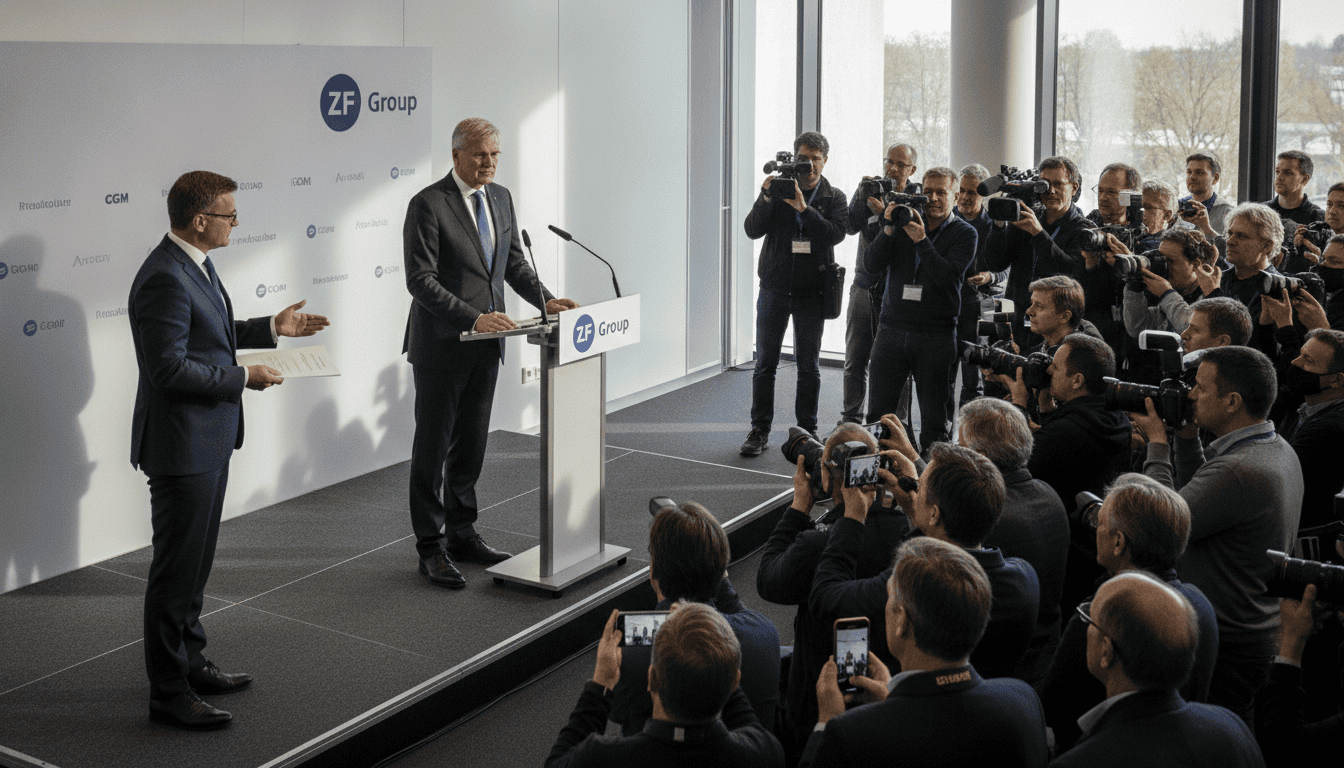
CGM withdraws injunction against ZF works council chairman Achim Dietrich after Ulm court expresses doubts
CGM withdraws injunction application against ZF works council chairman Achim Dietrich after the Ulm labour court suggested the case lacked clear legal footing and questioned the union’s standing.
The Christian Metalworkers’ Union (CGM) has formally withdrawn its application to bar Achim Dietrich, the ZF works council chairman in Friedrichshafen, from exercising his duties pending possible removal proceedings. The Ulm labour court told parties that, with the withdrawal, “the procedure is resolved,” reflecting the court’s doubts about the legal basis for an emergency injunction and the CGM’s right to bring the motion.
Union’s allegations against Dietrich
The CGM had accused Dietrich of gross breaches of duty, claiming he violated the neutrality expected of a works council chair. The union alleged that Dietrich had become overly entwined with IG Metall and used council office hours for union activities.
CGM also claimed that Dietrich obstructed employer representatives from speaking at an escalated works meeting in July and that he improperly directed council resources toward trade union tasks. The union sought an interim order to suspend Dietrich’s functions while potential removal proceedings were considered.
Court signals procedural weaknesses
In the hearing, the Ulm labour court raised questions about whether the CGM’s factual claims met the high threshold required for an interim injunction. Court representatives indicated uncertainty that the alleged conduct rose to the level of immediate and severe misconduct justifying a temporary bar.
Judges also expressed concerns about whether the CGM had the legal standing to file the emergency application, a procedural point that contributed to the court advising the parties to withdraw the motion. Following that guidance, the CGM complied and the application was discontinued.
ZF works council denies the charges
ZF’s central works council and Dietrich himself rejected the accusations as unfounded, saying the claims misrepresented internal procedures and leadership roles. The Gesamtbetriebsrat (GBR) maintained that council operations had been conducted within established rules.
Representatives argued that the contested July meeting had to be interrupted because of heated debate over workplace pay elements, and that responsibility for managing the session lay with Dietrich’s deputy rather than the chairman. The works council’s public statements called for clarity and pointed to broader disputes over compensation measures at the Friedrichshafen site.
Dispute over who chaired the July meeting
A central factual point in the court’s assessment was whether Dietrich personally presided over the session that escalated in July. The GBR asserted that Dietrich’s deputy had chaired the meeting, a contention that complicated any straightforward finding of misconduct by the chairman.
Witness accounts and procedural records were reportedly mixed, leaving the court uncertain about who exercised control during the interruption and which interventions, if any, constituted breaches of duty. That ambiguity weakened the urgency argument the CGM needed for interim relief.
Background conflict over pay and rights at Friedrichshafen
The dispute surfaced amid a broader conflict at ZF’s Friedrichshafen plant concerning the termination of above‑tariff payments and other local conditions. The wage and benefits debate had heightened tensions among employee representatives and rival unions on site.
The interrupted works meeting focused on these local pay issues, and the resultant flare‑up highlighted underlying competition between the CGM and IG Metall for representation and influence among ZF employees. Those structural tensions form the backdrop to the procedural dispute that reached the Ulm court.
What the withdrawal means for next steps
With the CGM’s application withdrawn, the immediate legal clash over an interim ban on Dietrich’s duties has ended, but the underlying disagreements remain unresolved. The union could choose to pursue formal removal through the statutory mechanisms for works council accountability, subject to evidentiary and procedural requirements.
Legal analysts say that removal proceedings demand clear proof of serious misconduct and must satisfy statutory safeguards for works council members, which helps explain the court’s reluctance to grant emergency relief on the record presented. For now, ZF’s internal negotiations and union relations will likely determine whether the matter resurfaces in a formal legal setting.
The court’s intervention and the public withdrawal of the application mark a pause rather than a settlement, leaving workforce representatives and management in Friedrichshafen to address the disputed issues through internal channels and, if necessary, further legal action.
