
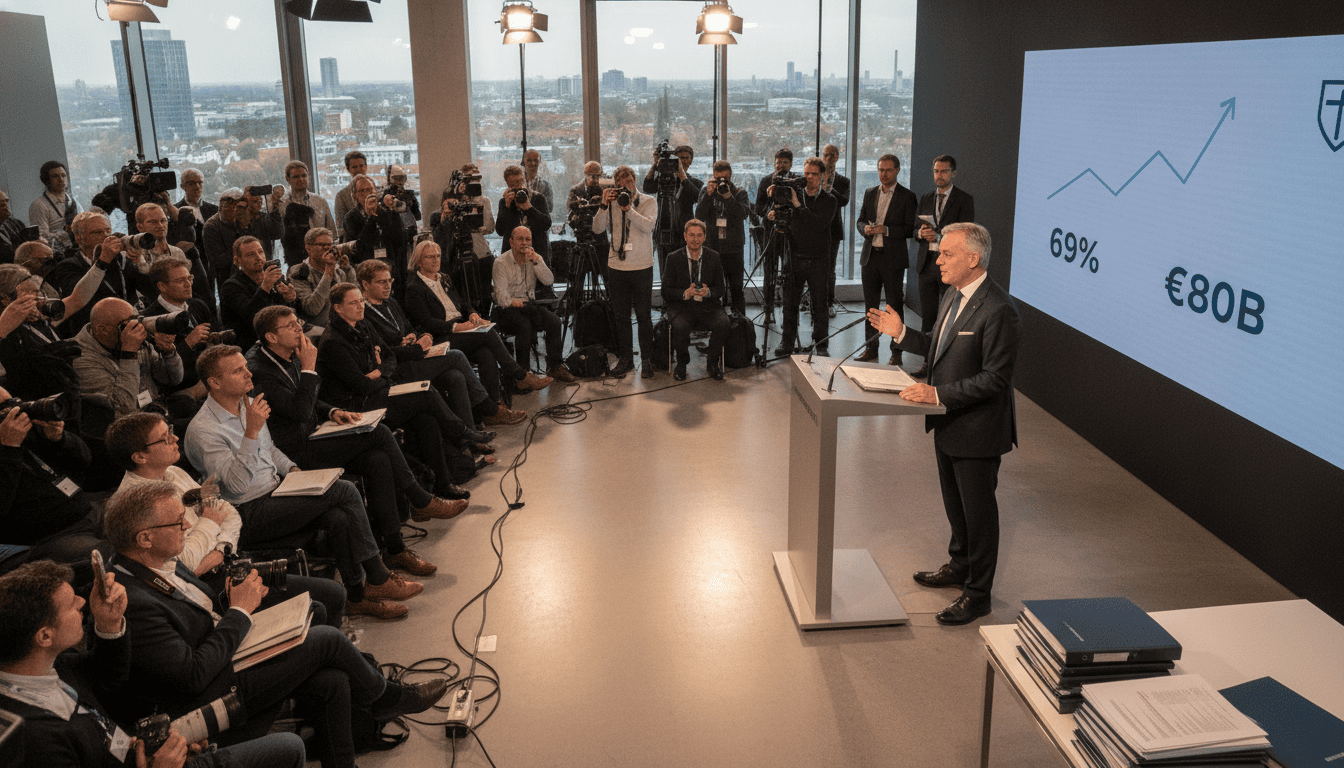
Rheinmetall Q2 results: Revenue jumps 69% to €3.3 billion as order backlog exceeds €80 billion
Rheinmetall Q2 results show revenue surged 69% in the April–June quarter to €3.3 billion, with operating profit beating market expectations and a record order backlog. The company cited a large Bundeswehr munitions contract and €5.7 billion of Romanian orders as major contributors. Shares rose sharply on the preliminary figures, even as a recent government exit from a frigate project highlights ongoing political and programmatic risks.
Revenue surge and quarterly snapshot
The company reported preliminary revenues of approximately €3.3 billion for the second quarter, a 69% increase compared with the same period last year. Rheinmetall said the April–June performance reflected strong demand across its defence segments and the recognition of major new orders. Management highlighted that the quarterly top line was driven by accelerated deliveries and contract milestones reached during the period.
The reported operating profit for the quarter rose to €562 million, significantly ahead of analyst expectations centered near €470 million. That outperformance represents roughly a 20% beat on consensus, underlining the stronger-than-anticipated margin conversion. The results were described internally as preliminary and subject to final audit and reporting procedures.
Operating profit and market expectations
Rheinmetall’s operating profit of €562 million surpassed the market’s forecast and lifted investor confidence when the figures were disclosed. Analysts had modelled a more modest margin, and the company’s ability to exceed those forecasts was attributed to favourable product mix and the timing of contract execution. Company statements emphasized that temporary effects from accelerated production and deliveries were part of the profit dynamics for the quarter.
Executives cautioned that quarterly swings can reflect contract phasing rather than steady underlying margin expansion, and that final audited results may show adjustments. Nevertheless, the preliminary beat has given market participants a reason to reassess near-term earnings trajectories. Investors and analysts will be watching to see whether the outperformance can be repeated across subsequent quarters.
Order backlog climbs past €80 billion
Rheinmetall said its order backlog has risen sharply and now stands above the €80 billion threshold, a level the company described as a new structural base. The expansion of the backlog was credited to several large awards, including a high-value munitions contract from the German Bundeswehr and a package of orders from Romania amounting to €5.7 billion. Those contracts, together with other recent wins, materially reshaped the company’s near-term work pipeline.
The enlarged backlog creates revenue visibility for several years and supports ramp-up plans across production sites, but it also imposes execution and supply-chain demands. Management noted that delivery schedules, subcontractor performance and personnel scaling will be central to turning backlog value into cash flow and earnings. Observers flag that backlog size is an important indicator of demand but not a direct substitute for near-term free cash flow.
Investor response and valuation movement
Following the preliminary figures the Rheinmetall share price climbed about 5.5% on the day, reflecting investor relief at the operational beat and the backlog news. The company’s market capitalisation stands near €53 billion, putting it just shy of the list of the ten most valuable German publicly traded companies. Market commentary noted that while the stock is well below its peak around the turn of the year, it remains substantially higher than pre‑war levels.
At the start of the year the share was trading near €2,000, roughly double its current level, illustrating notable volatility over recent months. Still, the current valuation remains more than ten times the price seen before the Russian invasion of Ukraine, a shift that underscores how geopolitics and defence spending have altered investor appetite. Traders pointed to the quarter’s figures as justification for renewed positioning in defence-related equities.
Naval project withdrawal and political implications
The results come against the backdrop of a political setback: the German government’s decision to withdraw from the F‑126 frigate programme in which Rheinmetall had been involved. Defence Minister Boris Pistorius indicated the exit was driven by multi‑billion euro additional costs and timeline delays, leading the federal government to pivot to purchases of a different frigate type from TKMS, a Thyssenkrupp subsidiary and competitor. The move highlights the sensitivity of major naval procurement to cost escalation and schedule risk.
Rheinmetall acknowledged the F‑126 development in investor communications and said it is adjusting to the altered procurement landscape while pursuing other naval and land programmes. Industry analysts noted that while the frigate exit removes a potentially lucrative contract, the broader surge in land systems and munitions demand is compensating. Still, the episode underscores how government procurement decisions can rapidly change corporate revenue mix and planning assumptions.
Outlook, risks and strategic priorities
Company executives signalled that the widened backlog and strong quarterly performance support a constructive medium‑term outlook, but they also flagged execution risks tied to supply chains, workforce expansion and programme delivery. Rheinmetall will need to translate booked orders into timely deliveries to sustain margin momentum and cash generation. The firm also faces reputational and regulatory scrutiny that accompanies large defence contractors operating in politically sensitive markets.
Analysts expect the next reporting milestones and the company’s full-year audited numbers to provide clearer guidance on sustainable margins and cash conversion. In the near term, investors will monitor order intake dynamics, the pace of contract execution and any further government procurement shifts that could reshape programme economics. Management has indicated priorities on capacity increases and tighter project management to meet the elevated order book.
Rheinmetall’s preliminary second‑quarter results mark a significant operational upswing driven by new contracts and heightened defence spending, but translating the backlog into sustained profit and cash flow will demand meticulous execution amid ongoing political and programme risk.
