
U.S. import ban on robots and networked inverters aims to curb security risks from Chinese suppliers
U.S. import ban on robots and networked inverters blocks new humanoid and quadruped systems and connected solar inverters, citing national security risks.
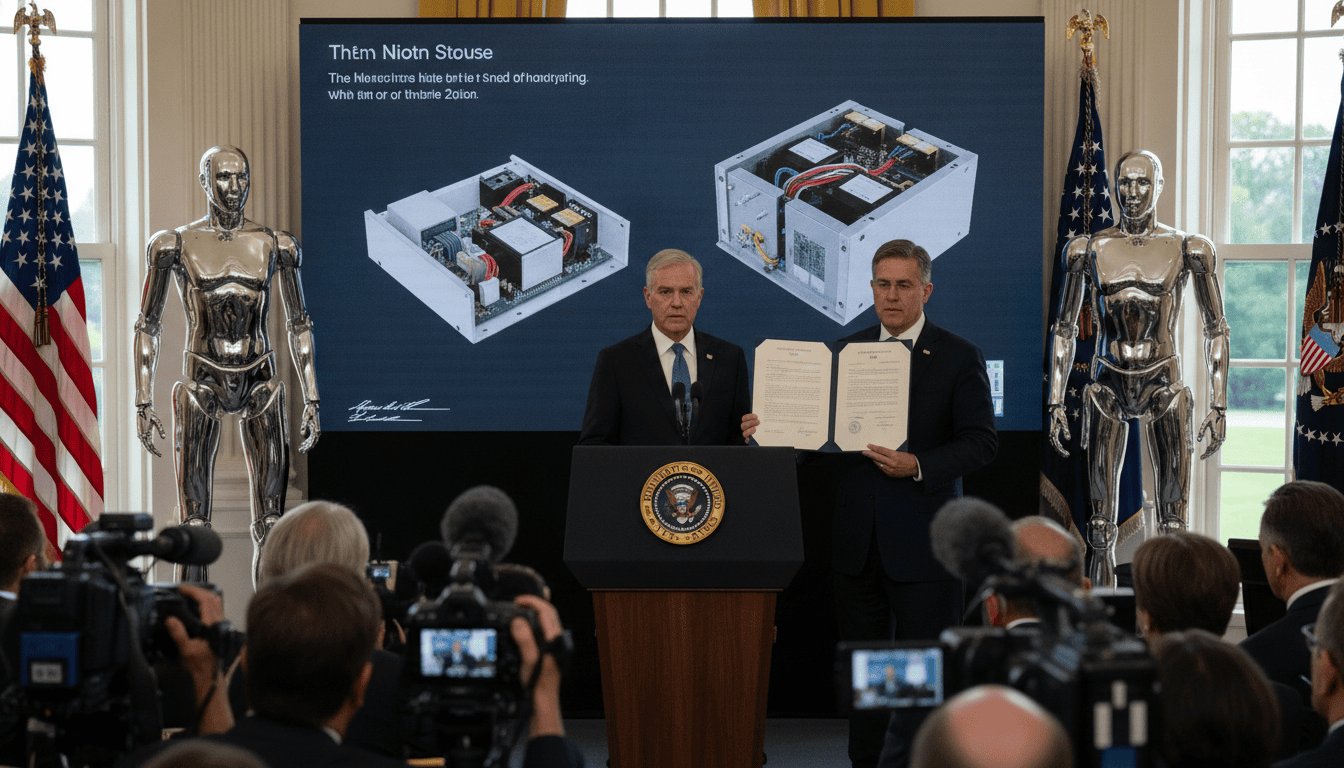
The Federal Communications Commission has issued an immediate U.S. import ban on robots that covers new humanoid and quadruped systems as well as certain networked power inverters, a move the agency says is intended to protect American AI infrastructure and critical electricity grids. The rule, which took effect on publication, applies to models not yet on the U.S. market and explicitly cites risks such as data theft and remote takeover that could be exploited to damage infrastructure. Officials framed the measure as part of a broader effort to bring production of key technologies back to the United States and to reduce strategic supply‑chain dependencies.
FCC cites data theft and remote takeover as core risks
The FCC’s statement identifies the potential for connected robots to collect sensitive information or be commandeered remotely as central security concerns, warning that compromised devices could facilitate surveillance or sabotage. The agency also named networked inverters as vulnerable components whose compromise could give attackers access to electricity distribution and large energy users such as data centers. Regulators said these vulnerabilities arise not only from software flaws but from supply‑chain weaknesses that allow malicious functionality to be introduced before devices reach buyers.
Chinese manufacturers are the primary focus, Unitree highlighted
Observers say the ban is aimed principally at Chinese suppliers, though officials signalled that exemptions for non‑Chinese vendors may be possible. Market researchers estimate that some Chinese firms hold significant global shares in quadruped and consumer robotics, with one cited manufacturer believed to control close to a fifth of the market. That company was recently placed on a U.S. Defense Department list of firms the government says may receive support from the Chinese military and has commercial ties with large U.S. chipmakers, complicating its access to the American market. Washington reached out to the firm’s representatives and to the Chinese embassy for comment; the embassy did not immediately respond to requests.
Inverters pose a distinct threat to renewables and grid security
Networked power inverters—devices that convert DC power from solar panels and batteries to AC for the grid—are central to modern renewable energy systems and to backup power for server farms. The FCC warned that compromised inverters could serve as a foothold for cyberattacks on critical infrastructure, echoing concerns raised after prior campaigns that targeted U.S. telecommunications and transportation networks. Energy and grid operators have told regulators they are increasingly dependent on imported hardware for large‑scale renewable builds, creating a concentration of manufacturing that U.S. officials say could be exploited in geopolitical disputes.
Industry disruption and possible exemptions for non‑Chinese suppliers
Analysts expect the ban to prompt immediate disruption for projects that rely on imports still awaiting U.S. certification, while existing equipment already in service is generally outside the rule’s scope. Suppliers headquartered outside China may seek carve‑outs or expedited approval routes if they can demonstrate supply‑chain integrity and independent manufacturing controls. The measure also increases pressure on firms to demonstrate secure device architectures and to relocate at least some production or critical component assembly to jurisdictions deemed lower risk by Washington.
Trade, legal and policy consequences loom for global suppliers
Trade lawyers and industry groups are likely to scrutinize the FCC action for potential legal challenges, arguing it may conflict with international trade commitments if applied discriminatorily. At the same time, the move follows a broader U.S. strategy to reduce reliance on single‑source suppliers for strategically sensitive technologies, a response shaped in part by past instances where supply concentration created leverage in geopolitical disputes. Policymakers have said they will pair restrictions with incentives to expand domestic manufacturing and to fund third‑party security testing of AI‑related hardware.
The immediate practical effects will play out over weeks as regulators publish implementing guidance and manufacturers assess which models fall under the ban and which might qualify for exemptions. Energy developers, data‑center operators and robotics integrators are already weighing options that include stockpiling approved hardware, switching suppliers, or accelerating plans to bring assembly and critical tooling onshore. In the near term, the ruling is likely to sharpen tensions between ensuring secure supply chains and maintaining access to competitively priced technology.
