
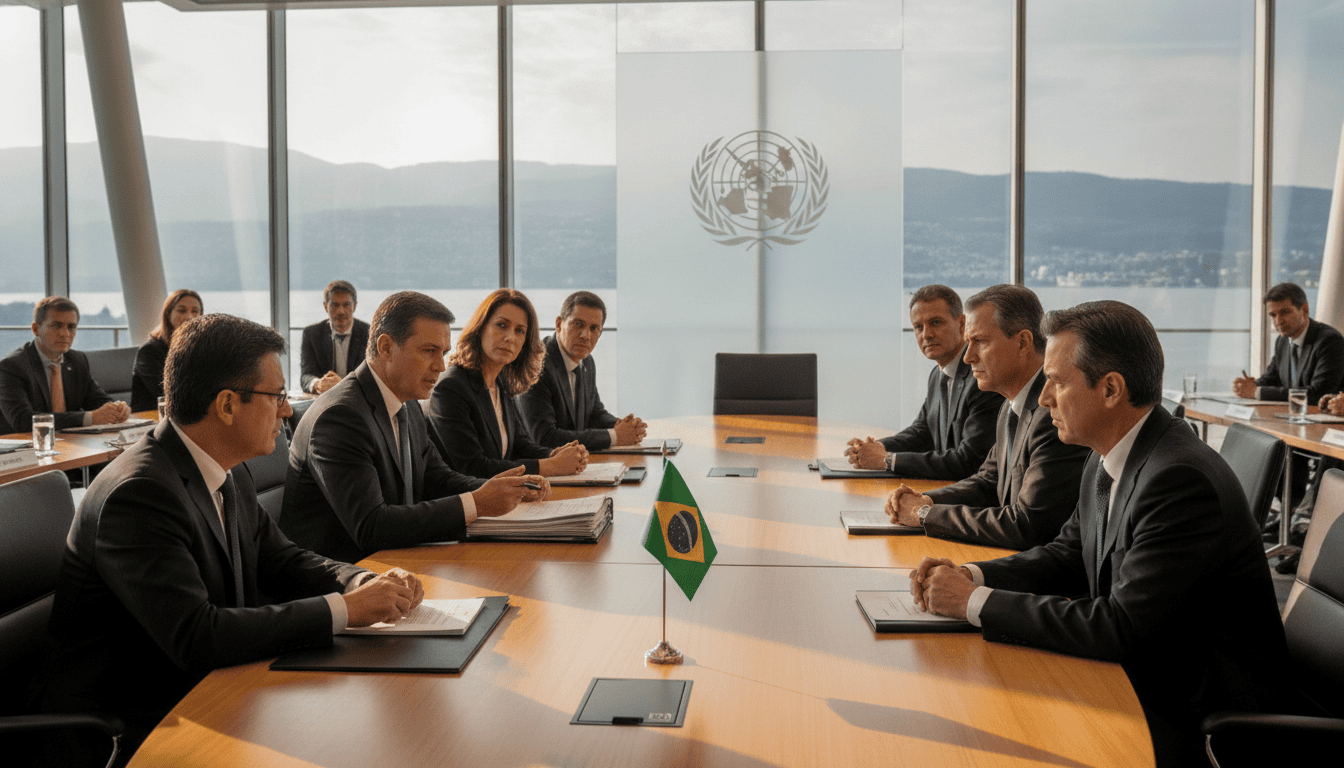
Brazil files WTO complaint against US over new tariffs
Brazil has asked the World Trade Organization for consultations after the United States imposed fresh tariffs, calling the measures unjustified and incompatible with global trade rules. The Brazil files WTO complaint centers on an initial 25 percent penalty introduced by the US and a subsequent 12.5 percent surcharge tied to allegations of forced labour, measures Brasília says exceed legitimate trade remedies. The move opens a formal dispute-resolution track at the WTO as Brazil seeks a negotiated end to a dispute that its government frames as both an economic and a political affront.
Brazil requests formal consultations with the United States
The Brazilian Foreign Ministry confirmed it lodged a request for consultations under the WTO’s dispute settlement system, a procedural step that signals official challenge without immediate litigation. Consultations are designed to give both countries a chance to resolve differences through dialogue before a request for a panel is made, and Brazil described the US duties as “unfounded and incompatible” with international trade norms. The filing shifts the dispute into a legal framework and compels a response from Washington within the WTO timetable.
US tariff measures and the forced-labour allegation
Washington’s measures began with a 25 percent tariff reportedly aimed at countering alleged unfair trade practices by Brazilian producers and exporters. Authorities later announced an additional 12.5 percent surcharge, citing concerns about forced labour in certain supply chains, a development that broadened the dispute from a tariff-level trade grievance into one with human-rights overtones. Brazil has rejected both rounds as illegitimate, saying the US action lacks sufficient basis under WTO disciplines and improperly conflates trade remedies with political accusations.
WTO dispute process and expected timeline
Under WTO procedure, consultations generally provide a 60-day window for discussion before a complaining party may request establishment of a panel to examine the case in detail. If consultations fail, Brazil could ask the WTO to convene an adjudicative panel whose findings may take many months and can be appealed, meaning an outcome is rarely immediate. The consultations request therefore represents an early, formal legal move that preserves Brazil’s rights under WTO rules while keeping open diplomatic channels.
Election context and diplomatic implications
Brazilian President Luiz Inácio Lula da Silva has publicly characterized the tariffs as interference in the run-up to the October 2026 presidential vote, in which he faces Flávio Bolsonaro, the son of former president Jair Bolsonaro. The timing of the US measures has added a political dimension to what began as a trade dispute, intensifying bilateral friction and giving the case high domestic visibility in Brazil. Relations between Brasília and Washington have experienced swings in recent years, and this WTO filing comes amid a fraught diplomatic backdrop shaped by electoral politics and past personal ties between US and Brazilian political figures.
Economic impact on exporters and market ties
Tariffs at the levels announced can quickly alter the economics for affected Brazilian exporters by reducing competitiveness in the US market and creating uncertainty for buyers and supply chains. Companies that rely on transatlantic trade flows may face higher costs, renegotiated contracts, or diverted shipments to other markets if access to the United States becomes more expensive. Beyond immediate industry effects, sustained trade measures can chill broader investment and cooperation between the two economies, prompting exporters and trade associations to monitor the WTO process closely.
Possible outcomes and remedies
If consultations do not yield an agreement, the WTO could establish a panel to adjudicate whether the US measures comply with treaty obligations; remedies can range from the withdrawal of the measures to the authorisation of countermeasures if a violation is found. Even when panels issue rulings, compliance can be contested and enforcement may require further negotiation or compensation arrangements, so legal victory does not always translate into swift practical change. Both sides also retain the option of striking a negotiated settlement outside formal rulings, which WTO consultations are specifically intended to encourage.
The Brazil files WTO complaint marks a formal escalation of a trade disagreement that combines tariff policy, labour allegations and political sensitivities, and it is likely to shape Brasilia’s trade diplomacy in the months ahead. The consultations process will test whether the United States and Brazil can reach a negotiated solution or whether the dispute will move into a protracted legal phase under the WTO.
