
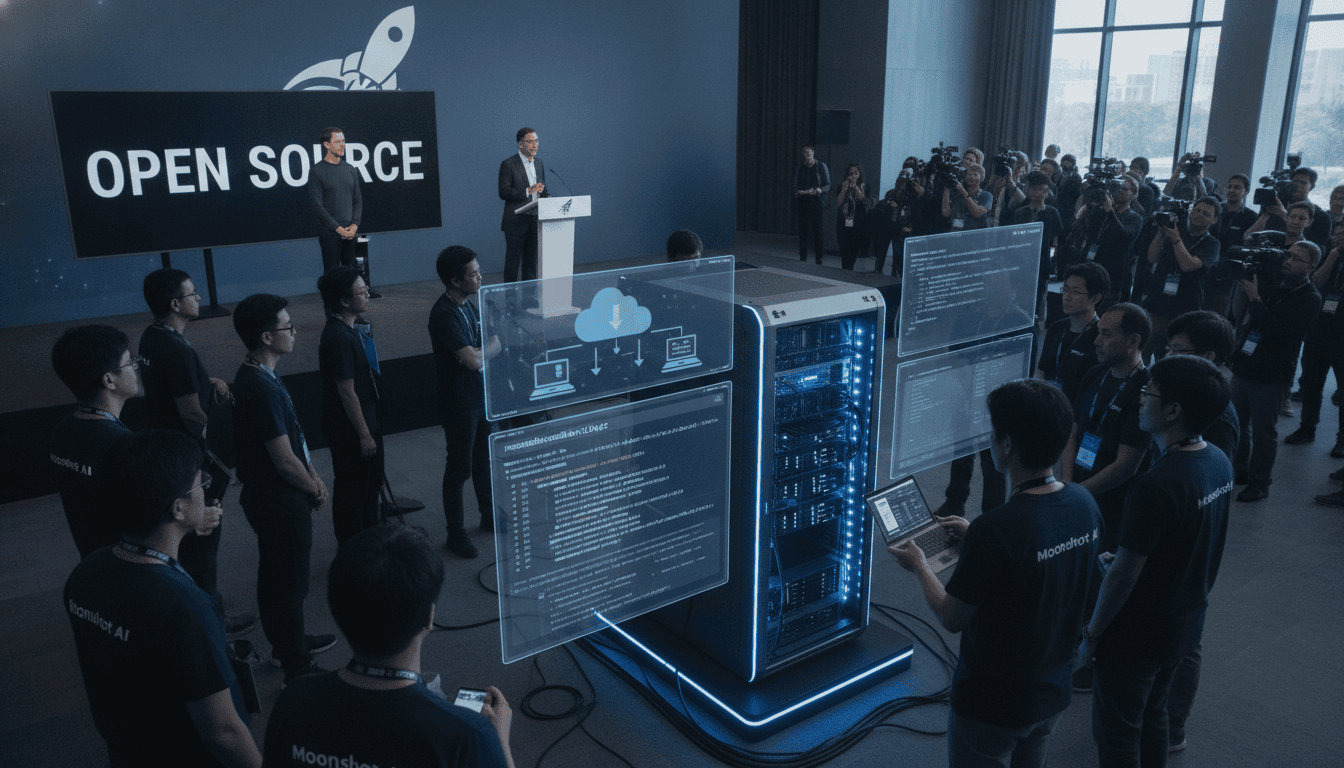
Moonshot AI Releases Kimi K3 Model Weights, Opening 2.8T-Parameter System for Download
Moonshot AI releases model weights for its Kimi K3 system, making the 2.8‑trillion‑parameter model freely downloadable and self‑hostable for developers and enterprises.
Moonshot AI, the Beijing‑based lab, on Monday published the full model weights for Kimi K3, allowing developers to download, adapt, and run the system on their own infrastructure. The move makes Kimi K3 one of the largest openly available AI models and signals a strategic push to grow Moonshot’s user base by prioritizing openness over proprietary control. (tomshardware.com)
Kimi K3 Released with Open Weights
Moonshot published the trained weights for Kimi K3 in a public repository, enabling third parties to fine‑tune, quantize, and self‑host the model without going through a hosted API. The company characterized the release as a deliberate effort to increase accessibility and adoption among developers globally. (thestandard.com.hk)
The release includes the raw parameter files that determine the model’s behavior, rather than only providing an API. That technical transparency is intended to lower the friction for integrators building specialized applications or running models inside restricted networks. (huggingface.co)
Model Scale and Technical Requirements
Kimi K3 is reported to have roughly 2.8 trillion parameters, placing it among the largest open‑weight models available to the public. The parameter count reflects the model’s scale but does not alone determine performance across different tasks. (tomshardware.com)
The published download is substantial in size and comes with hardware expectations: early technical notes indicate the full weights require multi‑node GPU infrastructure to run efficiently, placing practical self‑hosting within reach primarily for organizations with significant compute resources. (theagenttimes.com)
Availability, Licensing and Distribution
Moonshot made the weights available under a permissive code and model license, and mirrored copies appeared on established model repositories to facilitate distribution and redundancy. The licensing terms permit adaptation and internal deployment while retaining certain usage conditions. (huggingface.co)
Because the files are downloadable, operators can host Kimi K3 locally or within private cloud environments, offering a different trade‑off from hosted APIs: greater data control and potentially lower inference costs, at the expense of upfront infrastructure investment. (huggingface.co)
Founder Yang Zhilin Frames Release as Strategic Openness
Moonshot’s founder, Yang Zhilin, said the company hopes to win users through openness and broader availability compared with proprietary systems developed in the United States. The statement frames the weights release as both a product decision and a market positioning tactic. (ndtvprofit.com)
Yang’s comments underline a deliberate contrast with closed models: by making Kimi K3’s internals available, Moonshot is courting developers who prioritize auditability, customization, or the ability to run models entirely on domestic or private infrastructure. (ndtvprofit.com)
Industry Reaction and Policy Concerns
The public release has drawn rapid attention from industry groups and regulators, with analysts noting both the competitive implications and potential national security questions. Open‑weight releases complicate export or procurement restrictions because they can be mirrored and run offline once distributed. (tomshardware.com)
Observers also pointed to the commercial pressure such releases put on U.S. incumbents, since open models can reduce reliance on proprietary APIs and potentially undercut pricing models for hosted services. That dynamic has already prompted renewed scrutiny from some policymakers. (tomshardware.com)
What Developers and Enterprises Should Consider
For developers, Kimi K3’s availability presents new opportunities to experiment with advanced capabilities without API gating, but also requires careful assessment of compute costs, licensing constraints, and security controls. Organizations considering deployment should plan for significant infrastructure and operational overhead. (theagenttimes.com)
Enterprises weighing self‑hosting should also evaluate governance implications, auditability of training data and behavior, and the operational maturity needed to maintain large models at scale. For some, hybrid approaches that combine local deployment with managed tooling may be the most practical near‑term path. (huggingface.co)
The Kimi K3 weights release marks a notable moment in the global AI landscape by making frontier‑scale parameters publicly accessible and by underscoring divergent strategies between firms that keep models proprietary and those that pursue broad openness. The long‑term effects will depend on how quickly organizations adapt their infrastructure and governance to this new availability, and on how regulators respond to the wider circulation of large model weights.
