
Germany’s outpatient care budget cap sparks warnings of longer waits and higher costs
Germany’s outpatient care budget cap is reshaping ambulatory services, shifting cases to hospitals, lengthening waits and increasing costs while posing risks.
The German government’s decision to introduce an outpatient care budget cap is prompting immediate concern across the health system. The policy removes automatic pay increases for additional outpatient procedures beyond a fixed ceiling, effectively decoupling service volume from remuneration. Health providers and policy analysts warn that the outpatient care budget cap could shrink ambulatory capacity, alter incentives and redirect treatable cases into hospitals.
How the outpatient care budget cap changes payment rules
The new regulation sets a fixed upper limit on reimbursable ambulatory services, so additional procedures performed beyond that threshold receive no extra payment. This represents a substantive policy shift away from fee-for-service incentives toward hard-volume controls. By design, the cap aims to contain spending growth, but it also creates a financial disincentive for clinics and ambulatory surgery centers to maintain or expand service volumes.
Providers say the change reduces predictability for investment and staffing decisions. When additional activity does not generate proportional revenue, clinics are likely to restrict schedules, postpone hires and delay upgrades to equipment and facilities.
Immediate effects on ambulatory providers and clinics
Praxiskliniken and dedicated outpatient surgery centers report plans to cut back operating days and elective lists in response to capped budgets. Those facilities rely on a predictable link between services delivered and reimbursement to cover fixed costs such as specialty staff and operating rooms. Without that link, many will prioritize a limited basket of high-margin cases and scale back lower-return procedures.
Smaller practices and newly established ambulatory units are particularly vulnerable because they have less financial cushion. The result is a consolidation pressure that could reduce local choice and regional capacity for outpatient treatment.
Patient pathways shift toward hospitals
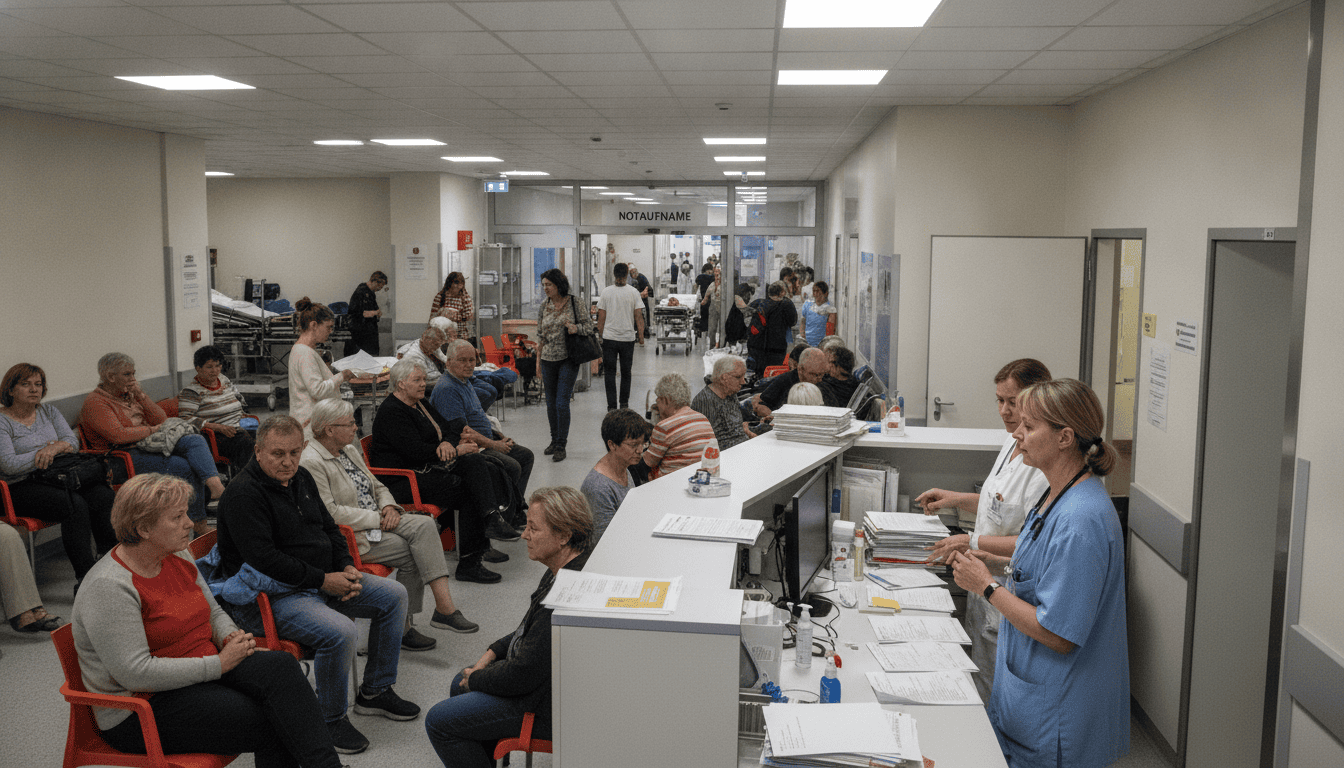
As ambulatory providers reduce capacity once budgets are reached, patients are increasingly referred to inpatient facilities for procedures that were formerly handled on an outpatient basis. That shift lengthens referral routes, introduces additional administrative steps, and often increases waiting times. For patients with routine, planned interventions such as arthroscopic joint procedures, the change can convert a short outpatient visit into a multi-day hospital episode.
Clinicians and hospital administrators warn that the hospital sector — already operating under capacity constraints in many regions — will feel intensified pressure. Delays and more complex scheduling will likely follow, with ripple effects across emergency care and elective surgery lists.
Financial and efficiency implications for the health system
Paradoxically, the outpatient care budget cap may raise overall system spending by moving care into the hospital sector, where unit costs are typically higher. Inpatient treatment carries additional overheads: longer stays, increased use of diagnostic and monitoring resources, and higher staffing ratios. These differences can offset — or exceed — the savings the cap is intended to produce in the ambulatory budget line.
Beyond direct costs, the shift can diminish system efficiency by creating duplicative processes and reducing the use of lean, outpatient-oriented care pathways that deliver faster recovery and lower complication rates.
Role of hybrid-DRGs and sectoral incentives
The phasing-out or reduction of hybrid-DRG mechanisms, which once enabled cross-sector payment arrangements, compounds the problem by removing a tool that could have smoothed transitions between outpatient and inpatient care. Without hybrid payments, identical medical procedures are priced differently depending on the site of care. That divergence reinforces perverse incentives and undermines efforts to treat patients in the most appropriate, cost-effective setting.
Remaining payment advantages in the hospital sector — for example for short-stay or observation categories — can make inpatient referral the economically rational choice for providers, even when outpatient treatment would be clinically preferable.
Political choices and potential policy responses
Policymakers who prioritized budget control now face a trade-off between near-term headline stability and longer-term structural health outcomes. Short-term metrics may show controlled outpatient spending, but they might mask growing hospital bills and declining outpatient access. Opposition voices and provider associations are calling for recalibrated payment models that preserve incentives for ambulatory treatment while maintaining fiscal oversight.
Possible remedies include targeted exemptions for high-value outpatient services, reintroduction or redesign of hybrid payment models, or capped-but-adjustable budgets that account for demographic and regional demand. Any adjustment would need clear monitoring metrics to avoid cost-shifting and to preserve incentives for efficient care.
The outpatient care budget cap is a concrete policy that illustrates how payment design shapes health system behavior. If implemented without parallel measures to safeguard ambulatory capacity, it risks reversing the very aim of strengthening outpatient care and pushing patients into more costly and less convenient pathways.
