
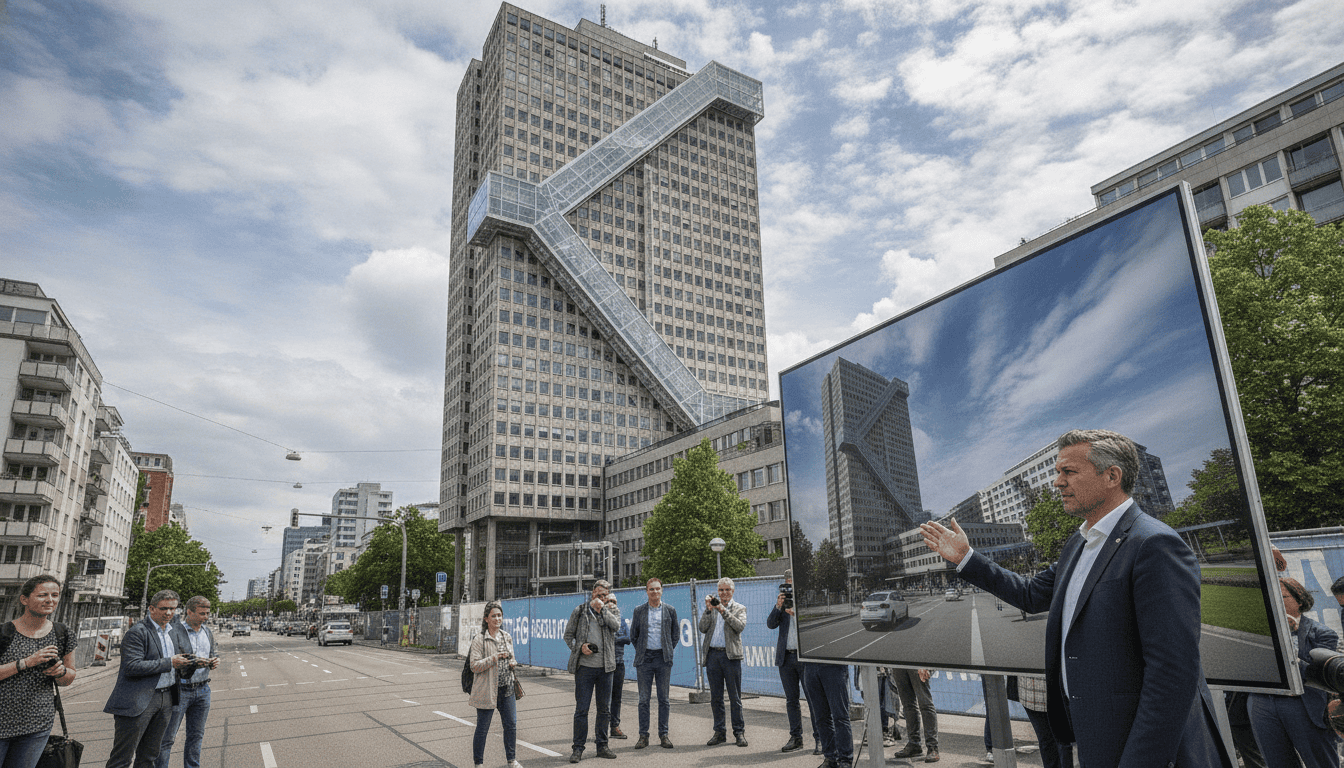
Architect proposes XXL escalator to save Arabellahaus in Munich
Architect Andreas Hild proposes an XXL escalator to convert the Arabellahaus in Munich and avert demolition by making adaptive reuse financially attractive.
Architect unveils radical conversion concept
Architect Andreas Hild has presented a novel proposal to prevent the planned demolition of the Arabellahaus in Munich’s Bogenhausen district. Hild told reporters that an engineered intervention — centred on an oversized escalator — could reconfigure access and circulation, transforming the building’s economics and appeal to investors. The plan is pitched as a pragmatic way to retain the building’s silhouette while repurposing its interior for mixed-use functions.
How the XXL escalator is meant to change the building
The escalator concept is intended to alter how tenants and visitors move through the structure, reducing the cost and complexity of internal restructuring while creating a new public experience. By concentrating vertical circulation in a single, high-capacity shaft, the proposal aims to free up floor plates for flexible use and lower refurbishment expenses for owners. Hild argues that such visible, large-scale interventions can also turn a formerly problematic structure into a marketable destination.
Making adaptive reuse attractive to investors
Hild’s pitch targets the core reason many postwar modernist buildings face demolition: investor resistance to costly conversions. He maintains that developers often choose replacement because rehabilitation is technically demanding and uncertain financially. The architect’s approach is to remove those objections by demonstrating a retrofit that reduces construction time and risk while offering an architectural signature that can command higher rents or cultural partnerships.
Arabellahaus history and cultural cachet
The Arabellahaus is a landmark of Munich’s Bogenhausen and is widely recognised for its slab-like profile and distinctive façade. The building also houses the legendary Musicland Studios, where international acts including Freddie Mercury, Donna Summer and the Rolling Stones recorded, giving the site significant cultural resonance. Proponents of preservation have pointed to this musical heritage as a reason to seek alternatives to demolition.
Why monument protection often falls short
Hild and other observers say conventional monument protection mechanisms frequently fail to prevent loss because legal designation does not solve the underlying economic calculus. Owners can seek demolition permits on the grounds of structural deficiencies, obsolescence, or prohibitive retrofit costs, and heritage rules may not cover postwar modernist interiors or later additions. The architect argues that combining creative design with investor-friendly engineering is a more reliable strategy than relying solely on legal protections.
Local stakeholders and possible obstacles
Any conversion would require negotiations with municipal planners, heritage authorities and private owners, and it would have to pass technical and safety reviews. Neighbourhood groups and cultural advocates are expected to press for retention of the Musicland legacy and public access to parts of the site. At the same time, developers will scrutinise projected returns, regulatory timelines and demolition alternatives before committing to a retrofit.
Precedent and implications for urban policy
Hild’s proposal fits a growing international discourse on adaptive reuse as a tool to reconcile climate, heritage and urban growth objectives. If realised, the escalator intervention could serve as a case study for how conspicuous architectural moves make conversions commercially viable. Local policymakers will face a test of whether to incentivise such interventions through zoning, subsidy or fast-tracked approvals.
The Arabellahaus debate underscores a wider tension in contemporary city-making: preserving cultural memory and embodied resources while accommodating investment pressures and functional demands. Hild’s escalator idea reframes that tension as a technical and market challenge rather than a purely legal or sentimental one, and it sets the stage for a potentially influential conversation about how Munich and other cities treat their postwar architectural legacy.
