
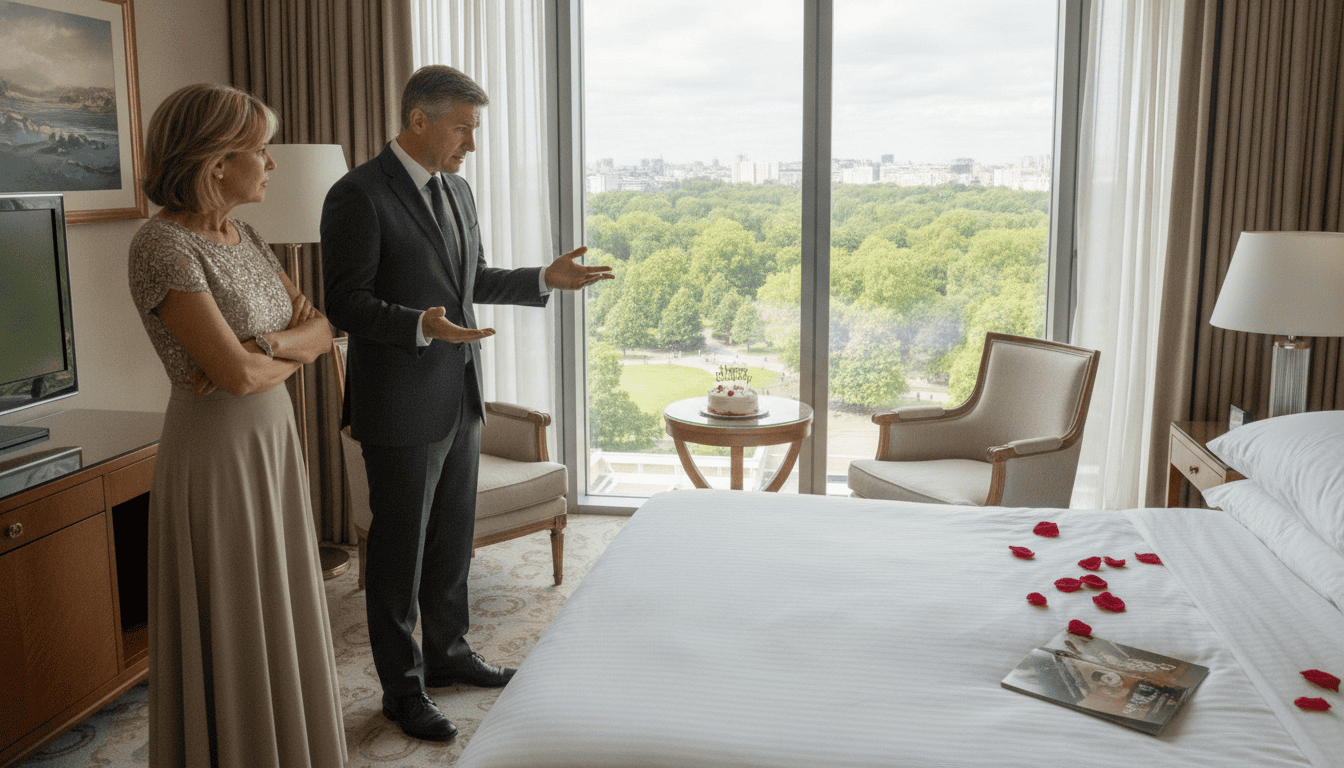
Hotel booking mistakes: birthday gift forges cautionary tale after seaside room listed as “park view”
A luxury hotel booking intended as a birthday gift turned into a lesson in hotel booking mistakes when a seaside room arrived listed as “park view” instead.
Expensive reservation, unwanted view
A traveler paid for a high-end room as a birthday present, expecting a seaside experience but received a confirmation for a “park view” without a balcony. The mismatch was only noticed after the booking confirmation landed in their inbox.
The reservation became a private example in a wider social debate about who should handle bookings and how carefully descriptions are read before purchase. Friends in the author’s circle call this the “Unlearn-Booking” debate: should partners split booking duties or do a double-check together?
Where the booking went wrong
The discrepancy arose when promotional photos and the booking page suggested a sea-side property while the specific room code and confirmation used different language. That divergence between marketing imagery and the allotted room type is a common source of consumer confusion.
A follow-up email from hotel staff asking if the party could be placed toward the front of the property suggested internal awareness of room allocations, but it did not change the originally confirmed room type. The result was disappointment on arrival and an awkward explanation for a birthday present.
Common hotel booking pitfalls
Room labels such as “sea view,” “partial sea view,” or “park view” lack a universal standard, leaving consumers to interpret what those phrases mean for their stay. Photographs on booking sites often highlight the best angles and may not reflect the precise room that will be assigned.
Other frequent pitfalls include hidden fees, non-refundable rates tied to promotions, and ambiguous descriptions about balcony access or room orientation. These issues regularly surface in consumer complaints when expectations set by listings do not match on-site realities.
How to avoid similar mistakes
Before confirming a payment, consumers should compare the room category code in the confirmation to the advertised type and read the fine print for phrases like “partial” or “from.” Calling the hotel directly to confirm the exact room features—view, balcony, bed configuration—adds a layer of certainty and creates a traceable record.
When booking as a gift, ask for confirmation screenshots and keep correspondence. Selecting rooms with explicit amenities listed and flexible cancellation or modification policies reduces the risk of an unwanted surprise upon arrival.
Booking gifts require extra care
Gifting a hotel stay shifts the responsibility of due diligence to the purchaser and can introduce awkward moments if the recipient cannot adjust or cancel without penalty. For surprise gifts, buyers should prefer flexible rates or obtain written confirmation of specific features to protect the recipient’s experience.
Some travelers opt to purchase a hotel voucher with open dates or a refundable booking, allowing the honoree to choose the precise room or travel dates themselves. That approach preserves the celebratory intent while avoiding the logistical pitfalls of a fixed reservation.
What hotels and platforms should do
Hotels and online travel platforms can reduce misunderstandings by standardizing room descriptions and clarifying what each view designation entails. Clear, up-to-date room inventories and precise labeling of balcony access or obstructed views would help align guest expectations with what is actually offered.
Platforms can also require property owners to link room photos explicitly to room-type codes and display dimensions, floor level, and balcony presence. Those changes would assist consumers in making informed choices and lower the incidence of complaints tied to mismatched listings.
A routine inconvenience like a mismatched hotel room highlights broader tensions in modern travel: convenience versus verification, surprise versus certainty, and marketing appeal versus contractual clarity. Travelers and providers alike have simple steps they can take to reduce the chance that an intended luxury gift becomes a lesson in hotel booking mistakes.
