
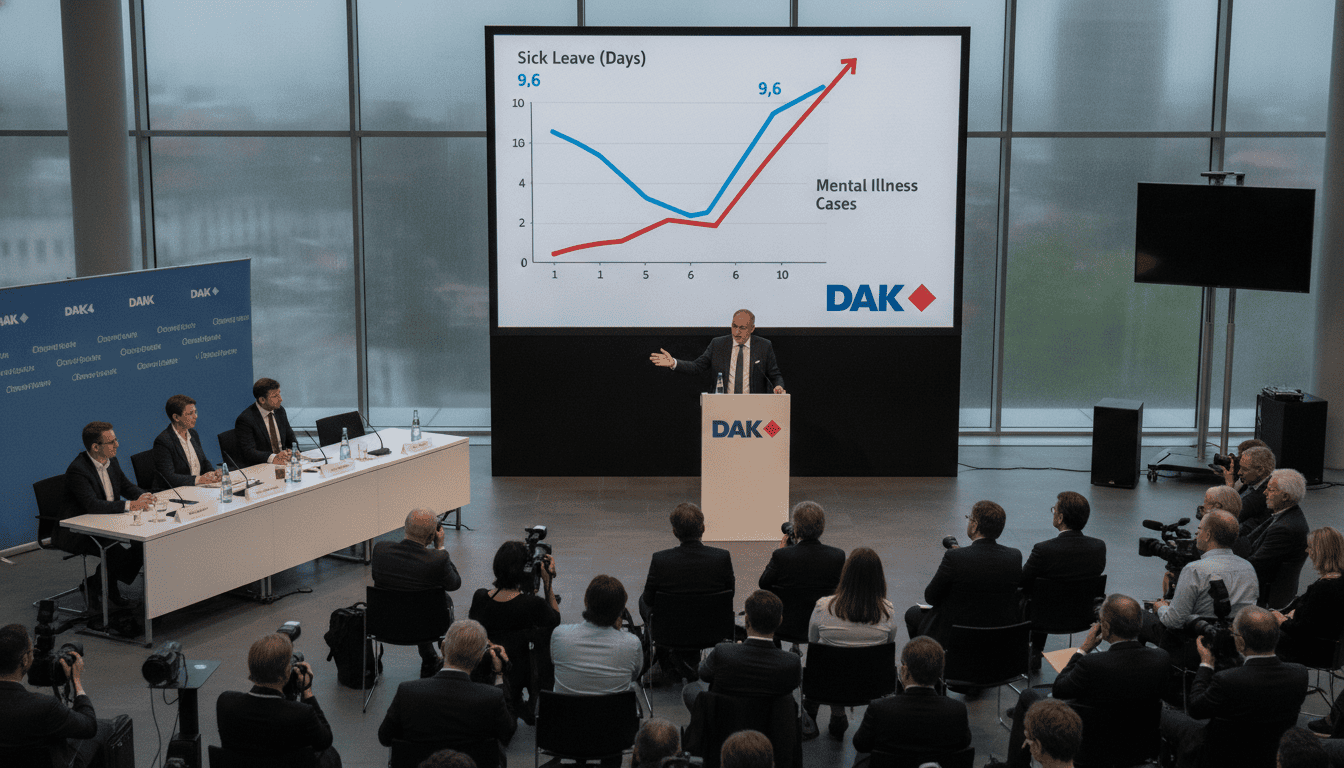
Sick leave in Germany edges down to 9.6 days in first half of 2026 as mental illness leads absences
DAK-Gesundheit analysis finds sick leave in Germany fell to 9.6 days in Jan–Jun 2026, with mental disorders rising while respiratory absences declined sharply IGES analysis
The number of sick leave days taken by employed people in Germany fell slightly in the first half of 2026, according to a new analysis by DAK-Gesundheit. Sick leave averaged 9.6 days per insured worker through June 2026, down from 9.9 days in the same period a year earlier. The insurer’s figures were analyzed by the Berlin-based IGES Institute and cover roughly 2.2 million people insured with DAK.
DAK data shows a small overall decline in absences
The DAK-IGES analysis reports the overall sickness rate fell from 5.4 percent in the first half of 2025 to 5.3 percent in the first half of 2026. That equates to an average of 53 out of 1,000 employees being on sick leave on any given day from January through June 2026. The change is modest but marks a reversal from larger fluctuations linked to seasonal illness waves in previous years.
The dataset underpinning the findings comprises medical absence records for about 2.2 million employed DAK members and was evaluated by IGES to produce the comparative figures. DAK’s leadership described the shift as welcome, while cautioning that headline improvements mask persistent challenges in long-term absenteeism.
Mental disorders now the top cause of sick leave
Mental and behavioral disorders were the primary driver of sick leave days in the first half of 2026, rising by about nine percent compared with the same period in 2025. The analysis records 184 days lost to mental health conditions per 100 insured people, with depression and related disorders highlighted as leading contributors.
Healthcare and workplace specialists point to a mix of factors behind the rise, including prolonged stress, post-pandemic effects on mental health services, and growing recognition and diagnosis of psychiatric conditions. Employers and insurers have increasingly flagged mental health as a priority for early intervention to limit long-term work incapacity.
Respiratory illnesses drop sharply after prior wave
By contrast, absences attributed to respiratory illnesses such as colds and influenza fell markedly, declining roughly 21 percent to 175 days per 100 insured. Respiratory conditions had been the leading cause of sick leave in the first half of 2025, when a pronounced cold-and-flu wave in January and February drove up absence rates.
Public-health measures, fluctuations in viral circulation and a relatively mild respiratory season in early 2026 are offered as possible explanations for the decline. Analysts cautioned that respiratory trends can be volatile and that future seasonal surges could again push sick leave higher in subsequent months.
Musculoskeletal problems remain a persistent burden
Musculoskeletal disorders — including back pain and related conditions — were the third-largest reason for sick leave, accounting for 174 days per 100 insured in the first half of 2026. Those conditions have long ranked among the top causes of workplace absence and are often associated with both acute injuries and chronic ailments that require prolonged treatment.
Workplace ergonomics, physical rehabilitation and preventative occupational health programs are frequently cited by employers as areas where investment could reduce musculoskeletal-related sick leave. Insurers and health services note that coordinated approaches linking primary care, physiotherapy and occupational measures tend to shorten absence spells.
Calls for targeted action on long-term absence
DAK chief Andreas Storm welcomed the slight overall decline in sick leave but warned that the large number of long-term cases requires attention. He said the modest reduction should not obscure the sustained high burden of prolonged absences, particularly those tied to mental illness, and urged more emphasis on prevention and early support.
Experts recommend stepped-care models for mental health, enhanced access to outpatient psychotherapy, workplace adjustments and stronger collaboration between employers, insurers and health services. Policymakers and social partners are also expected to monitor the figures as they consider reforms to sick-leave regulation and support systems.
The IGES evaluation and DAK’s internal data together portray a mixed picture: an early‑2026 easing in overall sick leave driven largely by fewer respiratory cases, alongside a worrying rise in psychiatric-related absences and persistent musculoskeletal demand. Employers, insurers and health authorities now face the challenge of translating the small overall improvement into durable reductions in long-term work incapacity.
Longer-term monitoring will be needed to see whether the trends reported for January–June 2026 hold across the remainder of the year and whether measures adopted by companies and the health system reduce the growing share of sick leave linked to mental and chronic conditions.
