
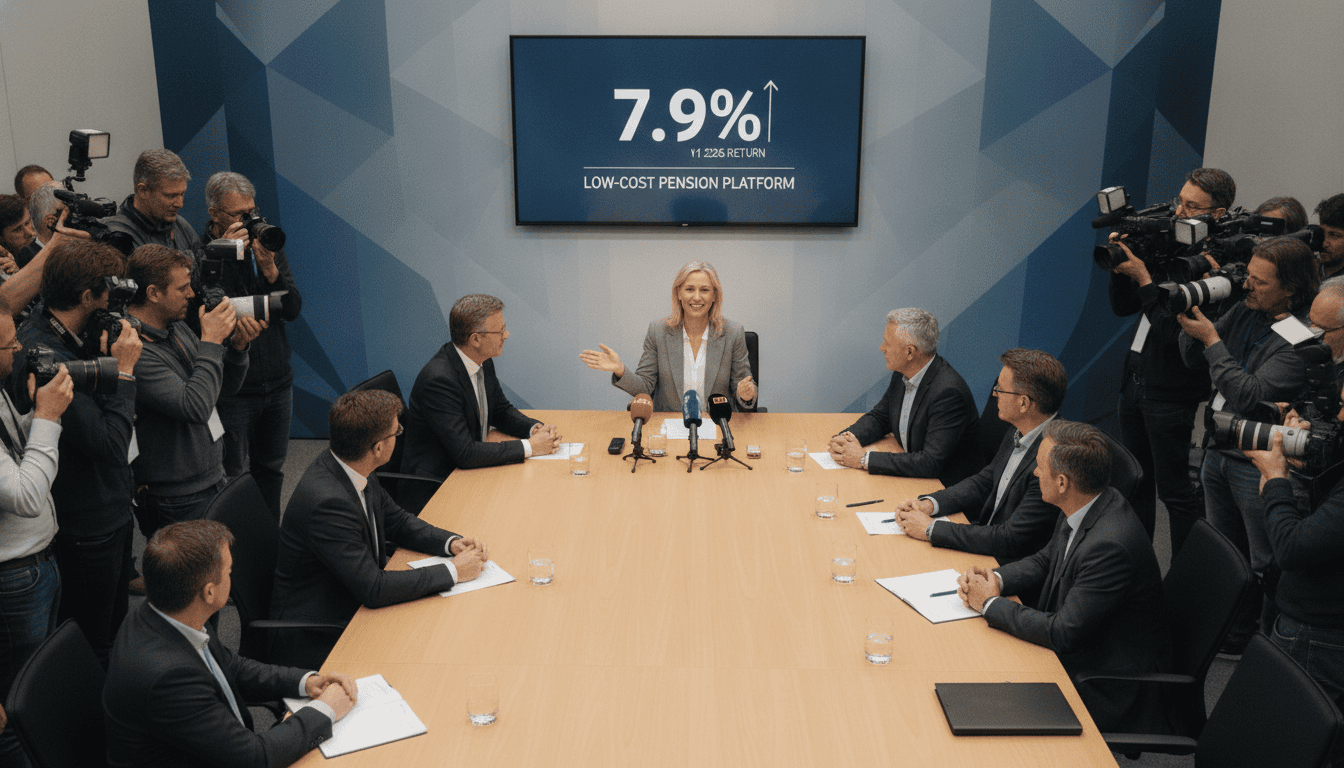
Kenfo posts 6.2% return in 2025 and 7.9% in H1 2026 as chair proposes managing a capital-funded pension
Kenfo fund posts 6.2% return in 2025 and 7.9% in H1 2026; chief Anja Mikus proposes using Kenfo to manage a new capital-funded pension with low fees and oversight.
Kenfo, the German fund set up to finance nuclear waste disposal, reported a 6.2% return for 2025 and a 7.9% return in the first half of 2026, the fund’s chair Anja Mikus announced on Wednesday. The performance, achieved despite market disruptions related to the conflict in the Middle East, has prompted discussions about expanding Kenfo’s remit to include management of a proposed capital-funded pension. Mikus signalled the fund could offer the infrastructure and a fee ceiling of no more than 0.1 percent to run such a scheme.
Kenfo posts 6.2% return in 2025 and 7.9% in H1 2026
Kenfo’s disclosed returns place the fund among the stronger performers for long-term public investment vehicles in recent years. The 6.2% annual return for 2025 and the 7.9% gain in the first half of 2026 came despite geopolitical volatility, underlining the fund’s resilience. The figures were presented by Anja Mikus at the press conference unveiling Kenfo’s annual accounts.
Fund built from 2017 lump sum now holds €25.6 billion
The fund was established in 2017 to manage a one-off payment of €24.1 billion made by nuclear operators in exchange for release from future disposal obligations. Since then Kenfo has transferred €5.3 billion to the Federal Environment Ministry to cover disposal costs, yet its assets rose to €25.6 billion by the end of 2025. Over the fund’s lifetime the average annual return stands at roughly 6.1 percent, reflecting a long-term investment horizon that stretches toward the end of the century.
Asset allocation shifting toward non-listed investments
Kenfo’s portfolio has been balanced between equities and bonds, each accounting for about 40 percent of assets, with nearly 15 percent invested in non-listed assets such as real estate and private equity. The board plans to increase the non-listed share toward roughly 29 percent, a strategic shift intended to capture illiquidity premiums and diversify return sources. That reweighting will require careful liquidity planning given the fund’s obligations and the need to sell public securities when adjustments are made.
Board chair signals readiness to manage capital-funded pension
Mikus told reporters Kenfo already has the platform and expertise to administer a capital-funded supplementary pension scheme that the governing coalition is considering. The government’s pension reform commission explicitly recommended Kenfo as a candidate in its late-June reform concept, proposing employees contribute an additional two percent of gross wages into a capital-funded vehicle. Mikus proposed a management-fee cap of 0.1 percent, positioning Kenfo as a low-cost provider if policymakers decide to transfer responsibility to the fund.
Single lump sum mandate shapes Kenfo’s operational constraints
Unlike a conventional pension fund that receives ongoing contributions, Kenfo must operate from a fixed initial endowment and fund future payments through investment returns and periodic asset sales. That structure increases the importance of long-term return targets and liquidity forecasting, since portfolio rebalancing frequently requires selling holdings rather than relying on fresh inflows. Mikus contrasted the operational complexity with that of a contribution-driven pension, arguing some adjustments would be simpler to execute in a flow-funded vehicle.
Volatility, past losses and purchasing opportunities
Kenfo experienced notable volatility, including a roughly 10 percent decline during the market stress of 2022, yet Mikus described such setbacks as part of a normal market cycle rather than a catastrophe. She argued that price dislocations present buying opportunities for long-horizon investors and said the fund’s strategy explicitly embraces occasional drawdowns in return for higher expected long-term yields. The fund’s increasing allocation to unlisted assets is also presented as a hedge against public-market swings, albeit with a trade-off in liquidity.
Political conditions and the mandate to deliver returns
Mikus emphasised that political actors must respect Kenfo’s primary obligation to generate returns, noting explicitly that the vehicle is not intended as a promotional or subsidy fund. Any change to Kenfo’s remit would require political approval, with a forthcoming decision expected from the coalition in the autumn. Lawmakers will face the task of balancing the fund’s technical investment mandate with social and fiscal goals if they pursue using Kenfo for broader pension responsibilities.
Kenfo’s recent performance and the chair’s openness to a new role have elevated the fund from a specialised technical vehicle to a potential pillar in Germany’s broader retirement architecture, but substantive change will hinge on political choices and careful alignment of governance, fees and liquidity management.
