
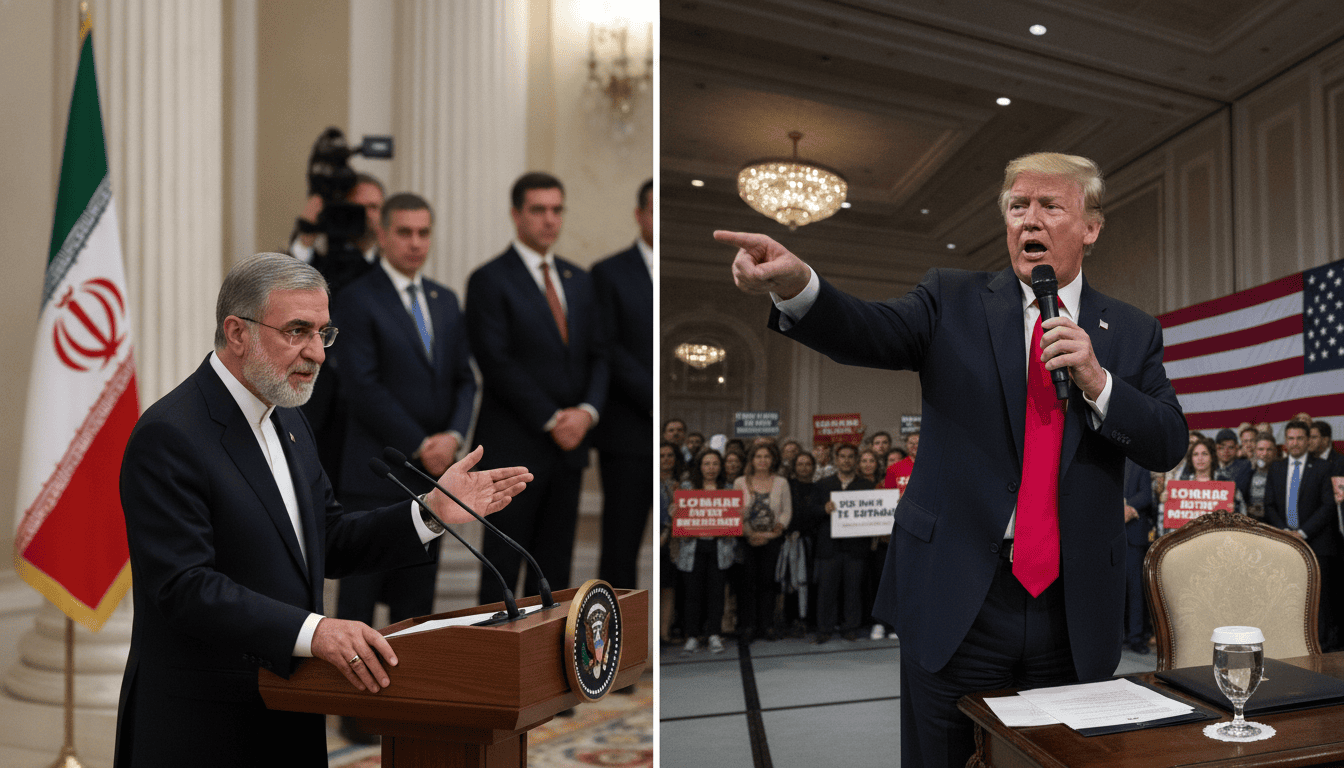
Iran says it upheld an Iran ceasefire with US despite Trump’s warning
Tehran says it upheld an Iran ceasefire with the United States after President Donald Trump declared the truce over; Strait of Hormuz traffic plunged and the IEA warned on oil.
Iran repeats it “kept its word” on ceasefire
Iran’s foreign ministry reiterated on Saturday that Tehran had honored the Iran ceasefire with the United States, saying compliance must be mutual to hold. Foreign Minister Abbas Aragchi said violations by the other side had contributed to renewed friction but insisted Iran had met its commitments under the agreement.
Iran’s statement framed recent hostilities as reciprocal missteps rather than a unilateral breakdown, signaling Tehran’s readiness to press for public acknowledgment of perceived U.S. violations. The comment followed a day of sharp rhetoric from Washington and reports of disruptions to commercial shipping in the Gulf.
Trump says truce is over but opens door to talks
President Donald Trump publicly declared the truce ended and issued a harsh warning to Iran, saying Tehran would face overwhelming force if it pursued further attacks or assassination attempts. At the same time, the White House said Mr. Trump had agreed to continue negotiations, leaving a complex diplomatic signal in Washington’s public posture.
The mixed messaging — threats on one hand and a willingness to talk on the other — heightened uncertainty among regional capitals and commercial operators. Analysts said the dual track of saber-rattling and diplomacy is likely to complicate efforts to stabilise maritime traffic and energy markets.
Shipping through the Strait of Hormuz plunges after attacks
Commercial traffic through the Strait of Hormuz fell sharply, with open-source maritime reports showing a dramatic slowdown on the night of July 9–10, 2026. Only six vessels were recorded transiting the waterway that night, marking the third consecutive night of depressed movement since attacks on ships and an exchange of fire between U.S. and Iranian forces.
Maritime insurers and shipping firms have tightened routing and security protocols as commercial operators weigh the risks of transiting one of the world’s busiest chokepoints. The traffic reduction raises immediate concerns for delivery schedules and longer-term routing costs if disruptions persist.
Saudi and US leaders discuss regional tensions
Saudi Crown Prince Mohammed bin Salman and President Trump held talks focused on the escalating Gulf tensions and the ongoing U.S.-Iran exchanges. Riyadh’s outreach underscores the kingdom’s concern about any escalation that could destabilise oil markets or draw Gulf states into direct confrontation.
Regional leaders are increasingly engaged in back-channel and public diplomacy to manage the crisis, with Saudi Arabia positioning itself as a pivotal interlocutor between Washington and other Gulf capitals. Observers said Riyadh’s interventions aim to preserve stability while maintaining pressure on Tehran.
IEA warns escalation could derail oil supply forecast for 2027
The International Energy Agency has signalled that sustained escalation in the Gulf could upend its projection that oil supply will expand by 2027. The IEA cautioned that interruptions to Gulf shipping or additional sanctions and countermeasures would alter export patterns and investment timelines across global markets.
Energy traders reacted quickly to the warnings, and benchmark prices showed sensitivity to the news as market participants priced in elevated geopolitical risk. The agency’s assessment stressed that prolonged instability could drive higher costs and longer-term shifts in supply chains.
U.S. CENTCOM team arrives in Beirut ahead of regional talks
A team of U.S. Central Command military officials arrived in Beirut to assist with implementing a framework agreement between Israel and Lebanon ahead of scheduled talks in Rome. The deployment reflects Washington’s tactical role in stabilising localized conflicts even as broader tensions with Tehran persist.
Officials said the CENTCOM presence is intended to facilitate technical and security arrangements tied to the Lebanon-Israel framework, not to act as a broader escalation force in the Gulf. Mediterranean and Levant security dynamics remain interlinked with the larger Gulf standoff, officials noted.
Tensions between Tehran and Washington remain volatile, with both sides issuing stark warnings even as diplomatic channels signal a continued interest in negotiation. The coming days will be watched closely by regional governments, traders and international organisations for signs of either de-escalation or further confrontation.
