
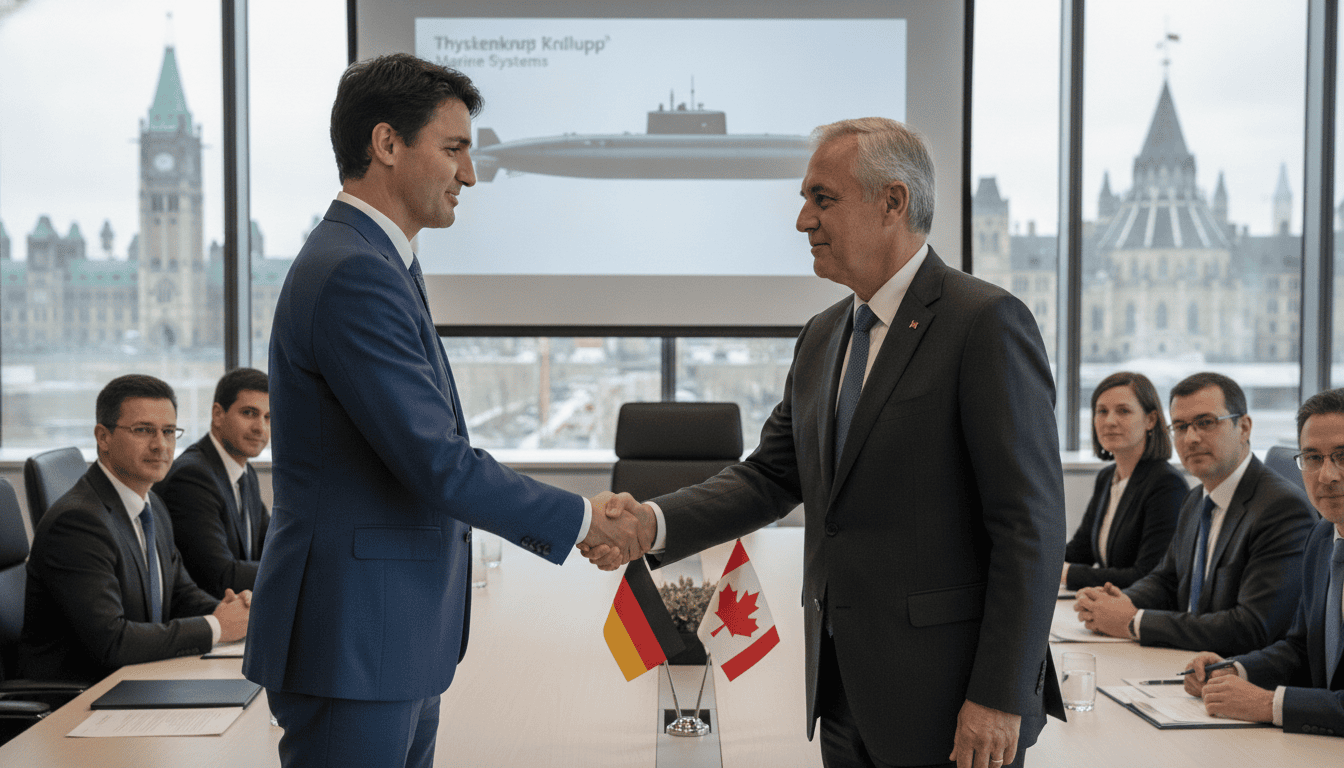
Canada submarine contract: TKMS to negotiate multi‑billion Type 212 CD fleet in landmark transatlantic deal
Canada selects TKMS to negotiate its largest-ever defence procurement, a Canada submarine contract to acquire more than a dozen Type 212 CD boats and build a transatlantic support ecosystem.
Immediate takeaway from Ottawa’s decision
The Canadian government has chosen German shipbuilder ThyssenKrupp Marine Systems (TKMS) to negotiate what Ottawa calls the largest defence procurement in its history, a Canada submarine contract to secure more than a dozen diesel‑electric submarines. Officials and industry executives describe the move as the core of a broader security and industrial partnership with Germany and Norway. Negotiations are expected to continue through the year as contract specifics, industrial offsets and timelines are settled.
Design choice and operational rationale
Canada’s apparent preference for the Type 212 CD reflects a demand for an existing, proven platform rather than a bespoke design, speeding delivery and reducing integration risk. The “CD” denotes a common design shared with German and Norwegian fleets, which proponents argue will simplify training and maintenance. Analysts note the Type 212’s stealth characteristics and suitability for operations in cold, coastal waters as a strong match for Canada’s extensive northern maritime responsibilities.
Economic scale and industrial promises
TKMS and allied governments have framed the program as far more than ship procurement, predicting a substantial economic ripple effect across Canada and Europe. Company statements have suggested the partnership could generate tens of billions in economic activity, with rough deal estimates in the range of €20 billion frequently cited in market commentary. The package includes shipbuilding work, supply‑chain integration, workforce development and construction of supporting infrastructure, making the Canada submarine contract a national industrial priority.
Production capacity and schedule risks
Bringing a program of this size to fruition will place heavy demands on TKMS’s German yards and on suppliers across the continent. The company already faces an order backlog measured in the billions, and officials acknowledge that meeting Canada’s delivery timetable — aimed at replacing an aging fleet by the middle of the decade — will require rapid capacity expansion. Observers warn that competing commitments to other customers and potential bottlenecks in specialised components could create schedule and cost pressure unless new facilities or partnerships are mobilised quickly.
Interoperability and NATO implications
A central argument in favour of a common Type 212 CD fleet is enhanced interoperability among NATO partners. Identical platforms would allow for more fluid cross‑crewing, joint maintenance arrangements and shared training standards, strengthening allied presence in the North Atlantic and Arctic approaches. Defence planners say this interoperability could serve as the backbone of a transatlantic security architecture that reduces dependence on any single external supplier while increasing collective operational readiness.
Political context and strategic signaling
Ottawa’s selection of a German bidder, and the emphasis on a tri‑national industrial framework with Norway, sends a clear political signal about Canada’s strategic partnerships. The decision comes amid broader efforts to diversify defence supply chains and build European ties that complement — rather than replace — traditional transatlantic relationships. Domestic politics and international diplomacy now intersect, as Canadian officials must balance industrial promises to provinces and suppliers with alliance commitments and budgetary constraints.
What comes next in the contract negotiations
Formal contract finalisation is expected to proceed over the coming months, with both sides stressing that headline economic figures remain subject to negotiation. Key outstanding issues include the exact number and configuration of submarines, the split of in‑country construction versus foreign work, timelines for delivery and the scale of investment in Canadian infrastructure and workforce training. Industry sources say Ottawa will closely scrutinise guarantees on delivery dates and penalties for delays given past multinational defence program failures.
The Canada submarine contract marks a significant pivot toward coordinated European‑Canadian defence cooperation and presents a complex test of industrial capacity, alliance politics and procurement discipline as Ottawa moves to modernise its undersea capabilities.
