
Forterra Deploys 100+ Self-Driving ATVs in Ukraine, Company Says
Forterra says 100+ self-driving ATVs completed 1,100 missions in Ukraine, hauling supplies and evacuating casualties while testing ground autonomy under fire.
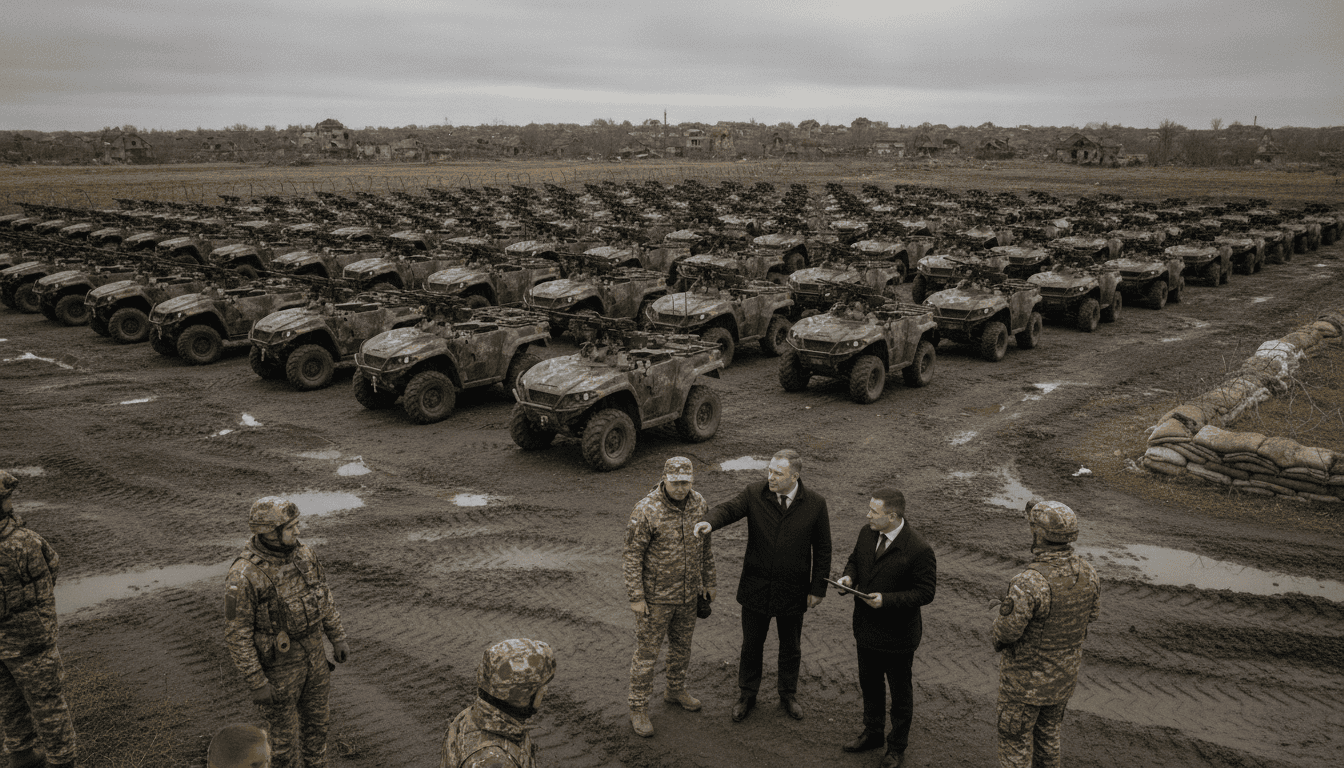
Forterra, a U.S. builder of autonomous ground systems, disclosed on July 7, 2026, that more than 100 of its self-driving ATVs have been operating in Ukraine for roughly nine months. The company said the vehicles — known as Lancers and built on Polaris all-terrain platforms — have been used for logistics, casualty evacuations and other frontline tasks while testing autonomy under combat conditions. Forterra characterized the deployment as one of the largest combat uses of autonomous ground vehicles by a U.S. defense technology firm.
Scale and timeline of the deployment
Forterra reported the Lancer deployment began in October 2025 and has since accumulated more than 2,500 miles across more than 1,100 missions. According to the company, the fleet carried a total of 777,440 pounds of supplies and completed 52 casualty evacuations during that period. Company officials and operators framed the data as an operational proof point for ground autonomy in an active conflict environment.
The disclosure follows months of field testing and iterative updates to the vehicles’ hardware and software, driven by lessons from frontline use. Forterra says the program received U.S. defense funding and that the operational tempo exposed performance limits and opportunities that laboratory trials did not reveal.
Operational performance and battlefield losses
Field reports indicate the Lancers have been primarily teleoperated in contested areas, a choice driven by both value preservation and current autonomy limits. Operators have sent the vehicles on remote-controlled supply runs and retrieval missions in zones where aerial surveillance and small loitering munitions make crewed movements hazardous. Sergeant Major Corey Wilkens, who oversees a U.S. Army program on autonomous tactics, summarized the peril: “There’s nowhere to hide,” a condition that has accelerated interest in remote and uncrewed ground logistics.
The vehicles have not been immune to battlefield attrition. Some Lancers were lost after becoming immobilized in deep mud or difficult terrain, exposing them to enemy targeting. Forterra acknowledged those losses and said crews have adapted procedures and routing to reduce exposure, while continuing to prioritize casualty evacuation missions when possible.
Design choices and frontline adaptations
Forterra’s Lancers differ from many Ukrainian-built uncrewed ground vehicles (UGVs) in key areas of endurance and payload. Where some Ukrainian systems are battery-powered and carry roughly 250 kilograms, the gas-powered Lancers can transport about 750 kilograms, extending operational range and load flexibility. The company’s use of commercially sourced Polaris chassis underpins that payload and sustainment model.
Frontline units also requested and received communications upgrades, including the addition of a Starlink satellite terminal to improve remote control and situational awareness. Soldiers reported that the connectivity upgrade significantly increased the vehicles’ utility, enabling more reliable teleoperation across contested corridors and reducing mission aborts caused by comms outages.
Technical lessons: electronic warfare, updates and autonomy limits
Operators and Forterra engineers stressed that electronic warfare and contested communications remain core challenges for ground autonomy in Ukraine. The company said it learned how to manage software updates remotely, harden systems against jamming, and tune vehicle controls for muddy and forested terrain. Those adjustments came after observing close-range threats and the complexity of battlefield navigation, rather than from simulated trials.
Despite improvements in navigation and route planning, Forterra and Ukrainian users both noted that the vehicles are not yet capable of full autonomous engagement in highly dynamic combat situations. Soldiers typically teleoperate when networks and value concerns permit, because current autonomy cannot reliably identify and respond to unexpected enemy forces in real time. Company officials described ongoing work to blend driving algorithms with newer model-based approaches so machines can better interpret and react to rapidly changing threats.
Industry context and procurement implications
Forterra has raised more than $500 million in venture funding and said the Ukraine deployment positions the company to compete for national security contracts. The field experience has given defense buyers and Forterra itself a clearer inventory of where autonomy can immediately reduce risk and where more engineering is required. U.S. military officials and industry competitors are tracking the results closely as procurement offices consider larger purchases for logistics and casualty evacuation roles.
Startups and established contractors are advancing similar capabilities, and investors have recently funded firms focused on training models and bespoke autonomy for defense applications. Procurement considerations now center on cost, attrition rates and the balance between teleoperation and autonomy. Ukrainian operators pressed Forterra for lower unit costs, arguing that battlefield attrition makes cheaper, more expendable systems desirable when missions do not require high-end features.
The deployment has also underscored the human-machine integration challenge: data collection, operator interfaces and maintenance in austere conditions remain as important as the autonomy stack itself. Forterra’s chief growth officer, Scott Sanders, emphasized that combat reveals practical requirements that do not always appear during development cycles.
The months of combat use in Ukraine have delivered both validation and hard lessons: autonomous ground vehicles can move critical supplies and extract wounded personnel in high-risk areas, but they still need better sensing, resilient communications and cost reductions to be employed at scale. Forterra and its peers now face the twin tasks of improving machine decision-making and lowering per-unit costs so that more vehicles can be deployed without unacceptable loss rates.
