
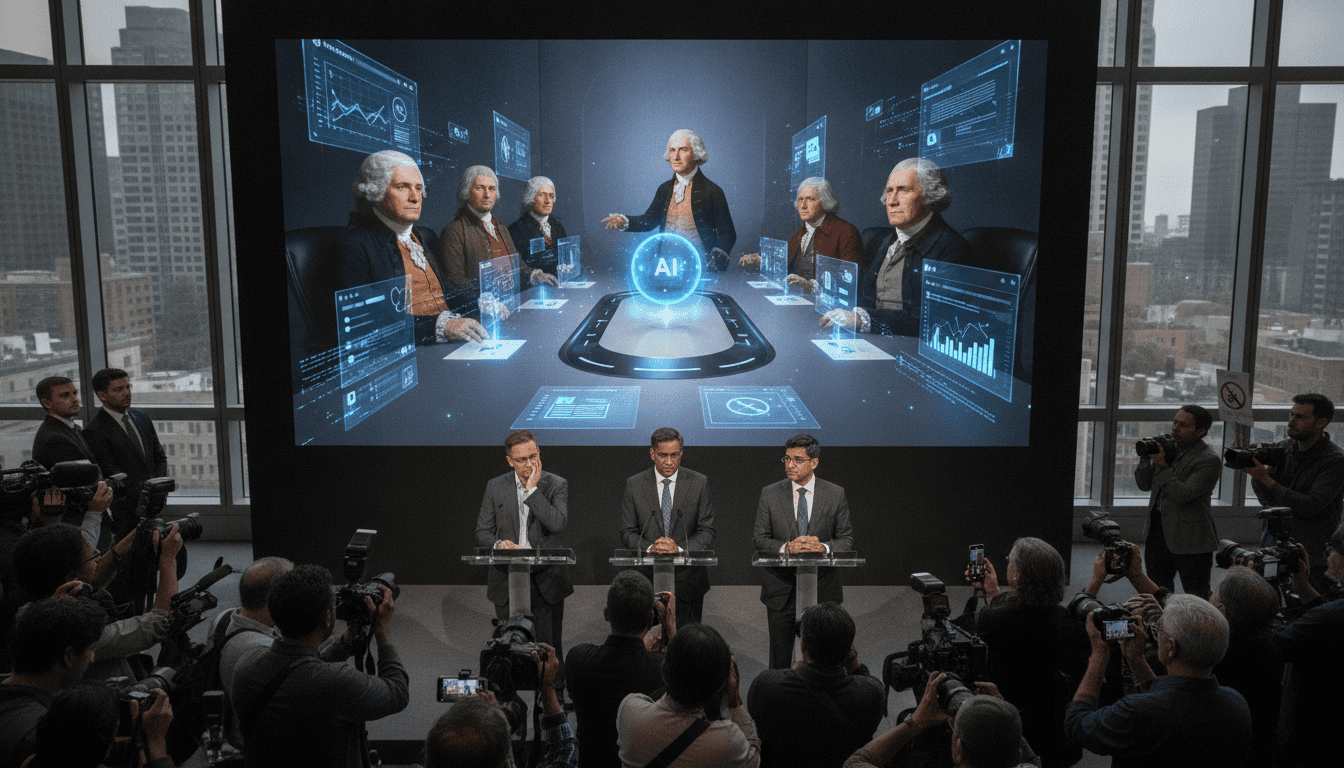
Google Workspace commercial reimagines Founding Fathers drafting the Declaration with Docs, Meet and Gemini
Google Workspace commercial reimagines the Founding Fathers using Docs, Calendar, Meet and Gemini; online reaction spans praise, puzzlement and sharp criticism.
Founding Fathers meet modern tools
The new Google Workspace commercial stages a tongue-in-cheek scenario in which the authors of the Declaration of Independence use modern collaboration tools to finish their draft. The spot frames the document as a late-stage group project, with Google Docs, Calendar and Meet woven into the narrative. Google’s generative tools also appear in small but pointed moments, blending workplace features with historical cast members.
The ad opens on a working Thomas Jefferson draft, then shifts through messages, suggested edits and a remote meeting that pushes the Founders into contemporary workflows. The sequence ends with digital approvals and celebratory visuals, a clear attempt to connect the product’s everyday utility to a landmark moment in American history. The commercial’s lighthearted tone is meant to emphasize ease of collaboration rather than rewrite historical texts.
How AI features are integrated
Artificial intelligence is present in the commercial, but it plays a supporting role rather than dominating the story. The spot shows an image-generation prompt used to test emblems for the national seal and a meeting assistant capturing notes, illustrating how generative and productivity tools can complement group work. The AI sequences are brief and framed as aids—visualization tools, automated note-taking and a chatbot consulted for procedural guidance.
The depiction avoids suggesting that AI authored or materially altered the Declaration’s text, and the characters ultimately rely on human judgement. Creators of the ad appear to have calibrated the balance so that automation enhances rather than replaces the familiar steps of drafting and approval. Still, some viewers flagged the visuals as bearing the hallmarks of synthetic imagery, prompting discussion about where creative effect ends and generated content begins.
Audience reaction across platforms
Responses to the Google Workspace commercial have varied notably by social network and community. On mainstream video and image platforms, many viewers responded with amusement or praise for the concept and production values. Comments on those services highlighted the playful mash-up of past and present and applauded the ad’s accessible framing of collaboration features.
By contrast, the ad met with sharper criticism on alternative and independent networks, where users called the execution tone-deaf and questioned the decision to place such tools within a politically charged historical moment. Critics focused largely on the prominence of AI, arguing that the spot either overstated or underexplained the technology’s role in civic and political processes. The split in reception underscores how different online communities interpret corporate storytelling through distinct cultural lenses.
Historical sensitivity and critique
The ad’s use of Revolutionary-era figures introduced immediate debates about historical sensitivity and context. Some commentators argued that placing the Founders in a modern workplace scenario trivializes a consequential political process. Others countered that the approach is intentionally satirical and aimed at highlighting teamwork rather than diminishing historical significance.
Observers also raised concerns about the implications of linking generative tools to political organizing or civic texts, even in a fictionalized vignette. Skeptics wrote that portraying AI as useful for drafting or strategizing around political documents risks normalizing automated intervention in areas that many believe should remain strictly human-led. Those critiques have fed a broader conversation about the limits and responsibilities of technology marketing when it intersects with public life.
Marketing strategy and context for Google Workspace
The commercial appears to fit within a wider trend of enterprise software vendors using cultural moments to humanize productivity suites. By recasting a familiar historical image through everyday tools, Google positions Workspace as both intuitive and indispensable for group projects. The company’s choice to include generative features acknowledges current product development priorities while aiming to keep the overall message centered on collaboration.
Industry analysts note that such ads serve dual purposes: they promote specific features to business customers while reinforcing brand identity to consumers who already use free or personal versions of the software. The inclusion of meeting assistants and visualization tools signals features that enterprise buyers may value, even as the playful framing speaks to broader awareness-building. For Google, the spot is a deliberate blend of product demonstration and cultural marketing.
The commercial also arrives amid heightened public scrutiny of generative technology, making the balance between novelty and responsibility particularly important. Careful placement and measured depiction of AI within a mainstream marketing piece reflect a recognition that audiences are wary of overhyped or misleading claims. How the spot affects perceptions of Google Workspace will depend on whether viewers see the tools as genuine productivity aids or mere promotional flourishes.
Public debate, product uptake and subsequent messaging will indicate how effective this approach is for Google. The ad has already generated conversation about the role of automation in collaboration and about the ethics of repurposing historical narratives for commercial ends. Those discussions are likely to continue as companies experiment with blending cultural reference points and emerging technologies.
The commercial is a clear attempt to connect a modern productivity suite to a foundational national story, and its reception highlights enduring tensions around technology, history and public life.
