
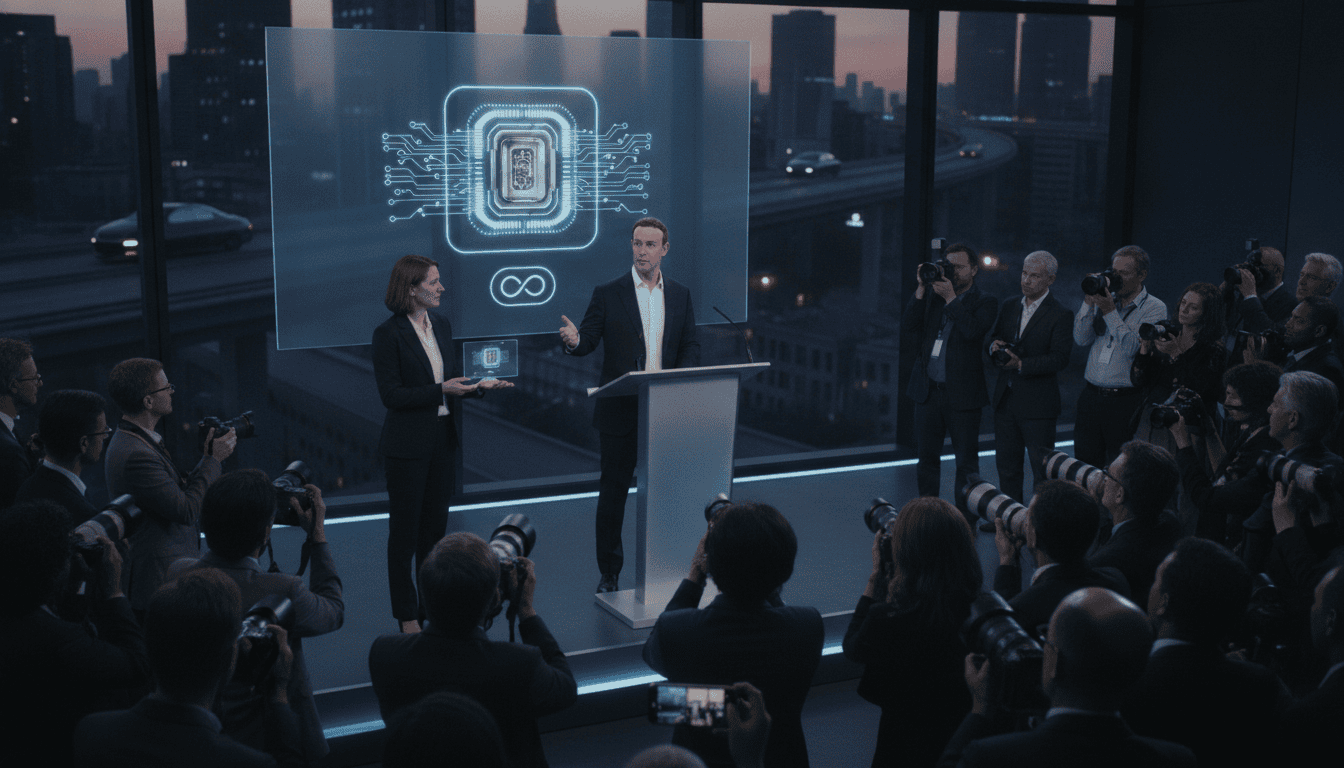
Upgraded Humans launches NxtPay Infinity as implantable microchips move into everyday use
Hamburg startup Upgraded Humans markets implantable microchips like the NxtPay Infinity payment implant, promising no-expiry payments, door access and data storage for everyday convenience.
Upgraded Humans, a small Hamburg firm, has put implantable microchips at the center of a commercial push with the NxtPay Infinity, a payment implant the company introduced to the market in May 2025. The devices are promoted for contactless payments, door and device access, and the secure storage of personal and health data. Company founder Patrick Kramer describes the technology as a way to integrate routine tasks into the body for faster, hands-free interactions.
Founder’s shift from consulting to biohacking
Patrick Kramer founded Upgraded Humans in 2017 after a long career in management consulting and a period of personal health crisis. Kramer says he experienced burnout and began extensive self-tracking to regain control, a process that evolved into experiments with wearable and implantable devices. Those personal experiments, public talks and demonstrations gradually turned into a business model that aims to normalise technological augmentation.
Kramer has presented on biohacking from San Francisco to Helsinki and used live implant demonstrations to explain the technology and ease public scepticism. He moved his work online during the COVID-19 pandemic and began selling products after testing them on himself, a step he says helped shape product design and build consumer interest.
NxtPay Infinity: product features and market launch
The company’s headline product, NxtPay Infinity, was launched in May 2025 and is billed as a first-of-its-kind payment implant without an expiry date. The implant measures roughly 20 by 16 by 1.5 millimetres and is priced at about €700. Upgraded Humans says the design removes the need to swap implants periodically, a common limitation with conventional payment cards.
Kramer explains that development required specialised biotech work and time spent in a London start-up accelerator, where his team confronted technical and regulatory complexity. The product lineup also includes a lower-cost Next implant at around €130 and several non-implant items sold through the company’s online shop.
Documented use cases and customer impact
Upgraded Humans markets a range of real-world examples to illustrate practical benefits. The company cites instances where implants enabled a twelve-year-old without arms to open a home door for the first time and a person with Parkinson’s disease to regain autonomy over simple access tasks. Customers also use so-called Biomed implants to carry continuous health metrics such as glucose indicators, and NFC chips to store vaccination records or personal identifiers.
The firm reports that couples sometimes choose implants for symbolic reasons, for example as an alternative to wedding rings, underscoring the technology’s evolving cultural role. Kramer frames these stories as evidence that implantable microchips can serve both functional and symbolic purposes depending on user needs.
Production, sales figures and international reach
Upgraded Humans operates with a compact team of roughly five specialised staff, including designers, IT professionals and accounting personnel, according to Kramer. The company reports revenues of about €66,000 for 2025 and estimates that roughly 20 percent of its sales are to customers outside Germany. Production is carried out across multiple countries, with chips manufactured in China, Taiwan, Germany and the United States.
Kramer states that approximately 5,000 people have received implants so far, and most purchases are made through the company’s website. He also says that while many customers use professional piercers to insert implants, he personally performs insertions about five times per month and that some customers opt for self-insertion or third-party piercers.
Safety, legal framing and public debate
Kramer describes implant procedures as closer to piercings than medical interventions and argues they do not require formal medical training; he notes that in Germany the procedures are treated like piercings and can be performed by non-medical practitioners. That framing has drawn criticism from some medical professionals and bioethicists who urge clearer regulatory oversight and standardized safety protocols for devices placed under the skin.
Supporters counter that rigorous sterilisation and standard operating practices can mitigate many risks, and that non-medical status does not inherently preclude safe practice. Upgraded Humans emphasises post-market testing, customer education and voluntary data protection measures as part of its approach to safety and responsible use.
Wider product range and wellness offerings
Beyond microchips, the company sells related wellness products and services intended to capitalise on the quantified-self trend. Offerings include a DNA gut analysis priced at around €400, which the company says tests genetic markers linked to gut health and digestion, and consumer items such as a Vitamin-C shower head for roughly €40 and a “Slow Control” cutlery set near €60 to encourage slower eating.
These ancillary products are marketed as preventive or lifestyle aids rather than medical therapies, and Upgraded Humans stresses that genetic analyses and biometric tracking are informational tools that do not replace professional medical advice.
As implantable microchips and related biohacking devices gain visibility, Upgraded Humans positions itself as a small but active player in an expanding market for body-integrated technology. The company’s mix of practical use cases, symbolic applications and consumer wellness items highlights the varied demand for in-body digital tools and the debates they prompt about safety, regulation and social acceptance.
