
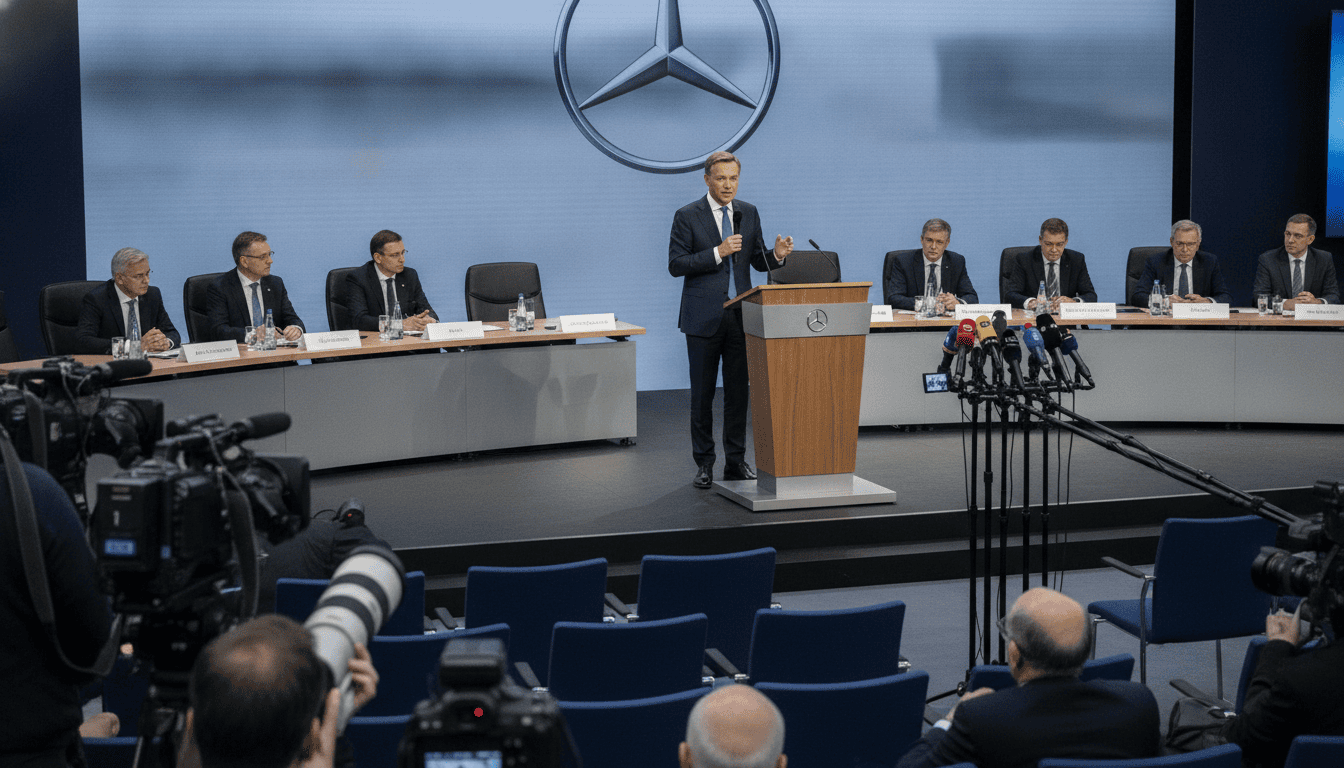
Mercedes 35-hour week questioned as board delays bonus and proposes 40-hour model
Mercedes board delays a special payment and proposes ending the Mercedes 35-hour week in favor of 40 hours, triggering industry backlash and union warnings.
Mercedes executives have moved to postpone a planned special payment and suggested shifting the company from a 35-hour workweek toward a 40-hour model, a step that has reignited labor tensions and rattled peers across the German auto sector. The proposal, made without prior notice to the company’s central works council, prompted immediate criticism from employee representatives who view the move as a direct challenge to established collective-bargaining norms. The dispute over the Mercedes 35-hour week has become a focal point in wider debates about how manufacturers should respond to a sustained industry downturn.
Board delays payment and raises hours demand
The company’s executive board announced a delay to a one-off payment while indicating it wants future compensation to reflect longer working hours rather than higher hourly pay. Works council leaders said they were not informed in advance, framing the decision as both a procedural breach and a substantive threat to agreed conditions. Management argues the measures are necessary to restore competitiveness and preserve jobs in the face of falling profits and structural change.
The proposed shift would see employees asked to work 40 hours for the same overall remuneration once the special payment is recalibrated, a change that unions and works councils say would effectively cut hourly income. For many workers the 35-hour week is among the most tangible gains of decades of collective bargaining, and its reversal would mark a significant break from past settlements.
Works councils and rival manufacturers react
Employee representatives at Mercedes’ plants publicly condemned the board’s approach and warned that the tactic could set an unwelcome industry precedent. Reaction was swift from other manufacturers, with supervisory and employee bodies at rival companies signaling alarm over potential copycat measures. The coordinated pushback underscores how interconnected the sector’s industrial relations are and how a single firm’s strategy can shift expectations across supply chains.
Unions and works councils from BMW, Audi and several major suppliers criticized the lack of consultation and argued that unilateral changes risk destabilizing longstanding social partners. Their statements emphasized that any adjustment to working time arrangements should be the subject of collective negotiation, not executive fiat.
Economic pressures behind the decision
Company executives point to a complex constellation of pressures that they say necessitate sweeping changes: declining margins at traditional automakers, the cost of electrification, intensified competition from overseas producers and weakening global trade dynamics. Mercedes and other German manufacturers have reported profit squeezes in recent quarters, and management teams are pursuing cost-saving strategies to remain viable during a transition to electric drivetrains and new mobility models.
Board members contend that conventional measures alone may be insufficient to secure long-term competitiveness and protect employment levels. They frame the proposed trade-offs—lower hourly pay offset by more hours or different bonus timing—as painful but pragmatic adjustments to an industry undergoing structural transformation.
Worker representatives frame the move as social compact erosion
Works council leaders described the board’s actions as an attack on the social contract between employers and employees, arguing that the timing and manner of the proposals violated trust. Employee representatives say such a unilateral recalibration of pay and hours undercuts decades of negotiated stability and could herald wider rollbacks if allowed to stand. They are calling for immediate discussions and warned of industrial measures if negotiations are not reopened in good faith.
For workers, the core concern is not merely earnings but predictability and respect for negotiated rules. Representatives have also highlighted the symbolic weight of the 35-hour week as a safeguard against overwork and as a visible gain from collective bargaining over the past thirty years.
Negotiation scenarios and sector-wide implications
The coming days are likely to determine whether the issue becomes a localized dispute or evolves into a broader confrontation across the auto industry. Management and employee representatives can still avert escalation through rapid talks, but trust will be hard to rebuild once consultation norms are perceived as breached. If other automakers adopt similar measures, the cumulative effect could reshape working-time standards and remuneration practices across Germany’s manufacturing base.
Analysts caution that any decisive resolution will need to balance short-term cost relief for companies with long-term commitments to labor standards and social dialogue. The political significance of the dispute is also notable: changes at a major employer such as Mercedes carry economic and symbolic weight and could influence public and policy debates about labor market protections.
The unfolding disagreement over the Mercedes 35-hour week highlights the strain between management imperatives to cut costs and employee demands to protect negotiated rights, setting up a contentious bargaining round that could reverberate through the wider automotive ecosystem.
