
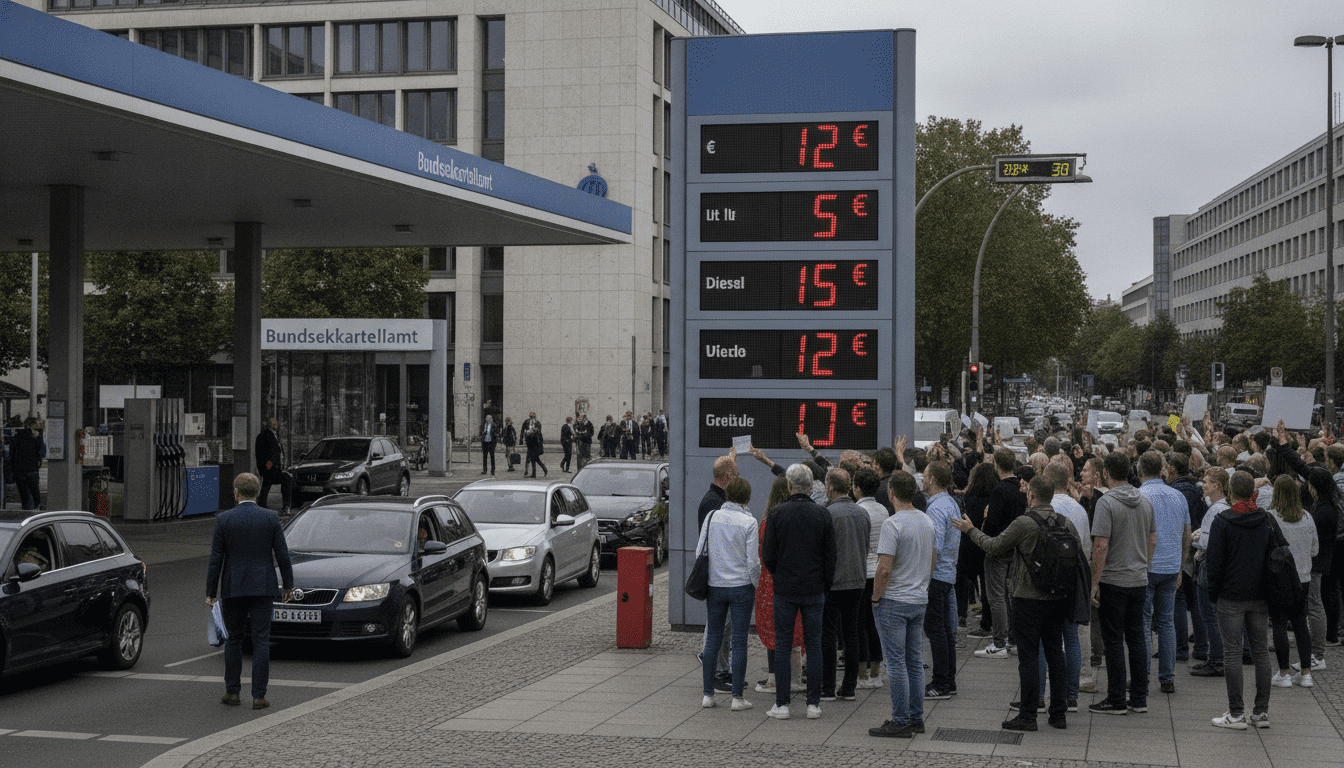
Prices spike at German pumps as Tankrabatt ends July 1, 2026
Fuel prices surged at German stations before the Tankrabatt ends July 1, 2026; ADAC reports midday jumps and regulators probe if discounts reached drivers.
Germany saw a sharp rise in pump prices on June 30, 2026, as the nationwide fuel tax discount known as the Tankrabatt approached its scheduled expiry at 00:00 on July 1, 2026. The motorist club ADAC recorded large midday increases in both diesel and E10 that exceeded the recent daily trends, prompting criticism from consumer advocates. Regulators and economic institutes say the pattern suggests fuel companies may have anticipated the end of the rebate and adjusted prices ahead of schedule.
ADAC reports midday jumps in diesel and E10
ADAC data showed a midday spike on June 30 in which diesel rose by about 24 cents per liter and E10 by roughly 20.3 cents per liter in the national average. After the jump at 12:15 p.m., E10 was 3.3 cents more expensive and diesel 3.5 cents higher than at the same time the previous Monday.
The ADAC also noted that on Monday the national daily average price for Super E10 was €1.861 per liter and diesel €1.784 per liter, marking several consecutive days of increases. These pump increases came even as crude oil prices retreated, which the ADAC said undercut any market justification for the scale of the rises.
Bundeskartellamt warns industry over pricing
The president of the Bundeskartellamt, Andreas Mundt, publicly warned oil companies against using the rebate’s expiry to impose undue price markups. He said firms must not exploit the situation to enact increases that lack a factual basis and that the authority would follow up on credible reports of unjustified rises.
The Tankrabatt, introduced in early May, cut fuel taxes by 16.7 cents per liter and was not subject to a legal obligation for dealers to pass the full reduction to consumers. A separate 12:00 rule limits stations to changing retail prices only at midday, a regulation regulators say is intended to limit opportunistic intraday swings.
Authority finds rebate not fully passed to consumers
The Bundeskartellamt has concluded that the Tankrabatt was not passed on to motorists in full, a finding that aligns with recent analyses from the Ifo Institute and the Monopolkommission. While the authority confirmed that some of the tax cut reached consumers, officials said the transmission was incomplete and the exact shortfall requires further validation.
Mundt declined to quantify the pass-through gap on the record, explaining that the agency was still validating data from the days immediately preceding the rebate’s expiry. The pending validation suggests the authority could issue more detailed findings and recommendations once its review is complete.
Industry groups dispute claims of overcharging
Industry representatives pushed back against the allegation that the rebate was withheld from consumers. The bft trade association dismissed the Ifo analysis as populist, arguing that public criticism oversimplified complex pricing mechanics at the pump.
The fuels association Fuels and Energy (en2x) said members had reduced prices by approximately 17 cents per liter when the rebate took effect. Christian Küchen, the association’s managing director, warned that restoring the energy tax to its prior level on July 1, 2026 would elicit an opposite retail reaction and that price movements reflected normal market adjustments tied to tax changes.
Mechanics of the Tankrabatt and midnight deliveries
Under the rebate scheme, fuel delivered to stations after midnight on July 1, 2026, will effectively carry the restored tax rate, so not all pumps will immediately reflect the higher charge at 00:00. Because the rebate applies to the tax status of delivered fuel, stations holding inventory purchased under the reduced tax may continue selling at earlier prices until those stocks are exhausted or re-priced.
In addition, the 12:00 rule constrains how and when stations can adjust posted retail prices during the day, creating a window in which many retailers changed prices at midday on June 30 rather than exactly at midnight. That timing helps explain why consumers observed significant increases around lunchtime rather than an instant jump at 00:00.
What motorists will likely face from July 1, 2026
Drivers should expect average pump prices to rise over the coming days as deliveries purchased after the rebate’s expiry reach service stations and as retailers adjust posted prices to reflect the full energy tax. The scale and pace of those increases will depend on each station’s stock, supply logistics and competitive pressures in local markets.
Regulators have signaled they will monitor price movements and pursue complaints about unjustified markups, and economic institutes may publish further analysis on the rebate’s net effect. For motorists, the immediate outlook is higher costs at the pump, while the longer-term picture will hinge on regulator findings and any market response that restores transparency in price-setting.
Regulatory scrutiny and public attention will remain high in the days after the Tankrabatt’s expiry, as authorities validate pass-through data and consumers assess the real impact on household fuel spending.
