
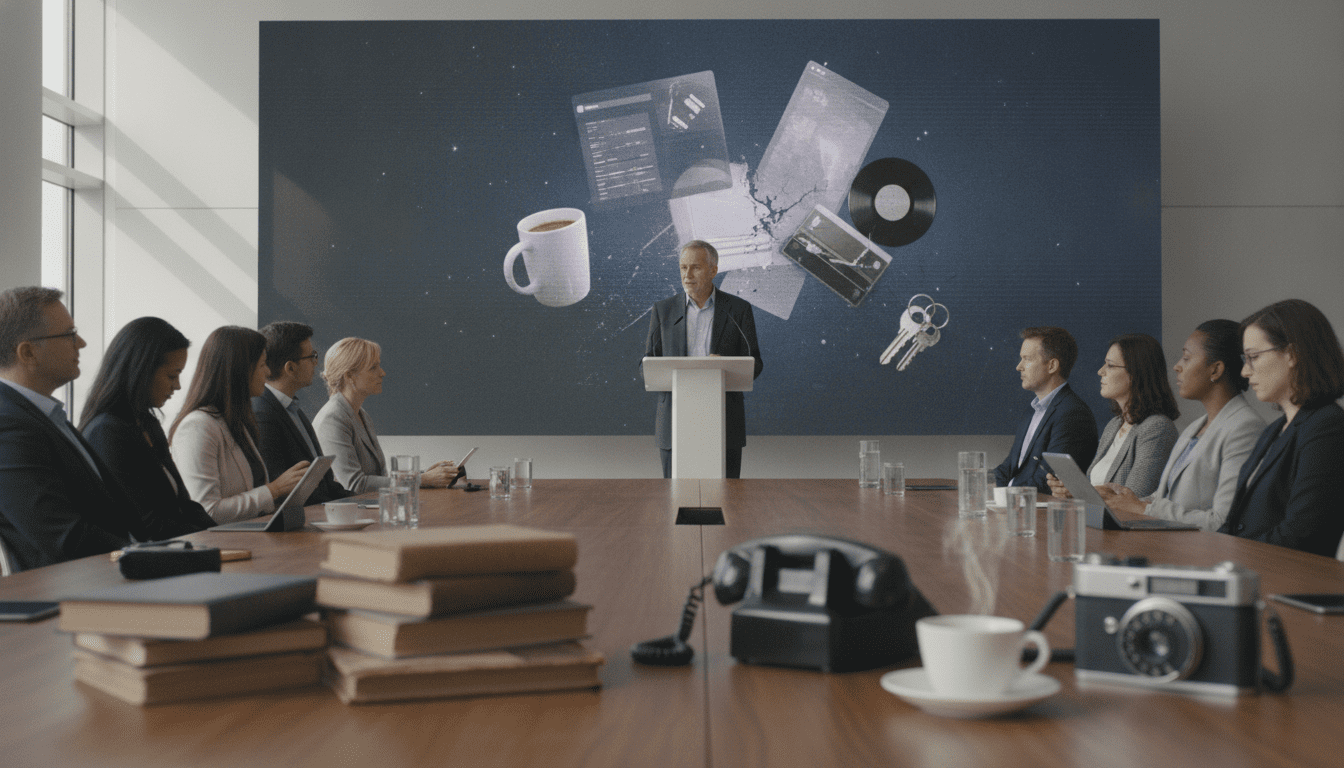
Ian Bogost’s The Small Stuff Warns of the Dematerialization of Everyday Life
Ian Bogost’s new book The Small Stuff argues convenience technologies have dematerialized everyday life, urging people to reclaim sensory, small pleasures and meaning now.
Ian Bogost, a writer and designer, lays out a diagnosis he calls dematerialization in his forthcoming book The Small Stuff, arguing that everyday sensory experiences have been stripped away by convenience-driven design. The book, born in part from Bogost’s viral essay on the cultural loss of the stick shift, examines how ordinary objects and routines—from car controls to restroom fixtures—have been transformed into invisible services. Bogost frames this shift not as simple villainy but as an incremental trade-off that has improved efficiency while eroding the texture of lived experience.
Author defines dematerialization as a sensory deficit
Bogost describes dematerialization as the gradual removal of tactile, audible, and embodied interactions from daily life, often in the name of convenience. He points to automated sinks, self-flushing toilets, and app-driven services as examples where the bodily act is outsourced to technology, reducing opportunities for sensory contact. The book argues this is not merely a design problem but a cultural and economic trend reinforced by bureaucracy, regulation, and market incentives.
Stick shift and electric vehicles as a cultural hinge
A central anecdote in Bogost’s argument is the decline of manual transmissions, which he used as a lens to explore broader loss. The rise of electric vehicles, many without traditional transmissions, made a long-running nostalgia into a concrete cultural endpoint for some car practices. Bogost uses that example to show how technological shifts can remove not only functions but also symbolic, meaningful practices that connect people to material objects.
Convenience technologies are beneficial but costly
Bogost acknowledges the real benefits delivered by services like ride-hailing, streaming, and automated systems, and he resists a purely negative account of technology. His point is that gains in efficiency and accessibility have come with a cost: a diminishment of small, sensorial experiences that accumulate into a meaningful life. Rather than framing technology as inherently malicious, he calls attention to the unseen trade-offs embedded in product design choices.
Silicon Valley culture and the invisibility problem
The book takes a critical, though measured, view of Silicon Valley’s emphasis on speed, scale, and automation, arguing this mindset can undervalue embodied human experience. Bogost traces how computing moved from human-centered design to a cultural dominance that often prioritizes outcomes over how actions feel. He suggests that some design philosophies implicitly assume humans can or should shed their bodily sensibilities, a claim he finds both unrealistic and impoverishing.
Practical remedies for designers and ordinary people
In its second half, The Small Stuff shifts from diagnosis to antidotes, offering both individual practices and institutional suggestions. For product teams, Bogost recommends re-centering the experience of doing things — not just the efficiency of outcomes — and reintroducing thoughtful friction that preserves sensory engagement without obstructing accessibility. For individuals, he emphasizes simple, immediate gestures: paying attention to tactile pleasures, preserving rituals, and deliberately choosing experiences that feel embodied in daily life.
Nostalgia, friction, and living in the present
Bogost warns against romanticizing the past or treating nostalgia as a solution, noting that societies do not simply revert to prior technologies. He rejects the idea that restoring antiquated objects will automatically repair sensory deficits. Instead, he differentiates between pointless friction and meaningful sensation: the goal is not to make life harder but to ensure people feel themselves in the act of living. He argues that small, intentional sensory moments can be cultivated today without waiting for sweeping economic or political change.
The book situates its arguments amid contemporary debates about work, remote life, and cultural taste, suggesting that choices by employers, civic leaders, and companies can shape whether opportunities for sensory engagement remain abundant. Bogost urges leaders to design spaces and policies that create more occasions for embodied encounters rather than further smoothing them away.
Bogost’s tone throughout the book is deliberately less vitriolic than some critics of modern tech, favoring practical orientation over denunciation. He acknowledges the comforts and advances technology provides while calling for a renewed valuation of the material world. That balanced stance makes the book both a critique and a how-to manual for restoring everyday gratifications.
The Small Stuff invites readers and builders alike to reconsider what counts as progress and to recognize the cumulative importance of small sensory moments. Bogost’s diagnosis of dematerialization reframes many of today’s tech debates around the lived experience of being human, and his remedial suggestions offer concrete ways to restore texture to ordinary life.
