
Bavaria and Baden-Württemberg Push for a “Südbonus” to Unlock Wind Power in the South
Bavaria and Baden-Württemberg seek a “Südbonus” in the EEG to steer more wind power projects to southern Germany, citing industry needs and grid-cost savings. (154 characters)
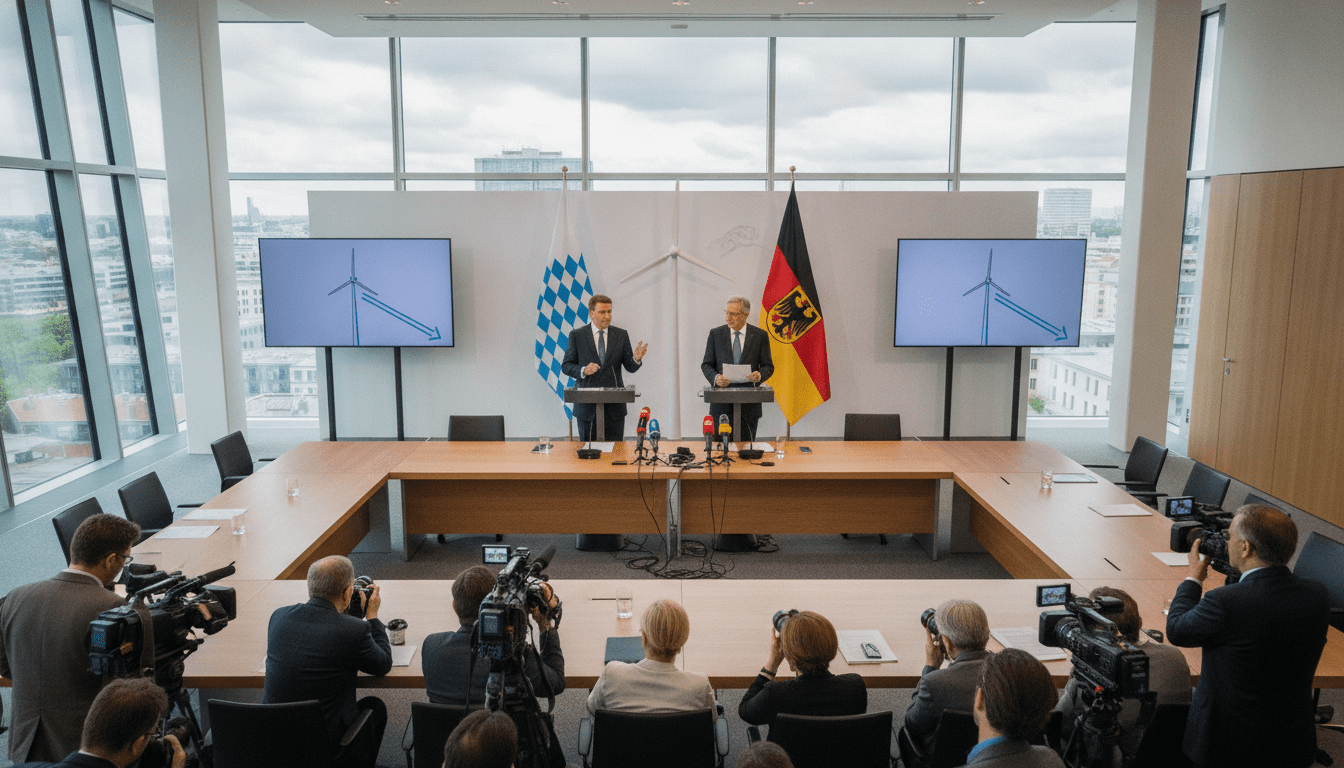
Southern German states have jointly demanded a “Südbonus” in the Renewable Energy Act to accelerate wind power deployment in Bavaria and Baden-Württemberg. The move represents a political U-turn in Bavaria, where longstanding resistance to wind turbines has given way to concerns that inadequate local generation threatens the region’s industrial competitiveness. Leaders in Munich and Stuttgart want special rules in the next EEG reform to reserve capacity and adjust auction mechanisms so approved projects actually get built.
Two southern states form an unlikely alliance
The governments of Bavaria and Baden-Württemberg have aligned around a shared proposal to change federal auction rules and introduce financial incentives for wind farms in the south. Once vocal opponents of onshore turbines, southern leaders now argue that a regional support mechanism is necessary to close a widening gap in clean generation capacity. Their joint demand asks the federal government to reserve a portion of auctioned volumes for the south and to boost a correction factor that compensates for weaker wind at southern sites.
Both state leaders frame the request as economic prudence rather than a regional favor. They say local wind power will help secure energy for factories, data centers and other high-demand users across the industrial south.
From opposition to advocacy: Bavaria’s political shift
Bavaria’s shift marks a pronounced realignment in rhetoric and policy. For years, senior Bavarian politicians used cultural and landscape arguments to oppose wind turbines, citing protection of traditional scenery and strict siting rules that kept new projects at bay. That stance has softened as the state assesses the economic risks of importing power or relying on distant generation.
Bavarian officials now publicly call for thousands of turbines over the coming years and argue that approved projects should not be stalled by auction outcomes that favor windier northern regions.
Why auctions disadvantage southern projects
The central technical barrier is the federal auction system, administered by the transmission authority, which awards development contracts to projects that bid the lowest subsidy levels. Because wind resources are typically stronger in the north, turbines there can offer cheaper bids and therefore win the majority of allocations. In recent national rounds, southern projects secured only a tiny share of awards, highlighting the structural bias of the current system.
State officials propose reserving a fixed share of auctioned capacity for southern sites and increasing the correction factor designed to level the playing field for wind-poor regions. They contend those measures would ensure that projects already approved by local authorities can attract investment and move to construction.
Local projects struggle despite community backing
Municipal examples illustrate the problem: in parts of Baden-Württemberg and Bavaria, towns have cleared planning hurdles, offered citizen investment schemes and secured unanimous municipal approval for wind parks. Yet many of those projects failed to win auction slots and remain unbuilt. Local leaders say that erodes public trust and chills private investment despite measurable community support.
Proponents point to models where local ownership and revenue-sharing supported by municipalities boosted acceptance and accelerated permitting. They argue that letting approved projects languish undermines those gains and the broader energy transition.
Economic case for a Südbonus and industry support
Proponents frame the Südbonus as an economic, not merely environmental, intervention. They argue that generating more wind power close to demand centers will reduce the need for costly long-distance grid expansion and lower system integration expenses over time. Industrial stakeholders and energy trade bodies have backed the idea, warning that insufficient local supply could raise electricity costs for energy-intensive firms in the south.
Executives from major regional companies have said a faster, distributed wind rollout would strengthen supply security and competitiveness, and several industry groups have formally supported southern-targeted measures in the EEG reform debate.
Berlin cautious over costs and precedent
At the federal level, Treasury and economic policy officials have expressed caution. A subsidy designed to advantage one region would raise short-term costs and set a precedent for other geographic carve-outs, officials argue. The ministry leading the EEG reform has so far been noncommittal, emphasizing an overall objective to lower system costs while accelerating renewables nationwide.
Critics of a Südbonus warn that bespoke regional incentives could complicate auction design and fuel political disputes among states. Supporters counter that carefully designed adjustments would deliver net savings by avoiding extensive grid investment and by securing generation where it is needed.
Southern policymakers now await a decision as Berlin drafts the next EEG reform. If accepted, the Südbonus could realign investment flows and allow hundreds of approved but stalled projects to proceed, supporters say. If rejected, state leaders warn they will press for alternative instruments to ensure that the industrial south can access reliable, locally produced wind power.
The outcome will determine whether a contested energy policy instrument becomes a short-term political fix or a structural change to how Germany balances regional conditions in its pursuit of rapid renewables deployment.
