
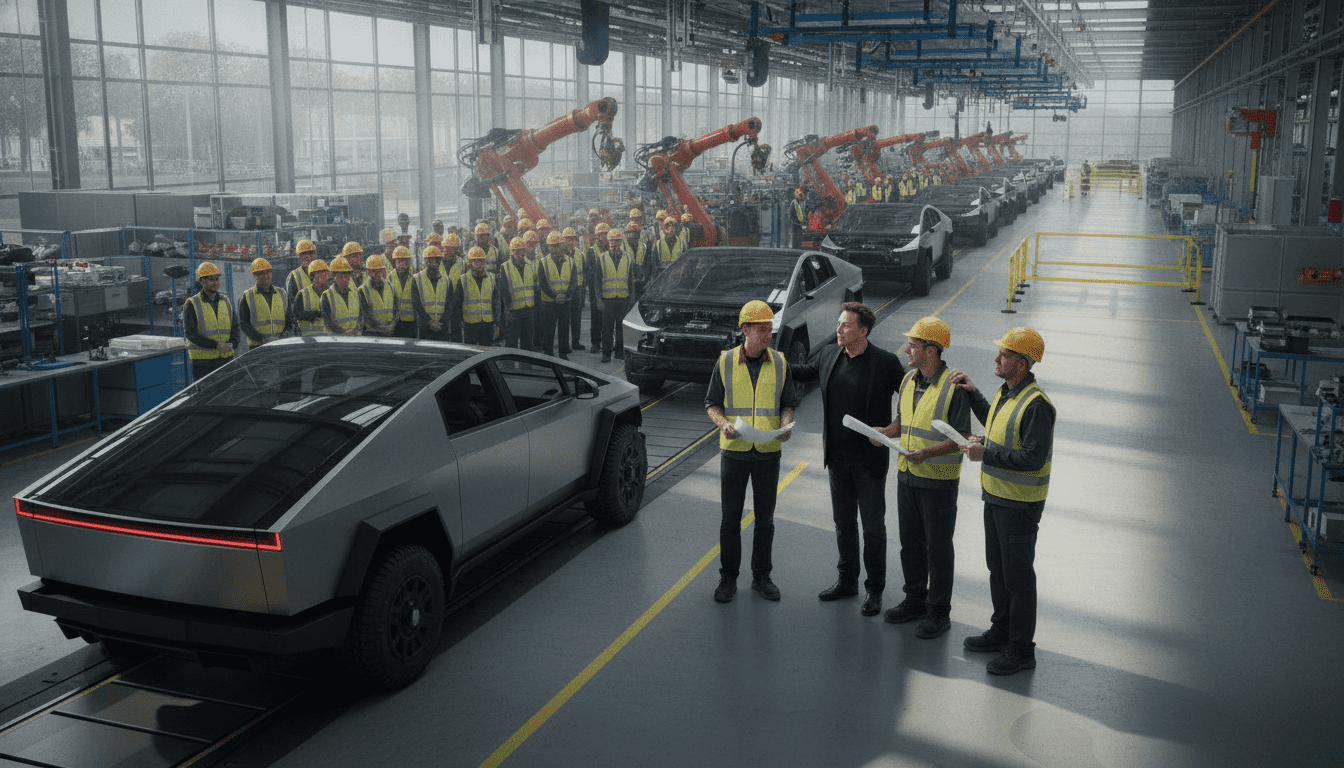
Tesla to raise output at Grünheide plant to 7,500 cars/week, creating 3,500 jobs
Tesla to raise output at its Grünheide plant to 7,500 cars/week in Oct 2026, adding 1,000 jobs; battery-cell investment lifts total new roles to 3,500.
Tesla announced plans to boost production at its Grünheide plant near Berlin to 7,500 vehicles per week from October 2026, increasing capacity by roughly 20 percent and creating about 1,000 additional jobs. The move follows earlier announcements this spring that expanded Model Y output and outlined a major investment in local battery-cell manufacturing. Taken together, the company says the expanded assembly and cell production will yield some 3,500 new short- and medium-term positions at the site.
Tesla confirms October production ramp-up at Grünheide plant
Tesla said the next stage of capacity growth at its German factory will begin in October 2026, targeting weekly output of 7,500 cars. The company characterized the increase as a roughly 20 percent rise over current levels and tied the expansion directly to ongoing demand for its Model Y crossover.
The planned ramp is aimed at accelerating deliveries across Europe and supporting the automaker’s broader manufacturing footprint on the continent. Tesla declined to specify the exact production mix or how the extra output would be phased across weeks and lines.
April expansion of Model Y output already added capacity
In April 2026 Tesla announced an earlier increase for Model Y production at Grünheide, raising the line to about 6,200 cars per week, also a 20 percent increase at the time. That April adjustment included a workforce expansion plan to add roughly 1,000 new roles tied to the Model Y line.
Company statements have framed the April and October measures as consecutive steps in a staged capacity build-out rather than isolated changes. Executives have said the phased approach helps align staffing, supply chains and quality control as volumes rise.
Battery cell investment and additional 1,500 roles
Separately, Tesla has committed about $250 million to expand battery-cell manufacturing at the Grünheide campus, an investment announced in May 2026. Tesla estimates the cell-factory expansion will create approximately 1,500 jobs focused on cell production, assembly and supporting operations.
The battery-cell investment is intended to localize a greater share of the electric-vehicle supply chain and reduce dependence on external suppliers. Company materials indicate the cells will be used to support Model Y production and potentially other models assembled at the site.
Grünheide site to add roughly 3,500 short- and mid-term jobs
Combining the October production ramp, the April Model Y expansion and the battery-cell investment, Tesla projects about 3,500 new positions at Grünheide in the short and medium term. The roles span manufacturing, engineering, logistics and facility services, according to the company’s announcements.
Local officials and regional business groups have highlighted the jobs figures as a significant economic boost for Brandenburg, while also noting challenges in sourcing skilled labor and housing for incoming workers. Tesla has said it will roll out targeted recruitment and training measures to fill many of the advertised roles.
Implications for European EV supply and logistics
Raising weekly output at Grünheide to 7,500 vehicles will affect supply flows to dealers and fleet customers across Europe, potentially shortening delivery windows for some buyers. Increased in-region battery production is also likely to reduce lead times for cells and lower transportation costs tied to importing components.
Analysts note that higher assembly volumes will increase pressure on component suppliers and logistics partners, especially for semiconductors, battery materials and stamping suppliers. Tesla has not detailed whether it will expand shift patterns or add additional production lines to reach the target output.
Timeline, hiring and next company steps
Tesla has set October 2026 as the start of the next production phase and says recruitment for many of the new positions is already underway. The company intends to stagger hiring to match production milestones and the commissioning schedule for the expanded battery-cell operations.
Officials at the plant have indicated that training programs and partnerships with local vocational schools will play a role in workforce development. Tesla also plans to provide more detailed operational updates as lines come online and testing is completed.
The announced increases at Grünheide mark a continued commitment by Tesla to scale European manufacturing capacity and to integrate more cell production close to assembly operations. As the October ramp approaches, the company and regional stakeholders will be judged on their ability to convert the stated investments into finished cars, stable employment and measurable supply-chain improvements.
