
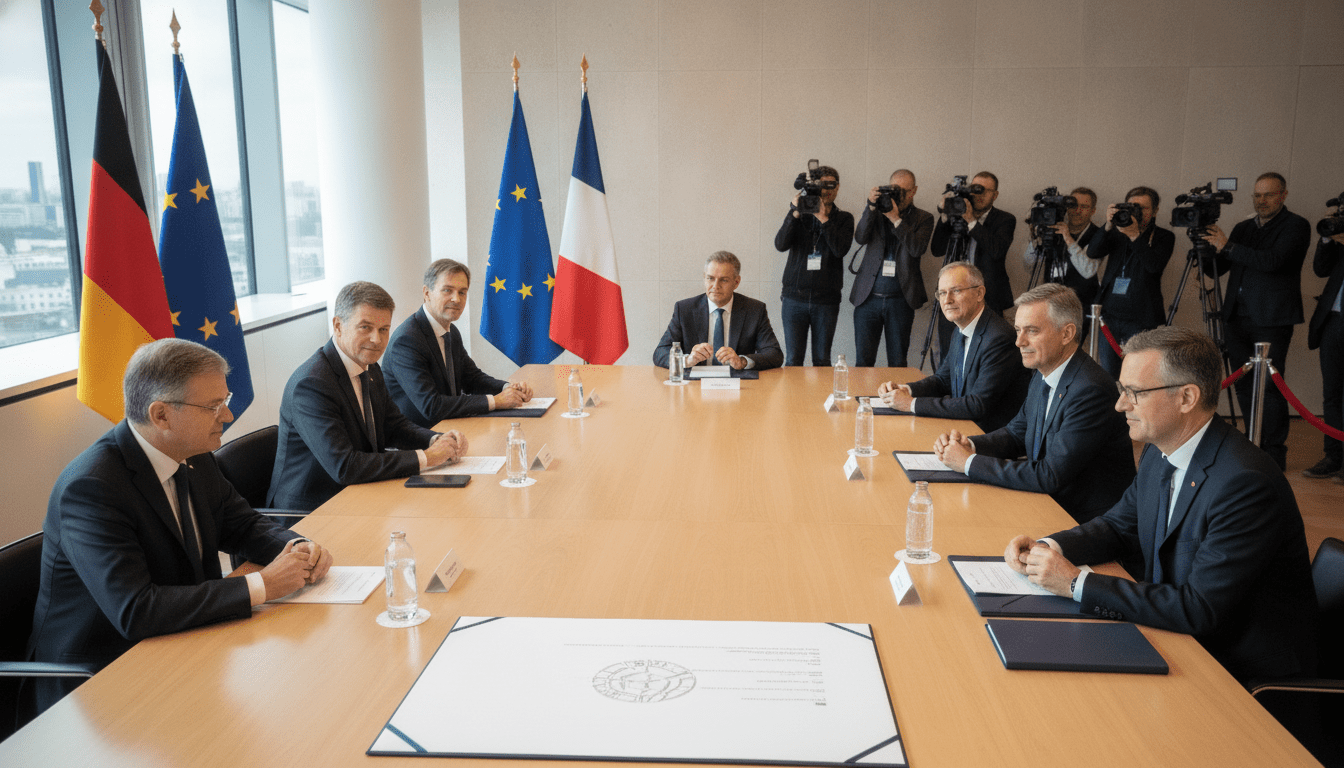
Germany to take 40% stake in KNDS to secure Leopard 2 production and defence sovereignty
Germany to take a 40% stake in KNDS, securing Leopard 2 production as Berlin prepares to invest up to €7bn ahead of an imminent IPO and a role in governance.
The German government and the French presidency announced a joint agreement for Berlin to seek a 40% equity stake in KNDS, the Franco‑German defence group, marking a move the states say will strengthen their shared defence sovereignty. Government spokesman Stefan Kornelius confirmed that the planned stake would put Germany on par with France in ownership and secure production of key armoured vehicles in Germany. The deal remains conditional on approval from the Bundestag budget committee ahead of the parliamentary summer recess.
Joint statement and government rationale
The joint communiqué issued by Berlin and Paris framed the planned state participation as “a decisive step to strengthen their common sovereignty” in defence matters. German officials have stressed that a state stake will preserve domestic industrial capacity and ensure long‑term influence over a company deemed strategic for national security. French and German leaders said their governance arrangements would protect security‑sensitive decisions while maintaining parity between the two states.
Parliamentary review and timing of the IPO
Officials say the agreement is subject to the Bundestag budget committee’s consent, with that body due to meet in the days before the summer break to consider the proposal. Insiders and reporting by international outlets indicate the government aims to secure approval quickly so a planned initial public offering can proceed before the French capital markets’ summer closure. Company and market timetables cited in reporting suggest an IPO window in late June or early July, with July 13 named as a practical cut‑off because of the approaching market holiday schedule in France.
Valuation and financial commitment
According to market reports, KNDS could be valued between €15 billion and €18 billion in the flotation, implying a gross cost to the German state of up to about €7 billion for a 40% stake. The planned transaction also reflects the intended exit by legacy German owner families, who currently hold roughly half of the group’s shares and are expected to sell as part of the IPO. France, which today holds about 50% through state interests, would reduce its direct stake to around 40% under the agreement with Berlin.
Governance protections and intervention rights
Berlin is seeking governance and oversight provisions that mirror those exercised by France, including nomination rights for supervisory board members and veto powers on certain key decisions. Reports indicate safeguards will be written into shareholder arrangements so that board members cannot be dismissed against the will of the German state, and that specific protections will apply to German business units, sites and intellectual property. Both governments have signalled the intention to maintain those rights at least until Germany’s stake is reduced following the floatation.
Industrial and strategic implications for the Bundeswehr
Officials and ministry papers cited by press outlets argue KNDS products, notably the Leopard 2 main battle tank, are central to the armoured capabilities of the Bundeswehr and therefore to Germany’s defence posture. Berlin’s intervention is being presented as an effort to guarantee supply chains, domestic production and the capacity to support long‑term modernisation programmes. The European Commission has reportedly cleared the prospective state participation, removing an important regulatory hurdle and enabling the governments to proceed with the timetable they have described.
The proposed intervention in KNDS represents a high‑stakes example of industrial policy intersecting with defence strategy, with immediate implications for shareholders, markets and defence procurement. If the Bundestag budget committee approves the participation as expected, the coming weeks will determine whether the IPO can meet the narrow market window identified by officials and observers. The outcome will shape German and Franco‑German influence over a company that supplies equipment considered critical to NATO‑aligned land forces and will set a precedent for future state involvement in strategic defence assets.
