
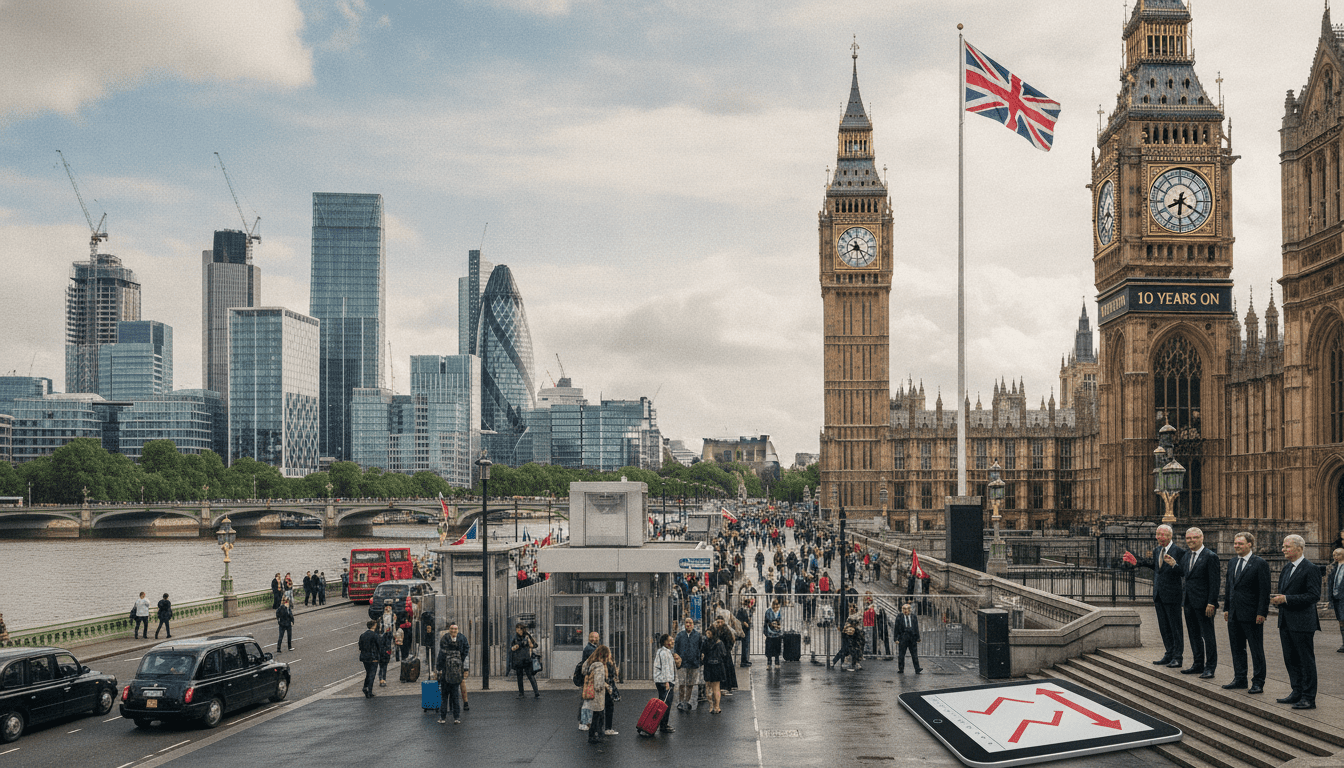
Brexit at Ten: Mixed Promises, Measured Gains and Lingering Costs
Ten years after the 2016 referendum, Brexit’s legacy is mixed: the UK’s economy is modestly larger but the promises of sovereignty, lower immigration and booming fisheries have only been partially fulfilled. The story of Brexit at ten shows modest GDP growth, weakened purchasing power, new trade frictions and persistent political debate.
Opening: Ten Years Since the Vote
The United Kingdom voted to leave the European Union on June 23, 2016, and June 23, 2026 marks a decade of Brexit’s consequences. Supporters had promised more control over borders, fewer EU rules and a resurgence in fishing and trade, while opponents warned of economic pain and disruption. Today those competing forecasts sit side by side: some pledges were met, others were not, and everyday impacts vary across regions and sectors.
Economic Growth and the GDP Picture
Measured by headline output, the UK economy is larger than it was a decade ago, with gross domestic product roughly 13 percent higher than in 2016. That expansion, however, has been slower than some forecasters expected and many analysts argue that the economy would have been stronger under continued EU membership. Investment patterns, business relocation decisions and productivity trends all reflect the complex interaction of Brexit-related changes with global economic forces.
Labour Market Shifts and Migration Trends
Employment has risen in several sectors since the referendum, yet the sources of that growth are disputed and unevenly distributed. While overall net immigration has fallen compared with pre-referendum levels, migrant labour has continued to play a significant role in filling vacancies and supporting expansion in health care, hospitality and other services. The government’s new immigration rules and tighter EU labour mobility have altered recruitment patterns and increased pressure on some employers to adapt staffing models.
Fisheries, Coastal Hopes and Limited Gains
Fisheries featured prominently in the Leave campaign as a symbol of regained sovereignty, but outcomes have been underwhelming for many coastal communities. New arrangements granted the UK greater legal control over its waters, yet access disputes, quota negotiations and market access obstacles have limited commercial gains. For many fishermen the administrative burden and costs of selling into European markets have offset the symbolic victory of regained jurisdiction.
Trade Deals, Customs and Rising Bureaucracy
Promises of a flood of new free-trade agreements have produced a handful of deals, but not the sweeping, rapid expansion into global markets some proponents envisaged. New customs checks and regulatory divergence have created additional paperwork and costs for exporters and importers, particularly for small and medium-sized firms. Businesses exporting to the EU confront ongoing friction at borders, while some sectors have shifted supply chains or relocated parts of operations to preserve market access.
Currency, Living Standards and Public Services
The pound’s depreciation after the referendum and at various points since has eroded household purchasing power, especially for imported goods and services. That decline in currency value has translated into higher costs for consumers and squeezed real incomes for many families. Public services, notably the health system, have faced funding pressures that critics link in part to slower tax receipts and fiscal constraints following the economic adjustments of Brexit.
Public Opinion, Political Fallout and the EU Question
Public attitudes toward Brexit have evolved and remain divided, with polls showing renewed interest among some voters in rejoining the EU while others stand by the original decision. Politically, Brexit reshaped party dynamics, influenced electoral strategies and altered Britain’s diplomatic posture in Europe and beyond. The decade since 2016 has underscored that the question of Britain’s place in Europe now influences domestic debates on growth, identity and governance.
Ten years on, Brexit’s record is neither the unalloyed triumph its backers promised nor the unmitigated disaster predicted by opponents; it is a complex mix of achieved aims, unintended consequences and ongoing trade-offs. Policymakers and businesses continue to navigate the practical implications of those choices as the country prepares for the next phase of political and economic adjustment.
