
U.S.-Iran Framework Agreement Eases Markets but Leaves Economic Risks Intact
Markets eased briefly after a U.S.-Iran framework agreement, lowering oil prices; economists warn repairs and supply measures are needed as Germany’s tankrabatt ends.
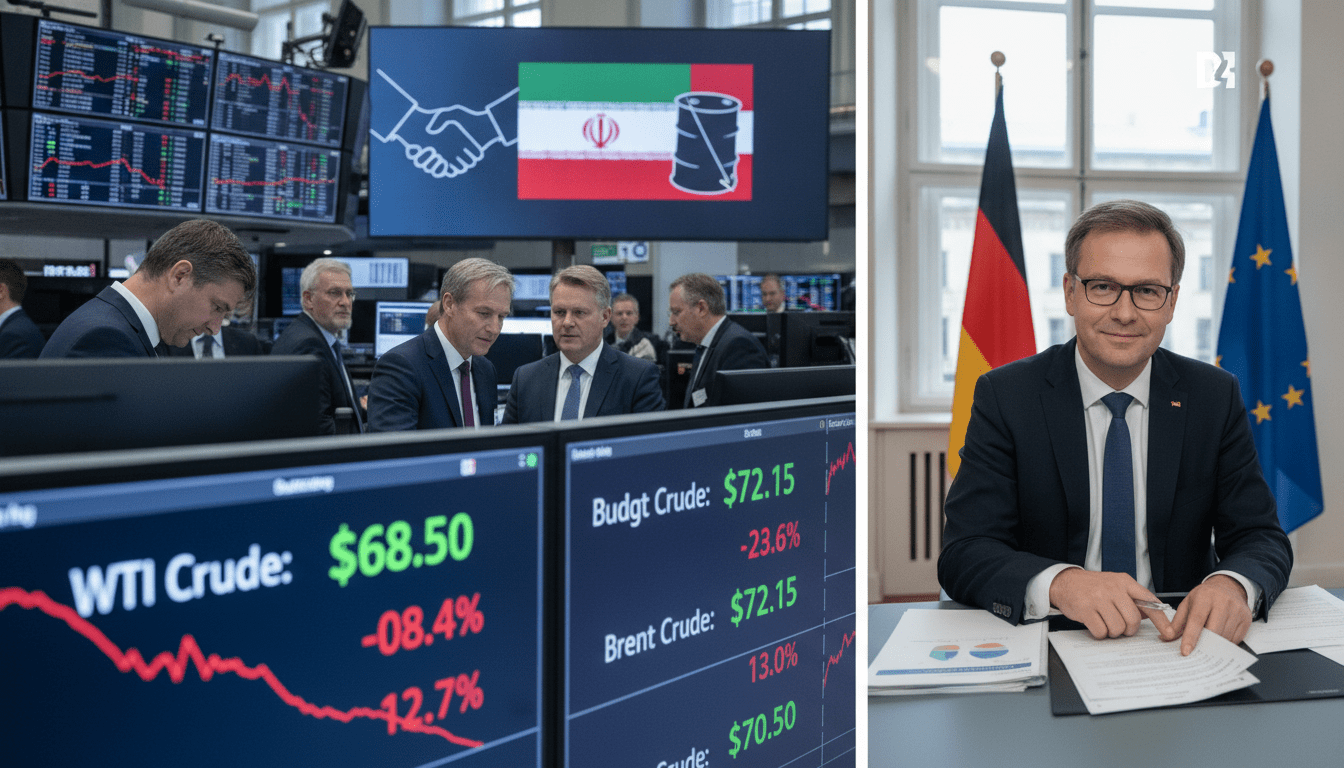
The tentative U.S.-Iran framework agreement sent a wave of relief through global markets, producing an immediate drop in oil and gas prices and a brief easing of energy-linked financial stress. While the agreement reduced near-term volatility, analysts and officials caution that the deal is fragile and that economic effects will play out only slowly. Investors welcomed the respite, but the broader economic consequences — from supply-chain interruptions to fiscal pressures — remain unresolved.
Agreement Remains Fragile
The framework agreement between the United States and Iran is being treated as a provisional step rather than a definitive peace settlement, according to diplomats and regional experts. Observers note that the diplomatic compromise could unravel if either side backtracks or if spoilers on the ground inflame tensions.
Uncertainty about implementation timelines and verification mechanisms keeps market participants wary, and political risk premiums are unlikely to vanish quickly. That fragility means any long-term economic relief hinges on sustained de-escalation and concrete steps to restore energy-sector stability.
Financial Markets and Energy Prices
Financial markets reacted swiftly to the prospect of reduced hostilities, with oil and gas prices easing as traders priced in a lower risk premium for Gulf supply disruptions. The fall in energy costs provided immediate relief to equities and bond markets that had been buffeted by conflict-driven volatility.
However, the transmission from headline price drops to consumer prices is slow and uneven, and central banks remain attentive to the risk that energy-driven inflation could persist. Market calm is welcome, but it does not eliminate the potential for renewed price shocks if political developments reverse.
Economic Strain on Consumers and Fertilizer Supplies
Higher energy prices have imposed a real burden on households and businesses, especially in energy-importing regions of Asia where fuel costs are a significant input to production and transport. Consumers in many economies have faced rising bills, while companies have grappled with higher operating costs and disrupted logistics.
Beyond fuel, the conflict raised concerns about fertilizer supplies because natural gas is a key feedstock for fertilizer production and disruptions can lead to shortages and higher food prices. Economists warn that the poorest populations are the most exposed to these second-round effects, which can drive food insecurity and social strain.
Repairing Gulf Energy Infrastructure Will Take Time
Even if the U.S.-Iran framework agreement holds, industry officials stress that physical repairs to damaged oil and gas infrastructure in the Gulf will require months of coordinated effort. Restoring pipelines, terminals and offshore facilities is complex and depends on security guarantees and technical access that are not guaranteed overnight.
The lag in restoring full export capacity means that energy markets will remain sensitive to residual outages and logistical bottlenecks. Policymakers who expect an immediate normalization of supply risks are likely to be disappointed; the economic recovery from an energy shock tends to be gradual rather than instantaneous.
German Fiscal Politics and the Tankrabatt
In Germany, the timing of lower energy prices intersects with a domestic policy debate over the so-called tankrabatt, the temporary fuel discount that transfers the cost of cheaper petrol to taxpayers. With the rebate scheduled to end soon, falling oil prices reduce pressure for further fiscal giveaways to consumers and could ease strain on public finances.
Lower energy costs may give lawmakers more room to focus on longer-term supply-side reforms rather than short-term subsidies, a shift that proponents argue would better address structural vulnerabilities. Fiscal prudence in a period of declining prices would also help contain upward pressure on long-term interest rates linked to temporary spending.
Lower oil prices provide immediate respite, but they do not substitute for a comprehensive strategy that strengthens energy supply, secures fertilizer chains and shields vulnerable households from residual price volatility. Policymakers face trade-offs between short-term relief measures and investments that improve resilience.
The diplomatic development is an important first step, yet markets and governments must prepare for a drawn-out economic adjustment even under a sustained ceasefire. Repairing infrastructure, stabilizing supply chains and reorienting fiscal policy toward durable solutions will determine whether the temporary market relief translates into lasting economic recovery.
