
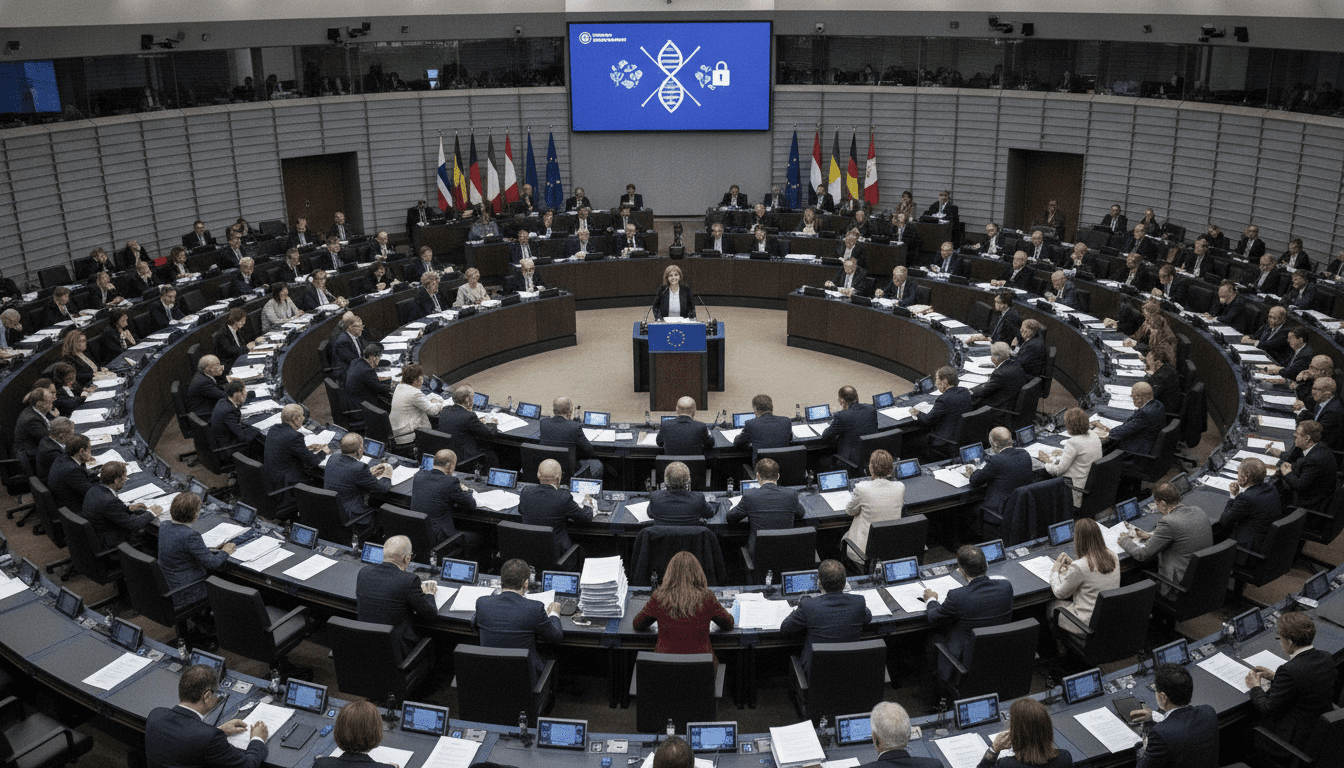
EU Poised to Approve New Genomic Techniques Rules After Contentious Debate
EU set to deregulate new genomic techniques (NGT). Environment Committee votes June 15 and plenary June 17 — pivotal for farmers, seed firms and the environment.
The European Union moved closer to a major overhaul of its gene-editing framework as lawmakers prepare votes on a package that would change how new genomic techniques (NGT) are regulated across member states. The Environment Committee in the European Parliament is scheduled to vote on June 15, with the full Parliament in Strasbourg expected to decide on June 17. If the measures pass, breeders, farmers and consumers across Europe could face a markedly different legal landscape for crops derived from CRISPR and similar tools.
Environment Committee to Vote on June 15
The Environment Committee will be the first to cast a decisive vote on the trilogue agreement reached by the European Commission, Parliament and Council. That committee vote marks a critical parliamentary checkpoint that could determine whether the draft becomes law when the plenary meets two days later.
Members will decide on a compromise text negotiated during months of inter-institutional talks, and their approval would pave the way for a final plenary decision in Strasbourg on June 17. The timetable leaves little room for further amendments if the committee endorses the compromise.
Plenary Decision Scheduled for June 17 in Strasbourg
If the full European Parliament backs the committee’s recommendation on June 17, the package would move to formal adoption and implementation by member states. Lawmakers say the schedule reflects urgency after long-running disputes over gene-editing policy in the EU.
A positive plenary vote would translate political agreement into legal change, obliging national regulators and farmers to adapt to the new classification and oversight regime. Opponents warn that the rapid timetable concentrates high-stakes decisions into a short window of legislative opportunity.
How the Draft Rules Redefine NGT Categories
The draft establishes a numerical threshold to distinguish treatments that remain subject to existing GMO law from those that would be treated like conventional breeding. Under the compromise, organisms bearing 20 or more discrete DNA alterations would be regulated as genetically modified organisms, while those with fewer changes would be exempt from the full GMO regime.
That exemption — commonly referred to in the package as NGT1 — would remove comprehensive risk assessments, long-term field monitoring obligations and routine labeling for food and feed derived from those plants. Seed producers would only be required to note on provenance documents that a particular breeding technique was used.
Industry and Scientific Advocates Back Deregulation
Seed companies, plant breeders and many research organizations have championed the change, arguing that new genomic techniques can accelerate the development of crops resilient to drought, pests and new diseases. Proponents point to CRISPR’s efficiency since its discovery in 2012 and say lighter regulation will spur innovation and make Europe more competitive.
Supporters further maintain that many NGT edits are indistinguishable from mutations that arise naturally or through conventional breeding, and that applying full GMO rules imposes disproportionate costs. They contend streamlined approval pathways will help deliver varieties with improved nutrition or lower allergenicity to farmers and consumers faster.
Environmental and Consumer Groups Sound the Alarm
Environmentalists, farmers’ representatives and consumer organizations say the proposed deregulatory approach underestimates potential risks to ecosystems and human health. Critics cite studies and assessments — including work by national conservation authorities and independent think tanks — arguing that gene editing can produce unintended genomic effects and may bypass cellular repair mechanisms.
Concerns focus on the ecological consequences if edited traits spread into wild relatives or non-target species. Environmental advocates are particularly wary of including fast-spreading plants such as reeds and poplars in relaxed oversight, warning that altered traits could reduce biodiversity or disrupt specialized relationships between pollinators and native flora.
Practical Implications for Agriculture and Markets
If the rules are adopted, seed firms and plant breeders could bring a broader range of edited varieties to market with shorter authorization lead times and fewer regulatory hurdles. Farmers may gain access to crops engineered for climate resilience or reduced inputs, but the absence of mandatory labeling for many edited products could complicate consumer choice and traceability.
The new regime would also shift the burden of monitoring from formal regulatory programs to targeted post-market surveillance in select cases, according to the compromise text. That change raises practical questions about how member states will track and manage the release of edited organisms at scale across diverse landscapes.
The coming votes in Strasbourg represent a decisive moment for EU policy on biotechnology and food production. Lawmakers will weigh promises of innovation and adaptation against calls for caution and rigorous oversight as they determine whether to recalibrate Europe’s approach to gene-edited crops.
