
Bundestag Advances Ecological Packaging Rules, Ties Licence Fees to Recyclability
Bundestag empowers Germany’s Environment Ministry to set ecological packaging rules, tying licence fees to recyclability and promoting use of recyclates.
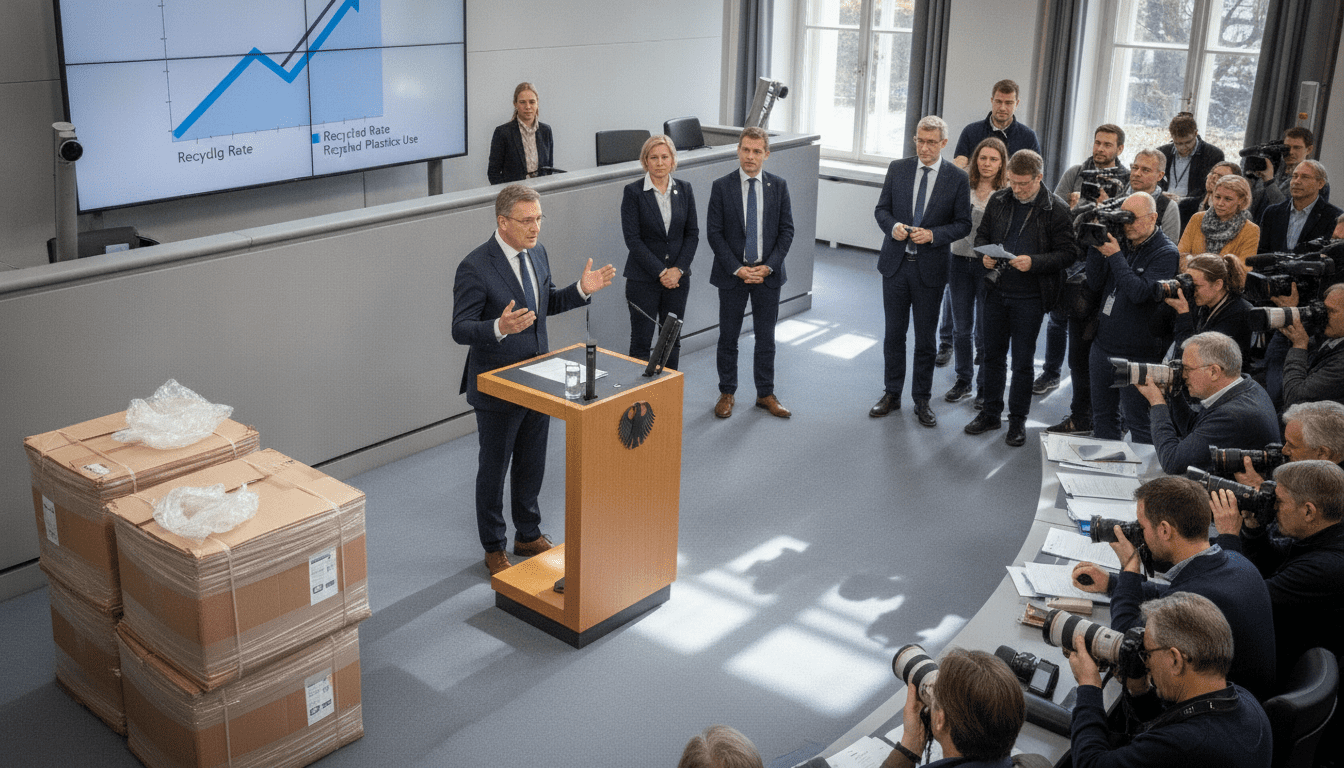
The Bundestag late Thursday approved a law empowering the Federal Environment Ministry to issue ordinances that will steer ecological packaging policy, including stricter licence-fee criteria for dual systems. The change is part of Germany’s implementation of the EU Packaging Regulation and is intended to incentivize more recycling-friendly packaging designs and greater use of recycled materials.
Parliament grants regulatory authority to the Environment Ministry
The vote, carried by the governing CDU/CSU and SPD groups, authorizes the ministry to define how licence fees for the collection and recovery of packaging should be calculated from next year. Parliament framed the move as necessary to align national practice with the EU regulation and to create clear market signals for producers and waste-management operators.
Proponents argued the measure fills a regulatory gap by giving the ministry concrete powers to reward environmentally preferable packaging through financial incentives. The legal empowerment is embedded in the broader Packaging Implementation Act that Bundestag adopted to meet EU deadlines and obligations.
Licence fees to be tied to recyclability and recyclate use
Under the new framework, the dual systems that manage household packaging collection will see licence fees reoriented toward ecological performance criteria. Fees will be structured to favor packaging that is easier to recycle and that contains higher shares of recyclates, the materials recovered from previous waste streams.
Lawmakers and industry stakeholders expect the ordinance-writing process to specify technical criteria and measurement methods, including potential preferences for recyclates produced in the EU. The ministry’s forthcoming rules will determine how strongly financial incentives are weighted and how they will be enforced across competing collection schemes.
Industry and recycling sector welcome clearer market signals
Representatives of the recycling and waste sector praised the decision as a step toward creating dependable demand for secondary raw materials. Jörg Lacher, managing director of the Bundesverband Sekundärrohstoffe und Entsorgung (bvse), said reliable markets for recyclates are essential to unlock the investments recycling firms need to scale up capacity.
Supporters argue that well-designed fee incentives can reduce dependence on imported virgin materials, stimulate domestic processing, and improve the economics of recycling technology. Government negotiators from the Union noted the move was part of delivering coalition promises to strengthen circular-economy measures.
AfD warns of added costs for businesses and consumers
The AfD parliamentary group criticized the reform as an additional regulatory burden for businesses that would ultimately be passed on to consumers. The federal government estimates additional annual costs for the economy at roughly €2.5 million, plus one-off transition expenses of about €4.5 million, figures that the AfD cited in its objections.
Opponents said the authorization to shift cost and steering questions into ordinances merely postpones hard choices and increases uncertainty for producers, retailers and medium-sized firms. They argued the reform raises compliance complexity without delivering immediate relief to companies facing cost pressures.
Greens press for stronger reuse and waste-avoidance measures
Green MPs and environmental organizations argued the package does not go far enough on waste avoidance and expanding reuse systems. Jan-Niclas Gesenhues, the Greens’ environment spokesman, criticized the removal of a planned federal body to coordinate packaging reduction and said the law misses an opportunity to roll out a nationwide reuse infrastructure.
The Greens submitted a parliamentary motion proposing stronger measures, including a potential levy on disposable take-away packaging, but the motion failed to gather majority support. Environmental advocates continue to press for a dual approach that combines recycling incentives with systemic investments in reusable packaging models.
Next steps, EU deadlines and implementation timeline
Germany must adapt its national rules to the EU Packaging Regulation by the August 12 deadline, and the newly passed law lays the groundwork for that transposition. The Environment Ministry is now tasked with drafting the specific ordinances that will operationalize ecological licence fees and set standards for recyclate use.
Officials also signalled an intention to pursue EU-level approvals for expanded use of recyclates in sensitive applications, such as food contact materials, to broaden the market for secondary materials. How quickly the ministry moves and how detailed its criteria are will determine whether the policy delivers the investment certainty recycling firms and producers say they need.
The Bundestag decision marks a shift toward market-based steering of packaging sustainability, but its effectiveness will depend on the technical design of the ordinances, enforcement clarity and parallel measures to promote reuse and waste prevention.
