
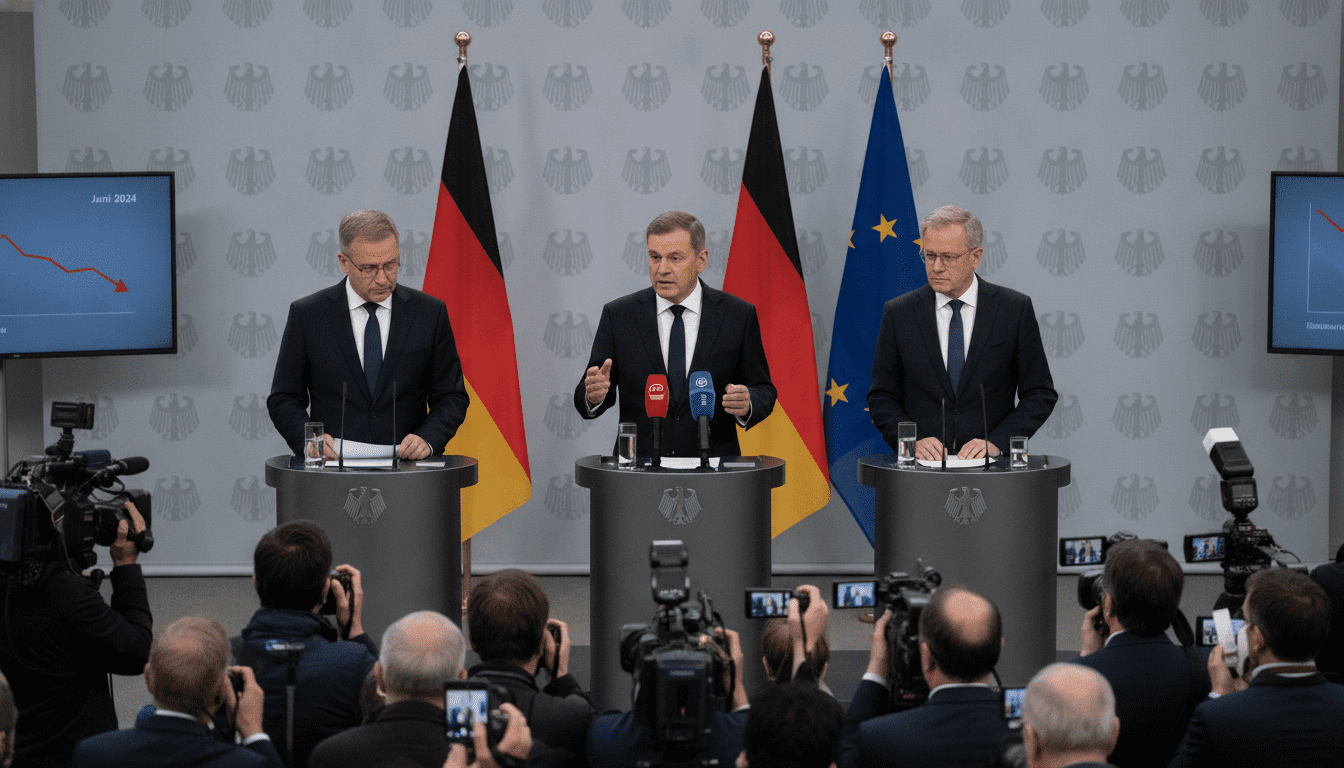
German coalition economic reforms stall after meeting with social partners
Coalition talks with unions and employers end without concrete German coalition economic reforms; leaders face rising job losses, soaring social costs and urgency to act.
The federal coalition’s recent meeting with unions and employer groups concluded without concrete German coalition economic reforms, leaving policymakers to confront mounting industrial job losses and ballooning social contributions on their own. Chancellor’s partners and business representatives exchanged views but produced no legislative roadmap, and officials acknowledged that responsibility for decisive change rests with the Union and SPD. With more than 10,000 industrial jobs reportedly disappearing each month and growing strain on social insurance funds, the window for carefully designed reforms is narrowing.
Coalition meeting produces no immediate reform package
Wednesday’s roundtable was presented as a forum to reconcile employer and union positions, but it yielded no immediate legislative measures to stimulate growth or curb rising costs. Participants described the talks as constructive in tone, yet coalition leaders declined to endorse sweeping or hasty initiatives, emphasizing the need for measured, targeted policy work. The absence of concrete outcomes drew attention to the gap between consultation and political accountability at the heart of the governing coalition.
Industrial job losses and business exits intensify pressure
Recent trends show persistent losses in manufacturing employment and a rising number of business failures across retail and hospitality, putting growth and regional prosperity at risk. Industry observers note that structural cost pressures and international competition are eroding viable business models, prompting plant closures and layoffs that erode the tax base. The pace of job destruction—estimated at over 10,000 industrial positions per month—has sharpened the urgency behind calls for reforms to improve competitiveness.
Rising social contributions push public insurance toward a tipping point
Social insurance contributions are climbing to new highs, and analysts warn that sustained increases in unemployment could soon necessitate higher payroll levies for the unemployment insurance fund. The fiscal stress is compounded by higher benefit payouts as more workers fall out of employment, a dynamic that threatens to feed back into labor costs for employers. Policymakers are now confronted with decisions that will affect both employers’ competitiveness and households’ disposable incomes.
Coalition must assume political responsibility for structural choices
Political accountability lies squarely with the Union and SPD as they decide which statutory frameworks to adapt in order to restore growth momentum and retain jobs. While cooperation with social partners remains politically valuable, ministers cannot defer core policy choices and expect to avoid electoral scrutiny. The coalition faces a practical test: converting broad consultations into legislated reforms that withstand parliamentary debate and implementation challenges.
Avoiding rushed fixes while delivering targeted measures
Officials warned against repeating the missteps of previous, hastily designed relief measures that delivered little long-term benefit and strained public finances. Experts urged that any new proposals be narrowly targeted to strengthen investment, reduce unnecessary cost burdens on businesses, and support retraining and mobility for displaced workers. The coalition’s challenge is to balance speed with technical rigor, ensuring that measures are evidence-based and aligned with macroeconomic goals.
Political timing and electoral accountability loom large
Coalition leaders will carry the consequences of their choices into the next election cycle, and voters are likely to assess results on the basis of employment trends and cost-of-living pressures. Parties within government must therefore prepare to defend specific policy packages rather than the absence of action or reliance on external actors for solutions. The strategic calculations will determine whether reforms are implemented before economic deterioration deepens or deferred until political risk becomes acute.
The coalition’s next steps will be watched closely by business leaders, trade unions and households across the country, all of whom seek clarity on how Germany will restore competitiveness and steady public finances. The government can still shape a reform path that eases the burden on companies while protecting workers, but it will require clear political choices, timely legislation and measures tailored to the sectors and regions most affected.
