
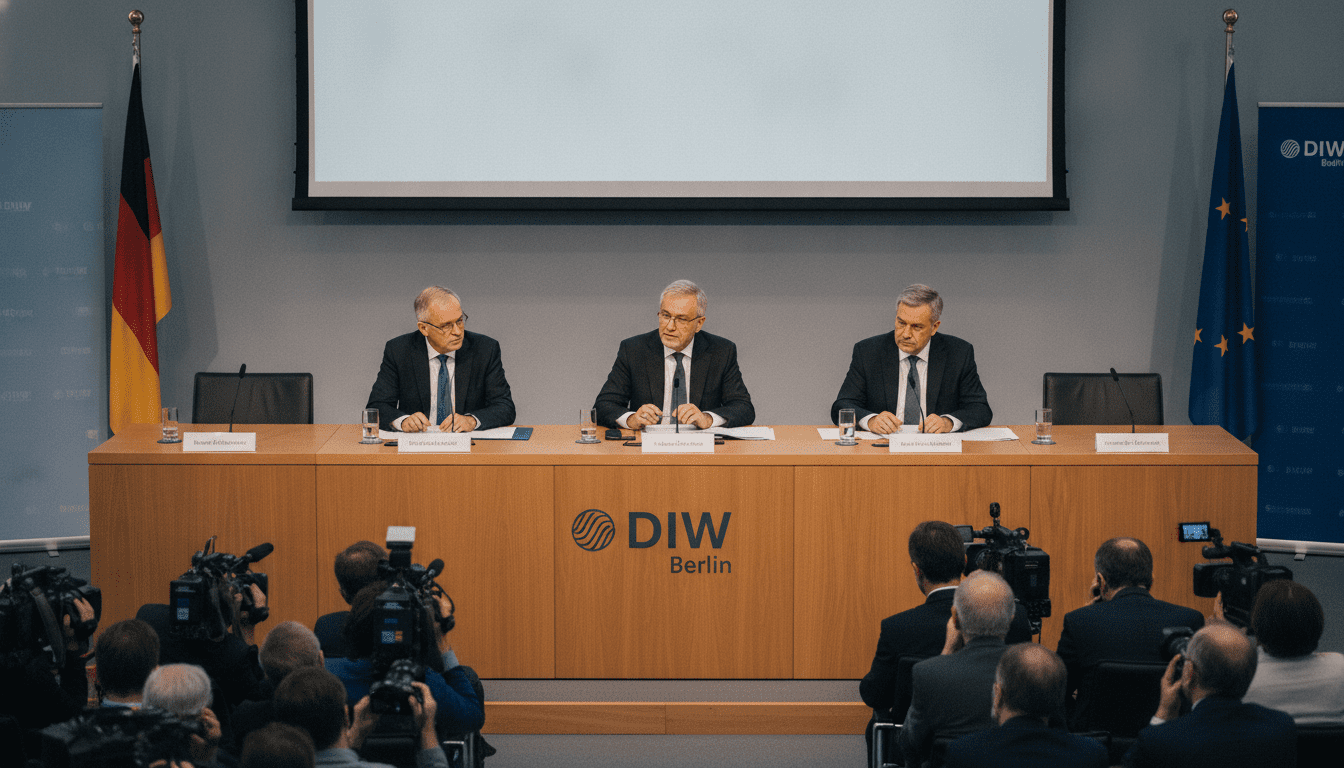
DIW Downgrades Forecast as German Economy Falls into Recession
DIW trims 2026 outlook and declares the German economy in recession; policymakers must boost public investment, increase fiscal support and structural reforms.
The German Institute for Economic Research (DIW Berlin) has sharply reduced its growth forecast for 2026 and now judges that the German economy is in recession, citing weaker domestic demand and persistent external headwinds. The institute said the downturn is deeper than previously expected and that a sustained recovery is unlikely without a significant expansion of state-led investment. DIW economists highlighted that current private-sector weakness and subdued industrial output have combined to push headline growth into negative territory.
DIW Cuts and the New Growth Numbers
The institute revised its growth projections downward, shifting expectations for 2026 toward contraction rather than modest expansion. DIW analysts pointed to falling business investment and weaker consumer spending as central drivers of the downgrade. The updated figures show a clear deterioration compared with forecasts issued earlier in the year, reflecting mounting risks from global demand and energy-related cost pressures.
Economic Diagnosis: Why DIW Calls It a Recession
DIW’s assessment rests on consecutive quarters of stagnation and falling production in key sectors, which meet common technical definitions of recession. The research institute emphasised that manufacturing, long a backbone of the German economy, has suffered from weaker export demand and inventory adjustments. In addition, consumer confidence has not recovered, limiting the scope for a domestic-led rebound.
Public Investment Identified as the Main Recovery Lever
The institute sees public investment as the primary mechanism to stabilize growth and revive demand, arguing that targeted state spending can offset private-sector retrenchment. DIW economists recommended accelerating infrastructure projects, digital transformation programs and climate-related investments to generate short-term demand and long-term productivity gains. They warned, however, that the timing and composition of state investments will be decisive for effectiveness.
Labor Market and Sectoral Consequences
While unemployment has not yet spiked dramatically, DIW cautioned that continued contraction could translate into job losses, especially in export-dependent and capital goods industries. Sectors such as automotive manufacturing and machinery — which account for substantial value added — are particularly exposed to a prolonged downturn. The institute noted that services linked to manufacturing activity are already showing signs of slowing, raising concerns about spillover effects.
Fiscal and Policy Options Under Debate
DIW outlined a range of policy responses, stressing that fiscal support must be carefully calibrated to avoid long-term imbalances while providing timely relief. Short-term measures could include front-loaded public investment and temporary support for firms facing acute energy or demand shocks. At the same time, the institute urged structural reforms to boost competitiveness and to ensure that investment spending translates into sustainable growth.
Risks and Downside Scenarios
The research institute flagged several downside risks that could deepen the recession, including a sharper-than-expected slowdown in global demand, renewed supply-chain disruptions, and energy price volatility. DIW warned that delayed policy action or misdirected spending would likely prolong the slump and increase the cost of recovery. Conversely, a credible and swift package of investment and reform measures could shorten the downturn and limit scarring.
Germany’s export orientation and industrial structure mean the country is particularly vulnerable to external shocks, and DIW’s downgrade underscores how quickly weak demand abroad can feed back into domestic growth. The institute’s prognosis has amplified calls within political circles for clearer investment strategies and faster project implementation to ensure that public funds have immediate stimulative effect.
The DIW report places fresh pressure on policymakers to strike a balance between short-term stimulus and longer-term fiscal responsibility, while business leaders and unions are likely to press for measures that protect jobs and maintain industrial capacity. The coming weeks will be critical as ministries and budget authorities consider how to respond to DIW’s assessment and whether to accelerate planned capital spending to arrest the slide.
