
Hessian Budget Committee summons minister over DFB tax office change
Hessian Budget Committee summons Finance Minister on DFB tax office change; FDP and Greens submit 45 urgent questions demanding transparency and a full reply.
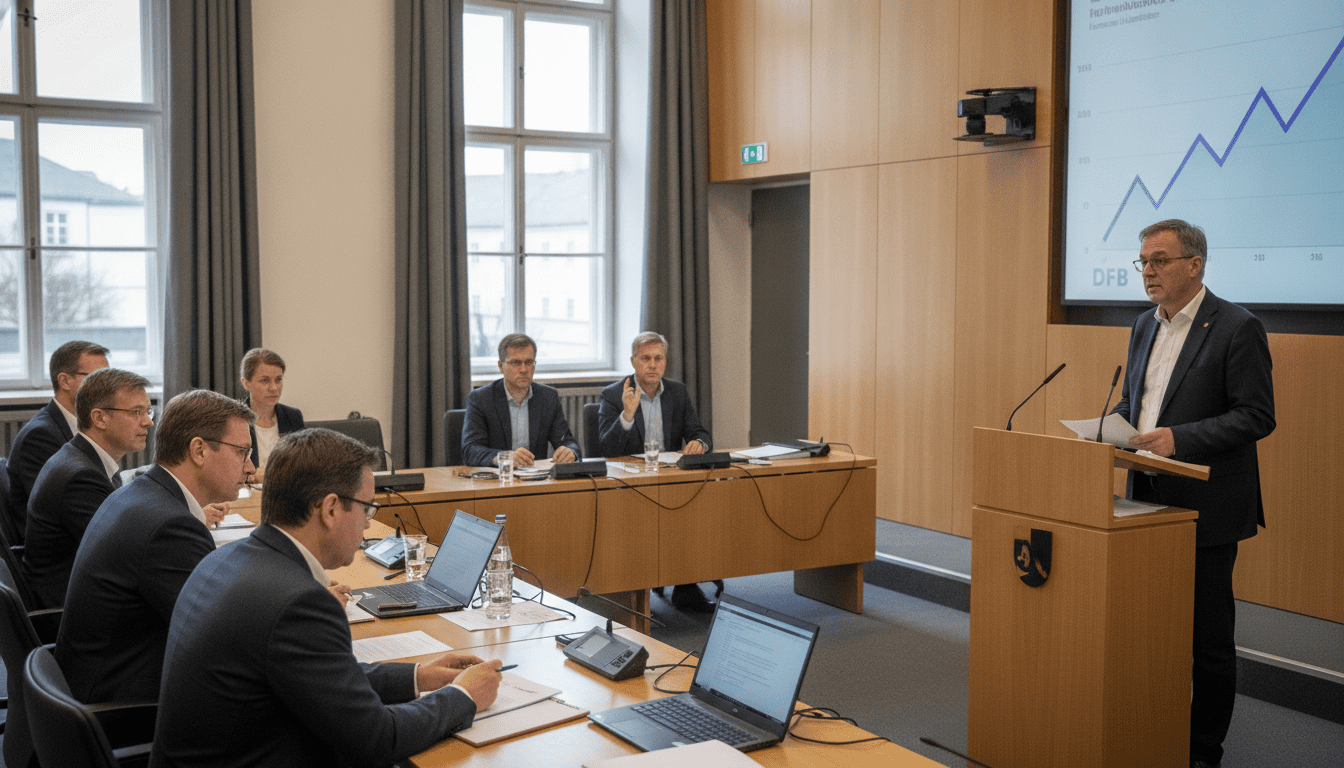
The Hessian state parliament’s Budget Committee will hold a special midday session to press for answers about the DFB tax office change, after opposition MPs filed urgent motions seeking clarity. The keyword DFB tax office change frames a line of questioning that FDP and Green lawmakers say raises unresolved legal and administrative issues. Finance Minister Alexander Lorz (CDU) has been asked to provide a formal response to a total of 45 written questions submitted by the two parties.
Committee meets in room 204 M during lunch break
The Budget Committee agreed to convene an extraordinary meeting in meeting room 204 M when the plenary recesses for lunch, underscoring the procedural urgency of the matter. Lawmakers arranged the timing to allow committee members to consider the motions and receive the minister’s statement without delay. The unusual scheduling reflects the heightened political sensitivity surrounding the DFB tax office change and the demand for immediate clarification.
FDP and Greens lodge 45 detailed questions
The opposition groups from the FDP and the Greens jointly submitted parliamentary urgencies that enumerate 45 distinct items for the minister to address. Those motions seek information on the timing, legal basis and administrative steps behind the tax authority switch, and they request documentary evidence and official correspondence where applicable. The breadth of the questions signals an intent to map both procedural facts and potential fiscal consequences tied to the DFB’s administrative choices.
Finance Minister Alexander Lorz to respond under scrutiny
Alexander Lorz, the Hessian Finance Minister and a member of the CDU, has been tasked with answering the motions in the special session and supplying the committee with the requested details. Committee members will evaluate whether the responses satisfy their requests or whether follow-up measures such as supplementary questions, additional hearings or referrals to oversight bodies are warranted. The minister’s reply will be scrutinized for precision on dates, decisions, and any communications involving tax authorities.
Areas of inquiry outlined by lawmakers
Parliamentary requests focus on core elements commonly implicated in tax administration changes: the rationale for the move, the legal and fiscal consequences, the involvement of state tax offices, and whether formal approvals or notifications were properly handled. Lawmakers also seek clarity on internal governance, any changes to tax treatment or accounting practices, and whether the change produced tangible financial advantages. The motions aim to pin down facts rather than speculate, demanding records that would allow auditors or oversight committees to assess compliance.
Political and public implications of the inquiry
Opposition parties say the scrutiny is necessary to preserve transparency and public trust in sport and civic institutions that enjoy tax privileges or complex legal statuses. The DFB tax office change has become a focal point for broader debate about accountability where large organizations intersect with public finance. Parties on both sides will watch how the minister frames the explanations, with potential political fallout if answers are incomplete or raise new questions about procedure.
Possible next steps after today’s session
Depending on the minister’s responses, the committee could call for deeper investigation, request documents from tax authorities, or ask auditing offices to review financial records connected to the change. If answers are partial, lawmakers may press for an extended timetable for information delivery or schedule further hearings with tax officials and DFB representatives. The procedural options range from parliamentary follow-ups to formal oversight referrals, each carrying different implications for transparency and potential corrective measures.
The special session will be an early test of whether the Hessian Budget Committee’s urgent motions produce the clarity opposition lawmakers seek about the DFB tax office change and whether the state’s finance ministry can supply the documentation required to resolve outstanding questions.
