
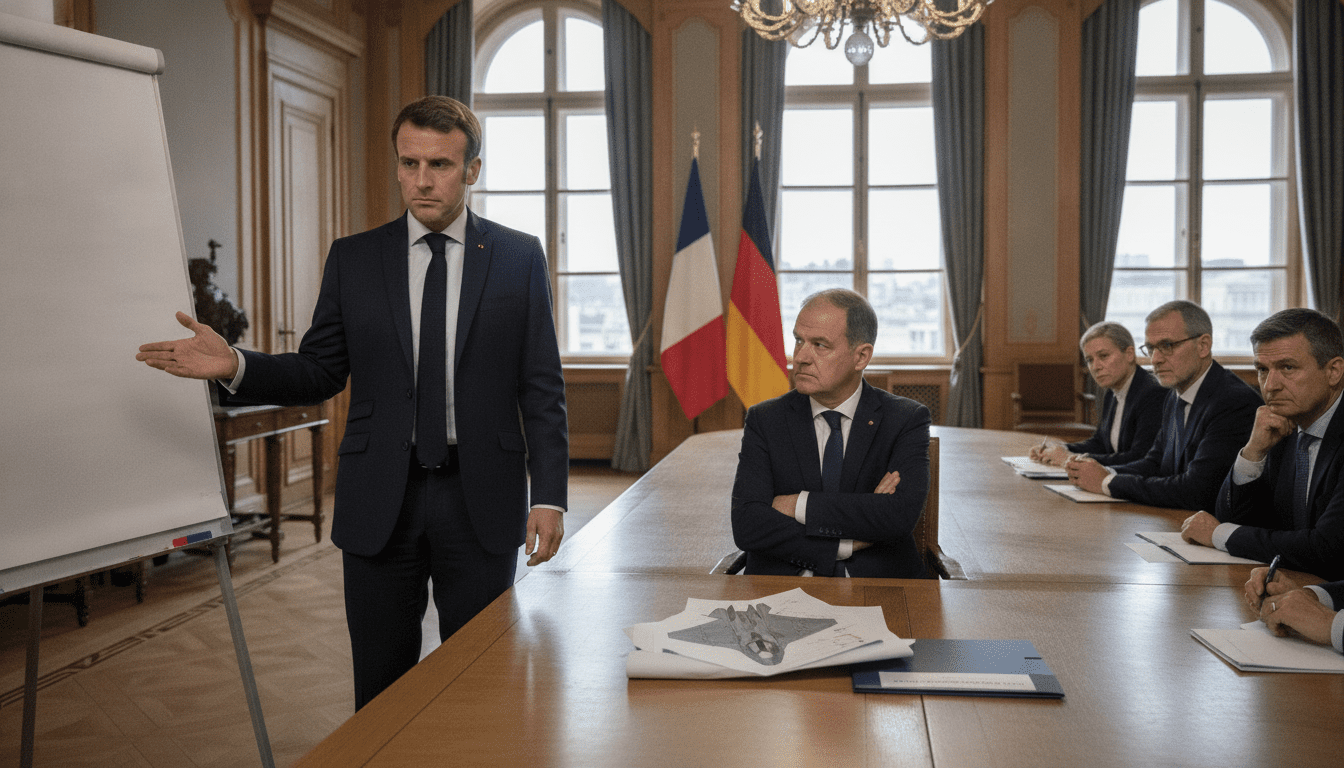
FCAS Collapse: End of the Franco-German Joint Fighter-Jet Project and Its Impact on European Defence
France and Germany have abandoned the FCAS joint fighter-jet project, raising questions about Franco-German ties and the future of European defence cooperation.
Emmanuel Macron’s 2017 Sorbonne speech promised a renewed, sovereign and democratic Europe, with the Future Combat Air System (FCAS) touted as a flagship of that vision. The planned Franco‑German effort to build a next-generation combat aircraft quickly became the continent’s largest defence collaboration and a symbol of deeper integration. With the programme now abandoned, policymakers and industry leaders face difficult choices about strategic autonomy and bilateral trust.
Macron’s 2017 vision and the birth of FCAS
In September 2017 President Emmanuel Macron laid out a blueprint for a more united and sovereign Europe, and FCAS was presented as a concrete step toward that goal. The project was conceived as a trilateral industrial endeavour to replace legacy fighters and bind French and German defence capabilities together. Its cancellation therefore represents not only a technical setback but also the erosion of a political symbol first promoted in Paris.
Why the FCAS project collapsed
Officials point to persistent disagreements over industrial leadership, workshare and programme governance as central causes of the breakdown. Technical complexity and cost escalation added pressure as partner priorities diverged, leaving negotiations increasingly brittle. Without a clear compromise on control and economic benefits, the collaboration became unsustainable.
Impact on the Franco‑German strategic partnership
FCAS’s demise strains a relationship long seen as the motor of European integration and defence cooperation. The project had been a major pillar of bilateral trust-building; its failure could reduce momentum on other joint initiatives. Both capitals must now repair diplomatic ground if they wish to restore confidence on defence planning and procurement.
Consequences for the European defence industry
For aerospace companies and their supply chains the cancellation creates uncertainty and potential capacity gaps in advanced combat technologies. Suppliers that oriented investment and workforce planning around FCAS face a scramble to reallocate projects or find new partners. The setback may also slow Europe’s ability to field interoperable, sovereign systems and cede market share to non‑European defence firms.
Political reactions in Paris and Berlin
Political leaders and opposition figures in both countries are expected to press executives and ministers for clear explanations and accountability. In Paris the end of FCAS will likely fuel debate over France’s strategy for maintaining technological leadership and export markets. In Berlin critics may question past negotiation choices and call for a more coherent European procurement framework.
Alternatives and the future of joint programmes
With FCAS off the table, governments can pursue a range of options: bilateral mini‑projects, multinational consortia with revised governance models, or a shift toward modular, interoperable systems built on common standards. Analysts say future success will depend on clearer governance, fairer industrial distribution and realistic budgeting from the outset. Rebuilding trust will also require transparent timelines and stronger political guarantees.
The collapse of FCAS removes a marquee symbol of Franco‑German defence cooperation and forces a practical reckoning over how Europe secures advanced military capabilities. Decisions made in the coming months about industrial compensation, programme salvage or new partnerships will determine whether this failure is an isolated setback or a turning point that reshapes continental defence collaboration.
