
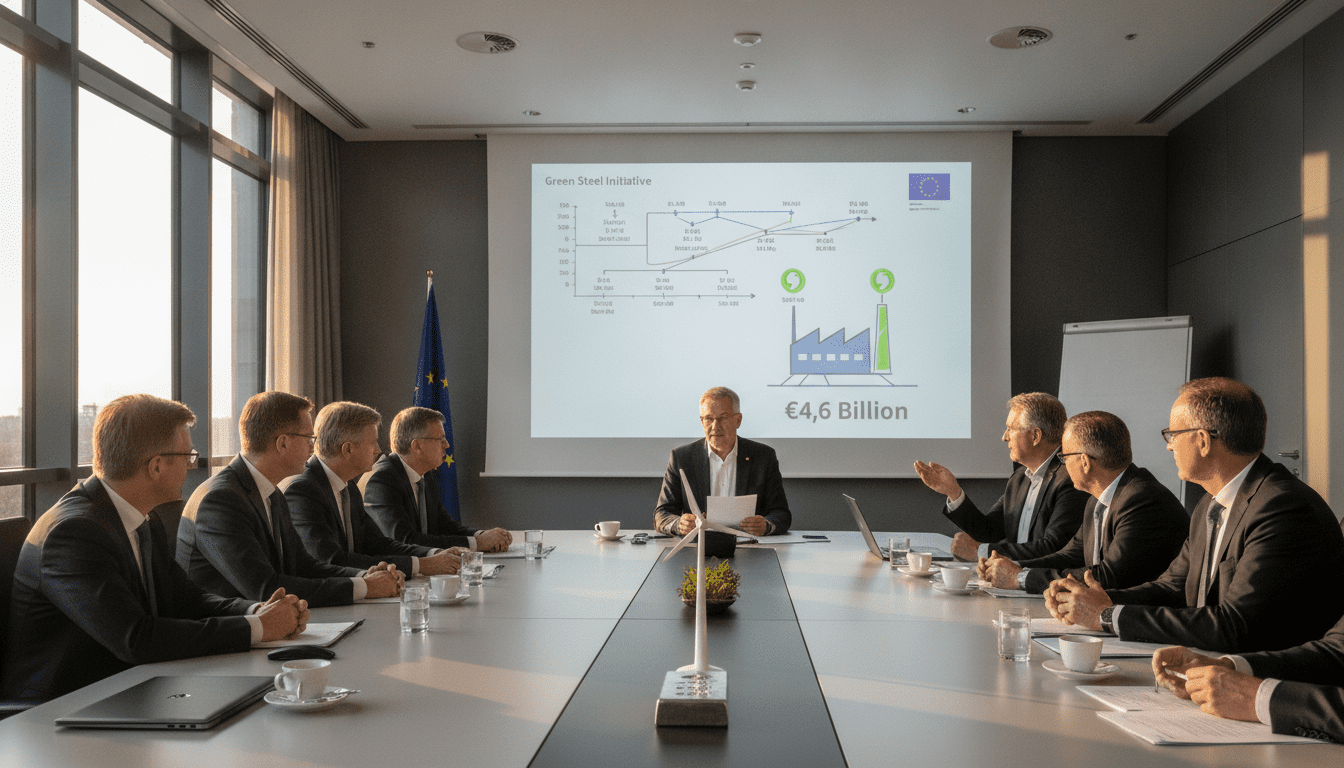
Saarland Steel Warns EU Emissions Trading Reform Could Derail €4.6bn Green Transition
Saarland steel warns EU emissions trading reform could derail a €4.6bn decarbonisation programme at Saarstahl and Dillinger Hütte ahead of the EU Commission’s mid-July 2026 decision.
Saarland’s €4.6bn green conversion hangs in the balance
Saarstahl and Dillinger Hütte have launched what company executives describe as the largest investment programme in Saarland’s history, a €4.6bn push to replace fossil-fuel blast furnaces with electric steelmaking. Company leaders say the plan, backed by roughly €2.6bn in state funding, was predicated on the existing rules of the EU emissions trading reform that foresee rising CO₂ prices. Executives argue the project is already two-thirds complete, with contracts signed and parts of the new installations built, and they have pledged to finish the conversion despite the current political debate.
The firms maintain that their calculations hinge on the predictable rise in the cost of emissions; if the EU emissions trading reform is diluted and free allocations are extended, the economics of green steel would no longer add up. Saarland executives warn that rolling back the agreed mechanism would transform a state-led industrial transition into a stranded-asset problem, requiring full political compensation if the rules change.
Industry fractures over proposed changes
Pressure to alter the EU emissions trading reform has come largely from Germany’s energy-intensive sectors and a group of EU member states including Italy and Poland, which argue that costs are too high and promised infrastructure such as cheap green electricity and hydrogen has lagged. The chemical sector has been particularly vocal, lobbying for continued free allocation of emissions permits to shield production costs. Industry voices, however, are divided: while Saarland companies have accelerated a full conversion, others like Salzgitter pursue a phased approach, Thyssenkrupp moves more cautiously, and ArcelorMittal has paused its green transformation in Germany.
Saarland’s chief executive says he has sympathy for the chemical industry’s difficulties but rejects pitting one domestic sector against another. He frames the debate in terms of resilience and domestic production, arguing that both steel and chemicals are strategic industries that reduce import dependence when produced at home.
Brussels timetable and political manoeuvring
Consultations between Brussels and industry stakeholders are ongoing, with the European Commission expected to announce its position on potential reforms in mid-July 2026, around July 15. Until then, lobby groups and national capitals are intensifying pressure to shape the outcome. Reports indicate the German chancellor’s office is considering options that could include a carve-out for the chemicals sector—an idea that industry insiders warn would create precedents and spark calls for similar exceptions from other sectors.
Saarland political leaders have moved in parallel. The state premier sent a formal letter to the chancellor this week, and demonstrations in support of keeping the existing ETS architecture are planned in Saarland later this week. Company executives say they have been in talks in Berlin and Brussels for weeks to press the case that predictable carbon pricing is central to the country’s industrial transformation.
CBAM seen as workable, but implementation gaps remain
Saarland executives accept the principle of the Carbon Border Adjustment Mechanism as a tool to level the playing field for domestic producers, though they acknowledge practical shortcomings. They argue that CBAM can work in principle but requires tightening to close loopholes and simplify administration. Critics of CBAM point to the administrative burden of assessing the carbon footprint of imported goods down to individual components, which could impose heavy compliance costs on customs and firms.
Despite those concerns, the company view is that CBAM is preferable to watering down internal carbon pricing, since border measures preserve the incentive for domestic producers to decarbonise while addressing unfair price competition from imports.
Exemptions risk undermining rule-based transition
Company leaders warn that weakening the EU emissions trading reform or granting broad exemptions would erode the credibility of the EU as a rule-based regulatory actor. They argue that rewarding sectors for non-compliance or delay would create market distortions and remove the economic impetus for long-term investment in low-carbon technologies. In practical terms, continued free allocation of permits would arrest the anticipated rise in CO₂ costs that underpins investment decisions across heavy industry.
Executives also note a wider political signal: if rule changes reward those who defer transformation, companies that have already committed to green investments face both competitive disadvantage and potential demands for state compensation.
Local politics and social mobilisation intensify
The debate has spilled beyond boardrooms into regional politics and civil action. Saarland’s regional government has publicly defended the investments in steel, framing them as strategic for local employment and industrial resilience. Demonstrations planned for the coming days aim to pressure national leaders to preserve the current ETS trajectory and to safeguard the viability of green steel in the region.
Company executives stress that local allegiances, not party labels, now shape positions: support or opposition to reform often aligns more closely with the location of voters and plants than with traditional political divides. That dynamic could complicate national-level bargaining as lawmakers weigh regional economic impacts against broader industrial interests.
As Brussels approaches its decision window in mid-July 2026, the outcome will determine whether a major, state-backed industrial transformation in Saarland proceeds on the timetable and economics on which it was planned or whether Europe’s most contentious sustainability instrument is reshaped in ways that could upend existing investments and divide industries further.
