
Homeschooling Debate Returns as AfD Proposes Home-Education Choice in Saxony-Anhalt
AfD proposal to permit homeschooling in Saxony-Anhalt rekindles debate over Germany’s strict school mandate, raising research findings and equity concerns.
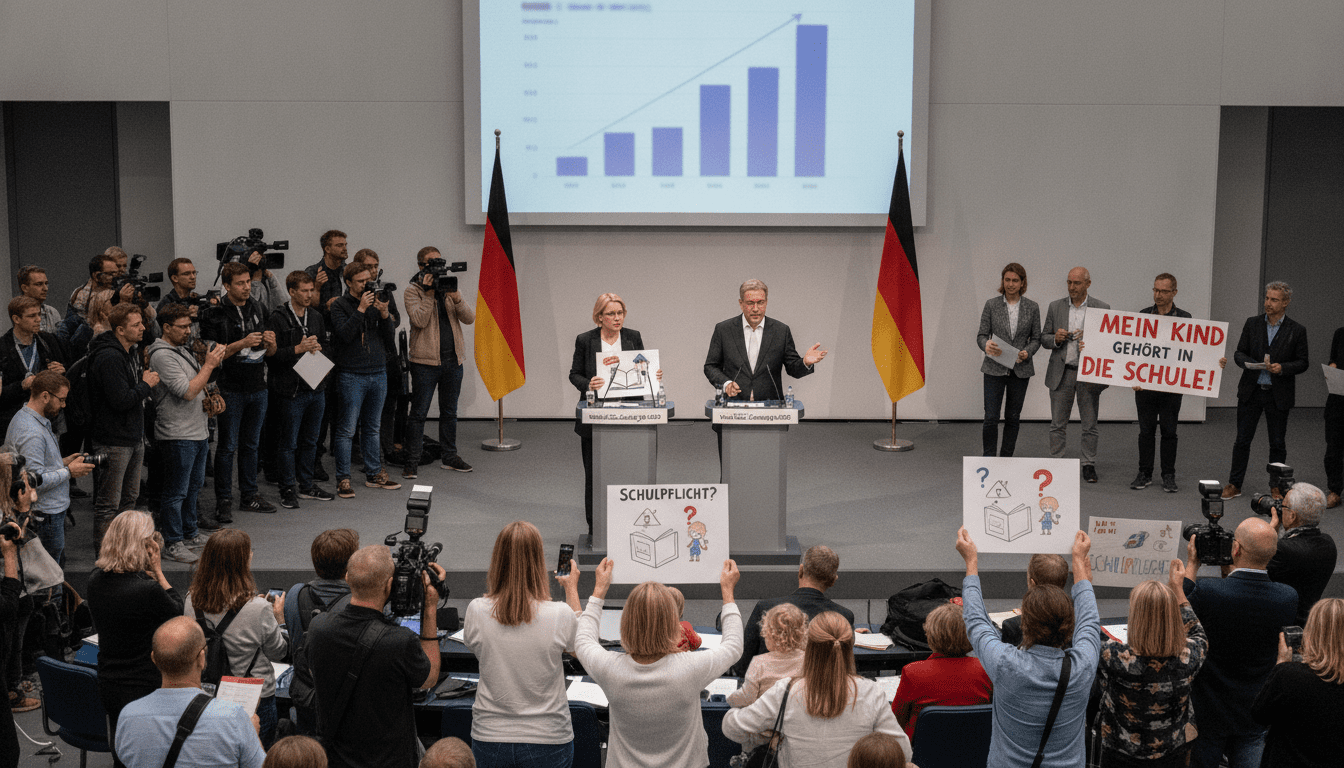
Germany is facing renewed controversy over homeschooling after the AfD included a proposal in its Saxony-Anhalt platform to allow parents to choose home education instead of mandatory school attendance. The party frames the change as an expansion of parental rights, while opponents warn it could undermine standards and civic education. The debate has quickly drawn in historians, education researchers and international comparisons, with homeschooling emerging as the central keyword of contention.
AfD proposal and political context
The AfD platform in Saxony-Anhalt calls for a legal option that would let parents elect home-based instruction in place of compulsory school attendance, presenting school as an offer rather than an obligation. Party spokespeople pitch the measure as a matter of parental freedom and reduced state interference in childrearing. With state elections on the calendar, the proposal has become a focal point for campaign discussion and cross-party criticism.
Historical background of Germany’s strict school requirement
Germany’s rigorous school-compulsory regime has deep historical roots, shaped in part by laws dating from the late 1930s and postwar efforts to secure civic education. After World War II, education policy was steered toward embedding the liberal-democratic order in the curriculum, a rationale often cited to justify state oversight. Critics of loosening mandates point to this legacy as a reason for caution, arguing that official schooling plays a role in safeguarding democratic values.
Philosophical and intellectual echoes
Debate over the state’s role in education often invokes classical thinkers who emphasized parental responsibility and individual formation. Reformers such as Wilhelm von Humboldt argued that formal state schooling should not replace the family’s educational role, a point now cited by advocates of greater parental choice. These intellectual references are being used by both sides to frame homeschooling either as a revival of personal liberty or as a risky retreat from collective civic instruction.
International trends and empirical evidence
A growing body of international research shows homeschooling is on the rise in several Western countries, with the United States reporting a substantial increase to roughly 3.2 million home-educated children by 2024. Studies from countries such as the UK, Australia and Canada register similar upward trends, and comparative reporting suggests that home education is becoming a durable alternative rather than a marginal phenomenon. Recent surveys and reviews indicate mixed academic outcomes and highlight the diversity of homeschooling practices across contexts.
Social equity and civic concerns raised by critics
Opponents of a legal shift warn that expanding homeschooling could exacerbate social inequality and weaken the equalizing function of schools, which bring together students from varied socio-economic backgrounds. Schools can offer structured access to resources, peer learning and exposure to differing viewpoints that some fear would be lost if many families withdraw. Proponents counter that existing school systems already reproduce inequalities and that regulated home education can be designed to protect standards and inclusion.
Parental motives and practical examples
Parents cite a broad range of motives for choosing homeschooling, from tailored pedagogical approaches to concerns about bullying, discrimination or unmet needs in mainstream schools. Historical and contemporary examples of successful privately educated figures are often invoked to argue that home instruction can yield strong cultural and intellectual outcomes. At the same time, researchers note that many families adopt hybrid models, combining periods of school attendance with phases of home-based learning rather than a permanent binary choice.
Public debate is intensifying as policymakers weigh whether to amend regulations to permit broader homeschooling options. Any legislative change would need to reconcile parental rights, child welfare safeguards and the state’s interest in ensuring consistent educational standards. The outcome in Saxony-Anhalt could influence discussions in other German states and shape national conversations on the balance between family choice and public responsibility in education.
