
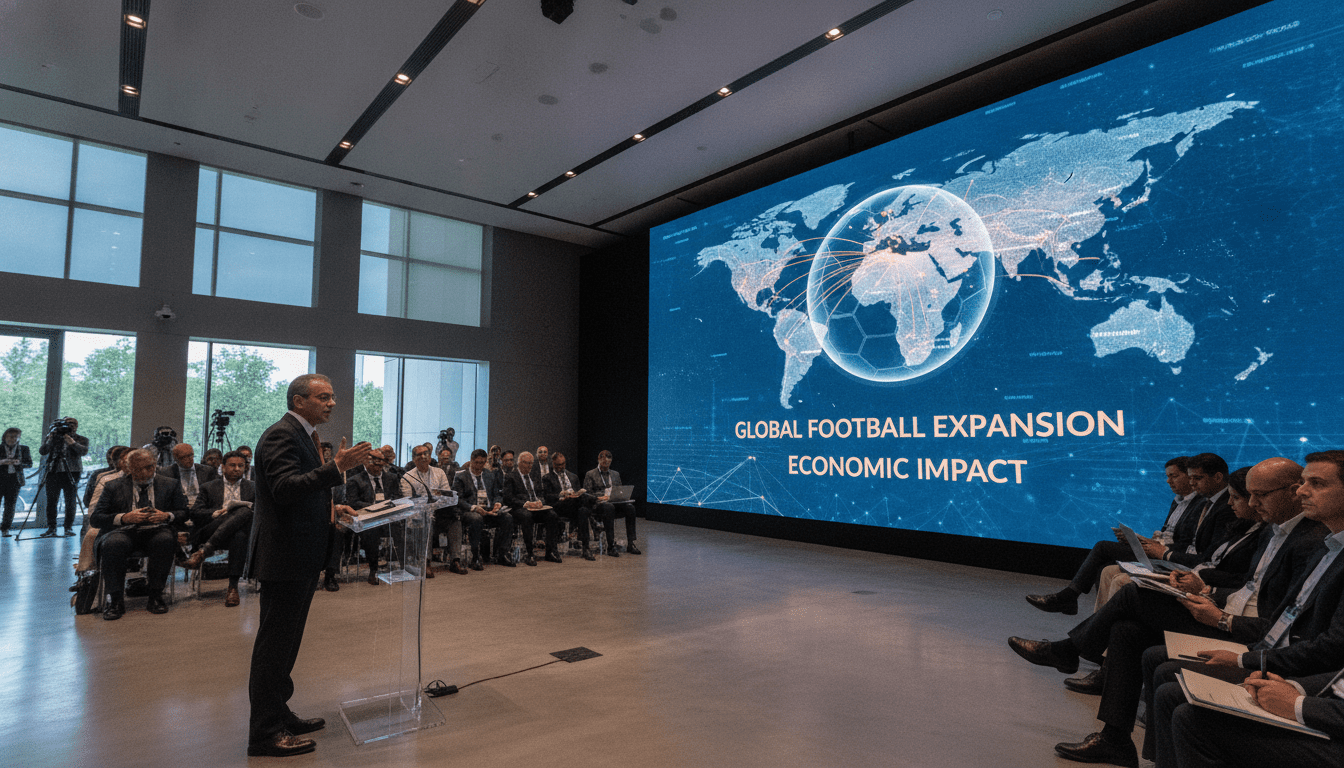
FIFA World Cup expansion raises revenue but fuels concerns over saturation, ticketing and dependency
Experts warn the FIFA World Cup expansion to 48 teams increases revenue potential but risks media saturation, ticket backlash and reliance on Gulf funding.
The decision to expand the FIFA World Cup to 48 teams and 104 matches has intensified debate over whether bigger necessarily equals better for global football. Christoph Breuer, professor of sport economics and sport management at the German Sport University Cologne, says the FIFA World Cup expansion is driven chiefly by commercial incentives even as it stretches the tournament’s duration and competitive balance. Critics point to rising ticket prices, questions about stadium fill rates and growing dependence on a small number of wealthy buyers for broadcast rights.
FIFA World Cup Expansion Driven by Commercial Interests
The move to include nearly 50 teams and extend the tournament by weeks is largely a commercial calculation, boosting inventory for broadcasters, sponsors and ticket sales. More matches create more broadcast windows and sponsorship inventory, which in turn raises the product’s appeal to global media platforms and advertisers. Organizers expect higher gross revenues, particularly in markets with large stadium capacities and premium ticket pricing.
Revenue Gains Versus Attendance and Ticketing Backlash
Higher headline revenues do not guarantee full stadiums or public approval, and the rollout has prompted notable fan unrest over prices. Early sales phases moved quickly, but resale and secondary-market mechanisms implemented by FIFA have intensified criticism about affordability and accessibility. Economists warn that sold tickets do not always translate into occupied seats, and empty venues would blunt the commercial and reputational gains of the expanded event.
Media Rights Growth and the Risk of Saturation
Broadcasting and streaming rights remain the core revenue engine for elite football events, but media budgets are not limitless. The expansion mirrors similar commercial strategies in club competitions that drove up rights fees, yet networks and streaming platforms may reach a point where they reallocate spend away from smaller or national competitions. Breuer and other analysts argue the growth trajectory is concave: initial gains are strong but will slow as the market nears saturation, a pattern already visible in some U.S. sports markets.
Dependence on Gulf Investment Poses Long-Term Risks
A substantial portion of recent prize money and rights valuations across global sport has been underwritten by significant Gulf investment, often tied to state-affiliated funds. While such injections can immediately elevate the financial profile of events, economists caution that heavy reliance on a few deep-pocketed buyers creates fragility. If those funding priorities shift, revenue streams tied to single-source deals could evaporate, leaving event organizers exposed.
Smaller Leagues and National Competitions Face Budgetary Fallout
As broadcasters and streaming platforms prioritize marquee global properties, smaller national leagues and other sports may see their media revenue shrink. Domestic leagues that had hoped for large increases in international rights income face tougher competition for buyer attention and budget. The reallocation of finite media spending threatens to concentrate financial power in a small set of elite competitions and may undermine the broader ecosystem of national and regional sport.
Tournament Quality and Competitive Balance under Pressure
Adding teams changes competitive dynamics and can lower the average level of play in some matches, but organizers argue the tournament model mitigates broader damage to viewership. Lower-profile matches may attract weaker audiences, yet the knockout structure and narrative of elimination preserve dramatic interest toward the later stages. For governing bodies, the financial calculus and the guarantee of a crowned champion carry more immediate weight than uniform match quality across a lengthened schedule.
The expansion of the World Cup illustrates a broader tension in modern sport between short-term commercial opportunity and long-term structural sustainability. While global attention and media rights have delivered unprecedented sums to top-tier events, analysts warn of limits imposed by media budgets, fan tolerance for price escalation and the political economy of single-source investment. The rise of women’s football and newly created competitions show that growth can still be found, but Breuer and others emphasize the need to monitor saturation and diversification risks if the industry hopes to preserve both revenues and the game’s competitive integrity.
