
Social media ban for minors faces weak effects, studies show
Public debate grows as researchers find school phone bans and national youth restrictions produce limited, mixed results.
Germany’s debate over a social media ban for minors has intensified as surveys and international studies cast doubt on how effective blanket prohibitions are at improving young people’s wellbeing. New data show extensive weekday screen time among adolescents, widespread public support for restrictive measures, and research from the United States and Australia suggesting that school and national bans lower visible use only marginally and deliver mixed impacts on discipline, learning and mental health.
Ifo survey quantifies youth screen time
The Munich-based Ifo Institute’s education barometer finds that social media use is embedded in young people’s routines. According to the Ifo data, 47 percent of adolescents spend one to three hours daily on social platforms during weekdays, 20 percent spend three to five hours, and ten percent exceed five hours each weekday.
Adults in Germany also report notable social media time, with the median weekday usage exceeding an hour and almost one in five adults spending more than three hours on social platforms. The Ifo findings underline why many parents and policymakers view a social media ban for minors as an urgent policy response.
Political momentum and public support in Germany
Several German leaders have signalled support for stricter rules on devices and platforms in schools and for children. The state of Hesse introduced a compulsory school cellphone ban from the 2025/26 school year, and prominent politicians including Schleswig-Holstein’s minister-president have publicly backed broader restrictions on children’s access to social networks.
Public opinion appears to back these moves: recent polling cited by researchers shows 85 percent of adults supported a social media ban for under-16s, while 59 percent favoured banning phones at primary schools even during breaks. Those figures have helped propel the measures into the national conversation.
US evidence: school phone bans reduce use but not outcomes
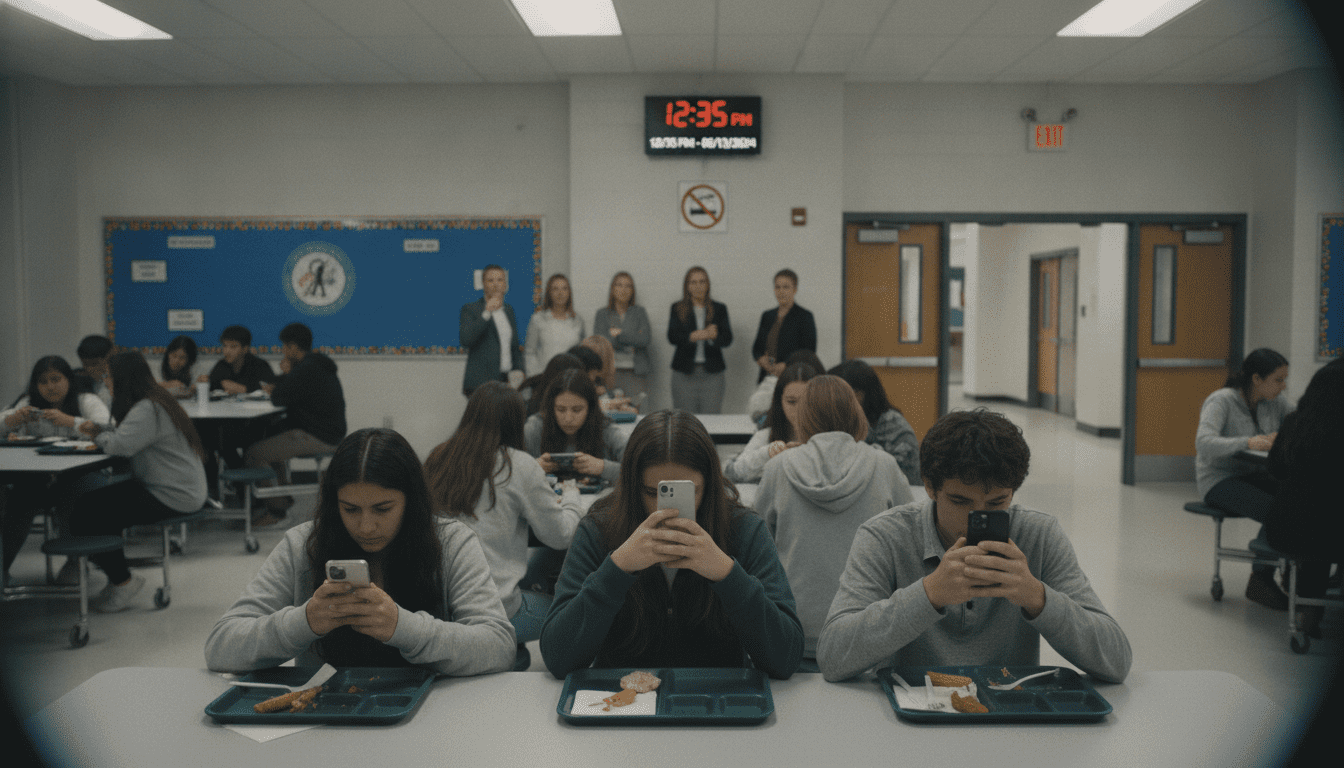
Economists studying strict in-school phone bans in the United States examined systems that require students to lock phones in sealed pouches upon entering campus and only retrieve them when leaving. GPS data indicate these policies can reduce on-campus phone activity by more than 30 percent relative to schools without such bans over two years.
However, the same evaluations report few sustained benefits for classroom outcomes. Disciplinary actions initially rose then fell back to baseline levels, online bullying did not decline, and test scores showed no clear improvement. In one unexpected finding, measured classroom attention decreased significantly after two years, while students’ subjective wellbeing dipped in the first year before recovering.
Australia’s under-16 ban shows enforcement and social dynamics limits
Australia’s national restriction on social media access for under-16s has been held up as a model for lawmakers elsewhere, but early evaluations reveal limited real-world effects. Surveys of teenagers found that a majority of 14- and 15-year-olds remained active on social platforms after the ban came into force, while usage among older teens remained very high.
Researchers point to network effects as a key barrier: adolescents whose friends continue to use social media are far more likely to find ways around prohibitions, and compliance can carry a social cost. Teenagers who refrained reported more family time and lower pressure to check devices but also greater boredom and difficulty maintaining peer contacts. Economists caution that differences in personality and social networks make it hard to attribute any small observed changes directly to the ban.
Researchers urge broader, targeted strategies over blanket bans
Taken together, the international studies suggest that neither exclusive reliance on school phone bans nor blanket legal prohibitions are likely to deliver large or unambiguous benefits. Researchers highlight enforcement challenges, measurement limitations—such as GPS data conflating teacher and student devices—and the strong role of peers in shaping online behaviour.
Experts recommending next steps emphasize a combination of measures: improved digital literacy in schools, parental guidance and tools, platform-level age verification and safety features, and targeted interventions for at-risk groups. Several studies argue that modest behavioral changes may follow from policies, but substantive gains in mental health or educational achievement will likely require broader, sustained efforts.
Implications for German policy and public debate
For German policymakers, the evidence presents a tension between public demand for decisive action and the modest effects observed abroad. School-level controls can reduce visible device use during class hours, and national restrictions may lower some pressures for a subset of youth, but current research indicates limited spillovers to learning, discipline or aggregate wellbeing.
As German states and federal leaders consider reforms, the research suggests policymakers should calibrate expectations, plan rigorous evaluations of new rules, and pair any restrictions with education, support services and technological measures aimed at platform safety.
The available studies do not provide a simple roadmap: they show that social media bans for minors can change certain behaviours, but their overall impact on children’s wellbeing and school performance is small, mixed and highly context-dependent.
