
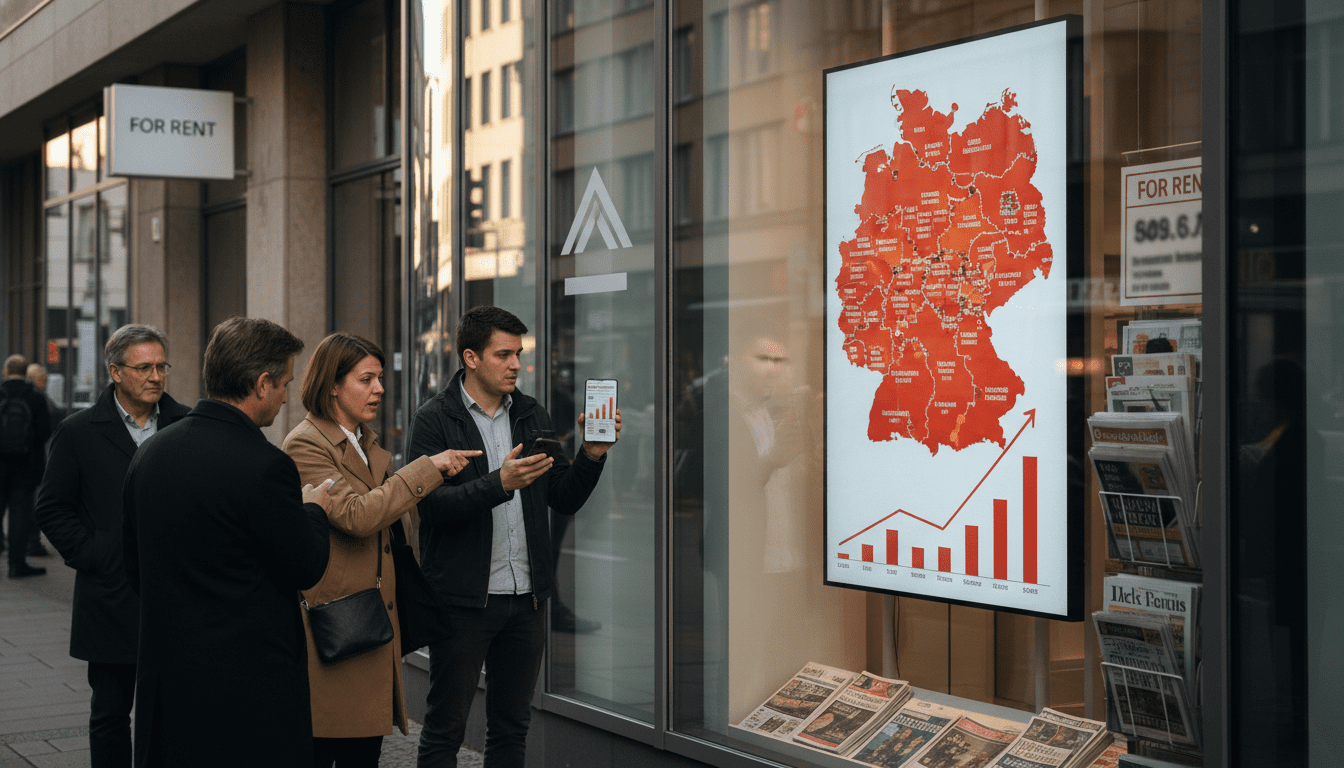
Rental prices in Germany show sharp divide as metros drive averages up
ImmoScout24’s Q1 2026 analysis finds rental prices in Germany average €9/sqm, but metropolitan hubs push rates much higher while many large cities remain affordable.
Germany’s rental prices are splitting into two distinct tracks, according to an ImmoScout24 survey of offer rents in the first quarter of 2026. The portal found that while the national mean stands at about €9 per square metre, the combined average for the eight major metropolises reaches €13.95 per square metre. At the same time, 37 of 71 district-free large cities report offer rents below €10 per square metre, and 15 cities fall under €8.50.
ImmoScout24 analysis reveals stark divide
ImmoScout24 based its findings on advertised rents for existing apartments in Germany’s 71 district-free large cities during Q1 2026. The study limited the sample to “existing” stock, defined as dwellings aged three years or older, in order to focus on the established rental market.
The report highlights a contrast between rents quoted for new lets and the broader pattern across a city’s housing stock. In nearly half of the cities analysed, tenants face average asking rents above €10 per square metre for new lettings, signalling pressure in many local markets despite pockets of affordability elsewhere.
Metropolises push national average higher
The eight largest urban centres — Berlin, Hamburg, Munich, Cologne, Frankfurt am Main, Stuttgart, Düsseldorf and Leipzig — register a combined average of €13.95 per square metre. That concentration of higher asking rents in major cities lifts the national mean and widens the divergence with smaller but still sizeable municipalities.
Leipzig stands out among these eight as the sole city with an offered-rent average below €10 per square metre, at €8.90. This exception underlines that even within metropolitan groups there can be significant intra-city variation driven by local supply and demand dynamics.
Regional pockets of affordability: Chemnitz and others
At the low end of the scale, Chemnitz posts the cheapest advertised rents among the 71 cities, with an average of €6.27 per square metre in Q1 2026. On that basis, a 70-square-metre apartment in Chemnitz would calculate to roughly €439 in cold rent before utilities and charges.
Other municipalities with relatively low advertised rents include Salzgitter at about €7.15 per square metre. Nine of the 15 cities with rates below €8.50 are located in North Rhine-Westphalia, including Gelsenkirchen, Hagen and Oberhausen, while cities in eastern Germany such as Magdeburg and Halle (Saale) also feature among the most affordable.
Why averages mask local variation
Average offer rents provide a useful snapshot but can obscure important local differences between neighbourhoods, housing types and building age. High-demand districts within a city can skew municipal averages upward even when other neighbourhoods remain comparatively cheap.
ImmoScout24’s managing director, Gesa Crockford, emphasised that many district-free cities outside the headline metropolises offer “good infrastructure at substantially lower prices,” a point that helps explain why some renters choose relocation over competing in costlier urban cores.
Implications for renters and relocation trends
For prospective tenants, the data points to pragmatic choices about trade-offs between cost, commute and local amenities. Households priced out of expensive city centres may find materially lower rents in smaller large cities that still deliver public transport, schools and services.
Employers and policymakers will also watch these patterns, as differing rental pressures can influence labour mobility, commuting patterns and regional population shifts. Lower urban rents in some centres could attract families and remote workers seeking better value without sacrificing basic infrastructure.
Policy responses and market outlook
The split between metropolitan and non-metropolitan rental levels raises questions for housing policy aimed at affordability and spatial balance. Sustained pressure in major cities is likely to keep debates about supply measures, zoning changes and rental regulation on the political agenda.
At the same time, the presence of affordable pockets suggests room for targeted measures that support housing quality and connectivity in smaller cities, rather than blanket interventions that only address headline metro markets.
Looking ahead, the Q1 2026 snapshot of rental prices in Germany indicates a bifurcated market where metropolitan demand elevates national averages while numerous large cities retain comparatively low asking rents. Renters, planners and local officials will need to monitor how these patterns evolve as supply, migration and policy responses interact.
