
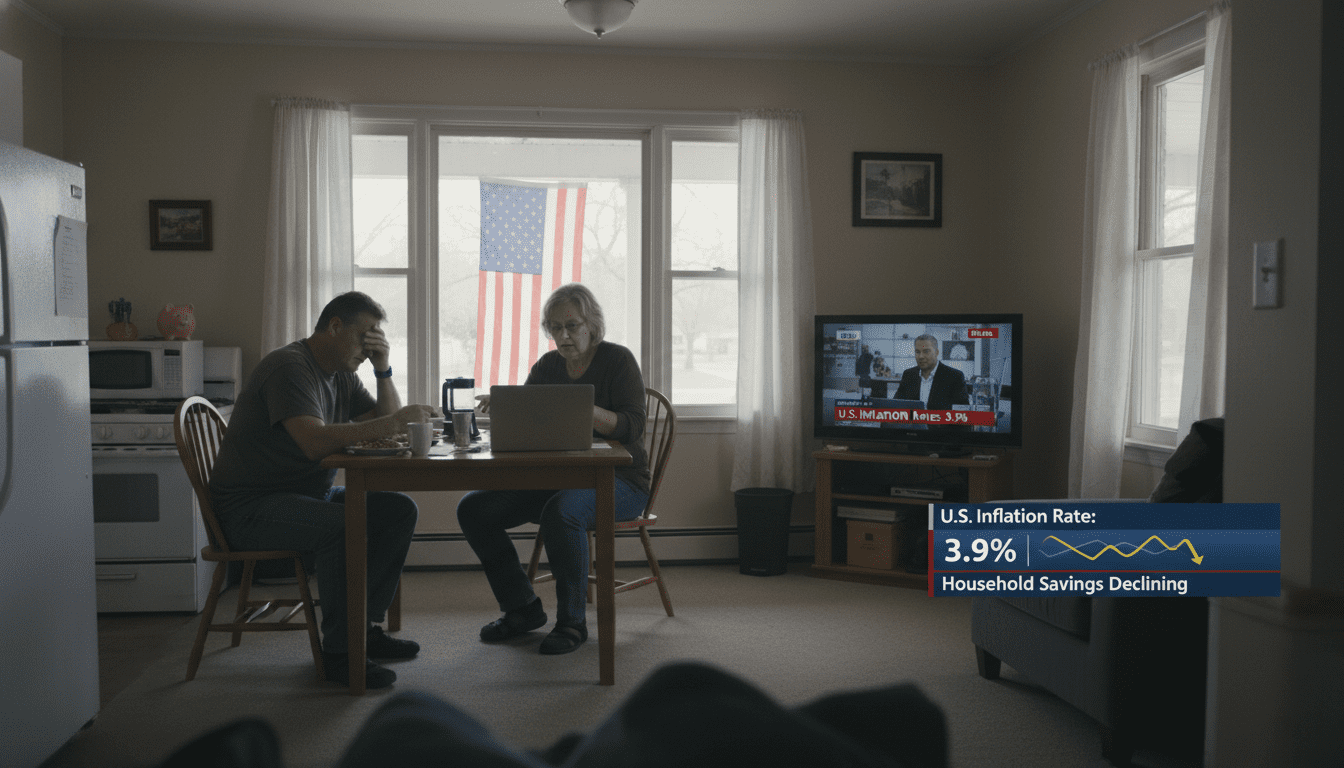
U.S. economy shows strains as inflation nears 4% while corporate investment holds
U.S. economy shows inflation near 4%, a plunging personal saving rate and Q1 GDP revision, while firm corporate investment partly offsets consumer weakness.
The U.S. economy presented a mixed and increasingly fragile picture on Thursday as a wave of government and private-sector data signaled rising inflation, dwindling household cushions and a downward revision to first-quarter growth. The Federal Reserve’s preferred inflation gauge, the personal consumption expenditures (PCE) price index, rose sharply in April, tightening the policy room for the central bank under its new chair. At the same time, consumers tapped savings to sustain spending and GDP growth for January–March was revised lower, even as business investment remained a notable bright spot.
Inflation Nears 4% on Fed’s Preferred PCE Measure
The personal consumption expenditures price index rose to 3.8 percent year-over-year in April, with core PCE excluding food and energy at 3.3 percent. Those readings place inflation well above the Federal Reserve’s 2 percent target and reduce the headroom for any near-term interest-rate cuts under new Fed chair Kevin Warsh. Policymakers will watch whether the inflation uptick is transient or signals a broader reacceleration that could force a more cautious monetary stance.
Americans Dip Deep into Savings as Spending Outpaces Income
Household behavior reflected the strain: personal spending increased even as disposable personal income edged down, and the personal saving rate fell to 2.6 percent in April. That rate is the lowest since mid‑2022 and represents a marked decline from 4.3 percent in January, leaving many households with thinner buffers. Economists note that consumers appear to be funding higher outlays by drawing down past savings rather than by facing immediate income gains.
First-Quarter Growth Revised Down to 1.6% Annualized
The Commerce Department’s revision trimmed the U.S. economy’s annualized, inflation-adjusted growth for the first quarter to 1.6 percent from an earlier 2.0 percent estimate. Officials attributed the downgrade primarily to weaker investment and lower consumer spending than initially reported. Forecasts from research firms such as Oxford Economics caution that consumer expenditures may expand at under 2 percent for much of the year, as fiscal tailwinds fade and rising fuel costs weigh on households.
CEO Confidence Falls Below Expansion Threshold
Business sentiment cooled alongside the softening data: a survey of chief executives showed confidence dropping 12 points to an index reading of 47, slipping beneath the 50 level that signals expansion. Housing activity also disappointed, with new-home sales dampened by higher mortgage rates that outweighed builder incentives. Together, these readings suggest firms and households are becoming more cautious about hiring and large purchases in the near term.
Corporate Investment Provides an Offset, Led by Equipment Spending
Despite the headwinds to households and overall growth, corporate investment has remained resilient, particularly in equipment and technology spending. Orders for core capital goods pulled back after two strong months, but shipments continued to rise in April, indicating firms are still deploying previously ordered machinery and IT equipment. This pattern points to a sustained pipeline of investment spending that may support manufacturing and productivity in the coming quarters.
AI Investment and Tax Incentives Sustain Capital Spending
Analysts point to a surge in AI-related capital expenditures and recently enacted tax incentives as key drivers of business investment. Oxford Economics’ trackers suggest equipment spending could still grow at an annualized rate near 7 percent in the second quarter, moderating from a 17 percent jump in the first quarter but remaining substantial. Even geopolitical shocks and energy-price volatility have so far failed to fully offset the momentum created by firms upgrading technology and taking advantage of fiscal incentives.
As the U.S. economy enters the summer months, the interplay between rising inflation, eroding household savings and robust corporate investment will shape the near-term outlook. Policymakers face a delicate balancing act: restrain inflation without unduly choking off the investment that is supporting growth, while households adjust to higher costs and thinner financial cushions.
