
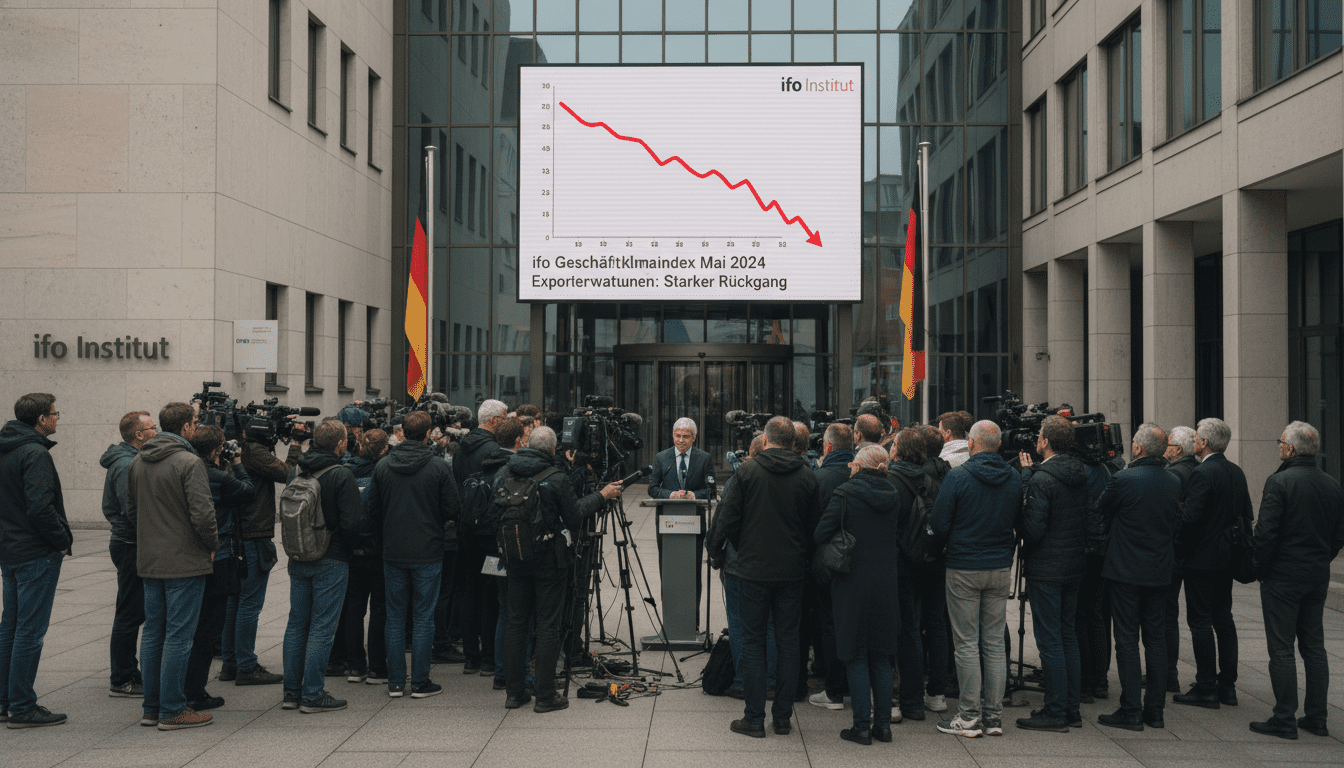
German export expectations slide to -5.5 in May 2026 as ifo signals growing pessimism
German export expectations fell to -5.5 in May 2026, the ifo Institute reports, as geopolitical risks and sectoral headwinds weaken exporters’ outlook and trade momentum.
The mood in Germany’s export sector deteriorated sharply in May 2026, with the ifo Institute’s index of export expectations plunging from -1.2 in April to -5.5. This marked the lowest reading in more than a year and underscored rising unease among exporters about future overseas demand. ifo’s head of economic analysis, Timo Wollmershäuser, cautioned that despite a recovery in first-quarter shipments, the outlook remains difficult amid elevated geopolitical uncertainty.
Details from the ifo survey
The ifo Institute’s monthly survey captured a broad-based decline in sentiment across several manufacturing segments during May 2026. Automotive exporters, which had reported four consecutive months of strong optimism, signalled a reversal and now expect falling shipments abroad. Metal producers likewise anticipate weaker foreign sales, and energy-intensive industries reported heightened vulnerability on world markets.
The electrical and furniture sectors provided a counterpoint, with the electrical industry remaining mildly optimistic about exports and furniture manufacturers expecting rising foreign orders. However, the optimism in those niches was noticeably softer than in April, suggesting uneven demand rather than a clear rebound for German exporters.
Quarter-one export momentum and recent GDP impact
Official figures for the first quarter of 2026 showed German exports rose by 3.3 percent from the previous quarter, bolstering economic activity in the early months of the year. Growth in chemical and pharmaceutical shipments, together with stronger metal exports, contributed to a 0.3 percent increase in GDP between January and March 2026. Those gains, however, now face an uncertain follow-through as the export expectations index turned negative in May.
Analysts caution that sequential quarterly gains can be vulnerable to abrupt shifts in external demand, and a May downtrend in expectations raises the prospect of weaker export contributions in the coming quarters. Companies that booked orders ahead of expected supply constraints may sustain volumes temporarily, but underlying demand indicators point to softer momentum.
Geopolitical shocks and short-term order effects
The Bundesbank highlighted spillover effects from the conflict in the Middle East in its most recent monthly report, noting that disruptions to vital shipping routes such as the Strait of Hormuz have altered trade patterns. In some cases, firms accelerated purchases to hedge against anticipated shortages of inputs, temporarily lifting new orders for certain exporters. German producers also benefited to an extent because some Asian competitors were more directly affected by closure-related bottlenecks.
The Bundesbank warned these advantages are likely transient, emphasizing that pre-emptive buying and regional supply shifts do not replace sustained global demand. Prolonged geopolitical tensions could, in contrast, amplify uncertainty, raise costs for energy-intensive industries, and ultimately weigh on export volumes.
Sectoral consequences and business sentiment
The automotive industry’s downgrade in export expectations is notable because vehicles and components remain a cornerstone of German external trade. A shift from optimism to expected contraction in May 2026 suggests manufacturers are already sensing softer order books or logistical complications. Metals and other capital-goods exporters face similar pressures, with higher energy costs and weaker industrial demand cited as immediate concerns.
Conversely, suppliers to digital and household sectors, including some electrical equipment and furniture makers, reported steadier foreign demand. Even so, the relative strength in these sub-sectors may not offset broader weakness if global investment slows and major trading partners reduce imports.
Outlook for policy and markets
Policymakers and corporate leaders will be watching incoming data closely to judge whether the May drop in export expectations is a short-lived correction or the start of a broader slowdown. If external demand softens further, it could constrain industrial output and dampen GDP growth in the second half of 2026. Fiscal and industrial policy responses are likely to focus on stabilising supply chains, supporting energy-intensive firms, and encouraging diversification of export markets.
Financial markets may also react to persistently weaker export signals through adjustments in risk premia for exporters and shifts in currency expectations. Companies with high exposure to raw-material price swings and energy costs could face margin pressure, prompting a wave of cost management measures.
German exporters entered May 2026 with less confidence than a month earlier, according to the ifo Institute, reflecting both cyclical and structural challenges in a volatile global environment.
The immediate outlook will depend on developments in geopolitical hotspots, demand trends among key trading partners, and how firms manage supply-chain disruptions and input-cost pressures.
