
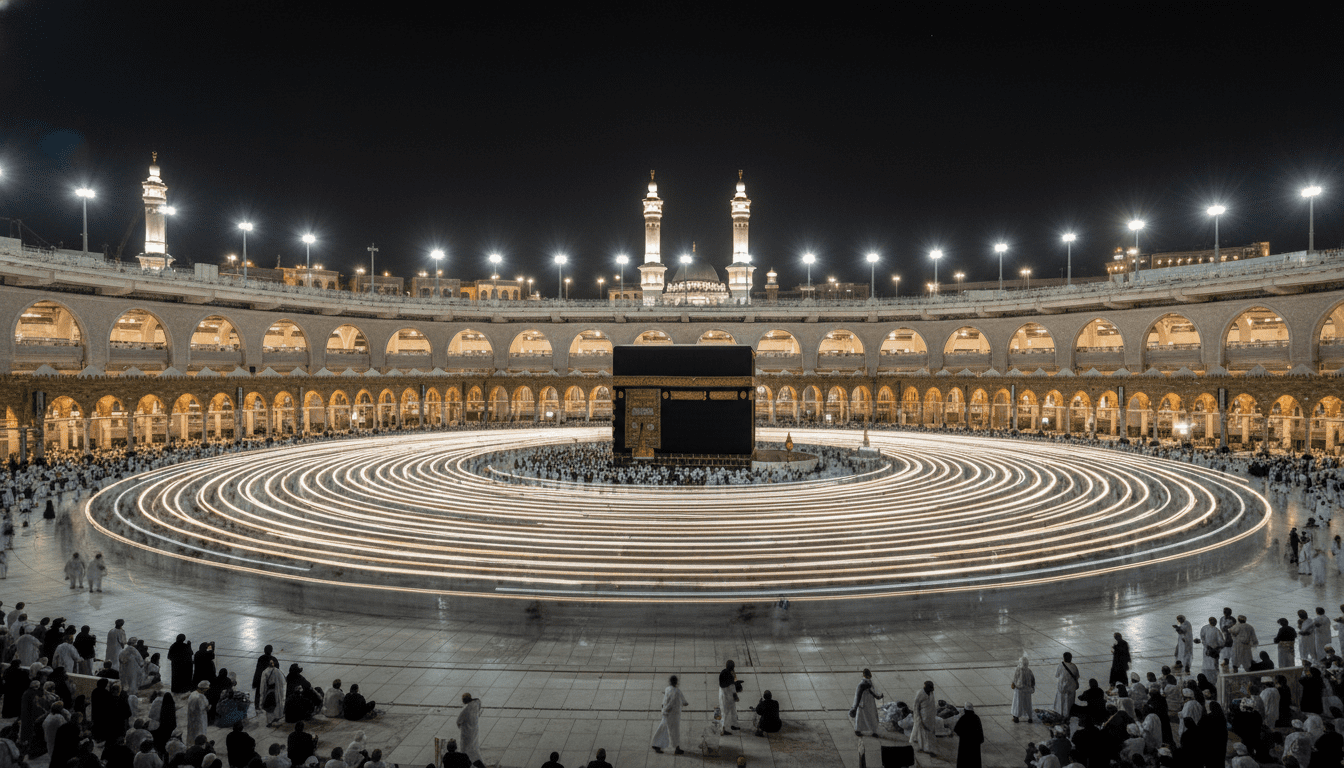
Hajj pilgrimage timelapse captures thousands performing Tawaf at Mecca’s Grand Mosque
Timelapse shows pilgrims circling the Kaaba in Mecca as Muslims gather for the 2026 Hajj pilgrimage, highlighting Tawaf, crowd control and safety measures.
The annual Hajj pilgrimage drew Muslims from around the world to Mecca on 25 May 2026, with a widely circulated timelapse showing dense rings of worshippers performing Tawaf around the Kaaba. The footage compresses hours of movement into seconds, illustrating both the ritual’s continuity and the scale of the gathering inside the Grand Mosque. Authorities and religious leaders described the scenes as a vivid display of devotion and logistical coordination.
Pilgrims Perform Tawaf Around the Kaaba
Pilgrims were shown moving in sustained circular motion as they completed Tawaf, the ritual circling of the Kaaba that forms a central element of Hajj rites. The timelapse emphasizes the steady flow of people and the choreography of movement that allows the ritual to continue despite heavy numbers. Observers noted the visual symmetry created by thousands following the same spiritual path round the black-draped cube.
Global Attendance as Hajj Pilgrimage Begins
Muslims travel to Saudi Arabia each year for Hajj from dozens of countries, converging on Mecca for a sequence of prescribed rites performed at set locations and times. This year’s arrivals followed months of planning by pilgrims and official agencies to secure permits, healthcare clearances and travel logistics. While exact quotas and national delegations vary annually, the pilgrimage consistently draws large, multinational attendance.
Security, Crowd Control and Movement Management
Saudi authorities maintain extensive operational plans to manage the movement of worshippers within the Grand Mosque and across the holy sites, combining physical barriers, signage and staff deployment. Crowd-control measures are calibrated to maintain the pace of rituals such as Tawaf while preventing bottlenecks and ensuring safe passage into and out of major prayer areas. Officials typically coordinate with trained volunteers to direct flows and respond to localized congestion.
Surveillance, communication networks and temporary medical posts are commonly used during Hajj to monitor crowd density and address incidents quickly. Organizers also adjust entry times and access points to spread attendance through the day and reduce peak pressure on specific corridors. These systems aim to preserve the sanctity of worship while prioritizing safety in one of the world’s largest recurring mass gatherings.
Religious Significance of the Tawaf Ritual
Tawaf represents an act of unity and submission in which pilgrims circumambulate the Kaaba in a counterclockwise direction, reflecting a foundational expression of Islamic faith. Performed during Hajj and at other times by visitors to the Grand Mosque, Tawaf is both a collective and deeply personal practice for those participating. The rhythm of the ritual—repeated circuits completed with reverence—remains central to the spiritual purpose of the pilgrimage.
Timelapse Video Highlights Patterns and Scale
The timelapse compresses hours of activity into a short sequence that makes large-scale patterns visible, turning streams of movement into concentric bands and flows. Visual compression in such footage can reveal how entry points, aisles and prayer zones channel worshippers, underscoring how infrastructure and ritual interact. Analysts say timelapse material helps planners and the public appreciate the practical and symbolic dimensions of the Hajj pilgrimage simultaneously.
Health, Transport and Accommodation Measures
Health services and transportation networks are a major focus as pilgrims arrive and depart, with measures generally designed to reduce transmission risks and manage climate-related strain. Temporary clinics, hydration stations and rapid-response teams are commonly placed near high-traffic areas to assist those in need. Transport planning seeks to coordinate buses, pedestrian routes and terminal operations to limit delays and maintain orderly movement between hotels, the Grand Mosque and peripheral sites.
Accommodation and staging areas are organized to support staggered movement to ritual sites, easing pressure on access routes at peak times. Local authorities and international delegations typically work together to provide information, language assistance and logistical support for first-time pilgrims and large group contingents. These efforts reflect routine operational priorities for a pilgrimage that spans several days and involves repeated movement between key sacred locations.
The timelapse of Tawaf on 25 May 2026 offered a striking visual summary of the Hajj pilgrimage’s communal and logistical dimensions, capturing worshippers’ devotion alongside the complex management that enables such a vast ritual to proceed. As pilgrims complete their rites, authorities will continue coordinating movement, health services and transport to support the remaining days of the pilgrimage and the safe return of attendees to their home countries.
