
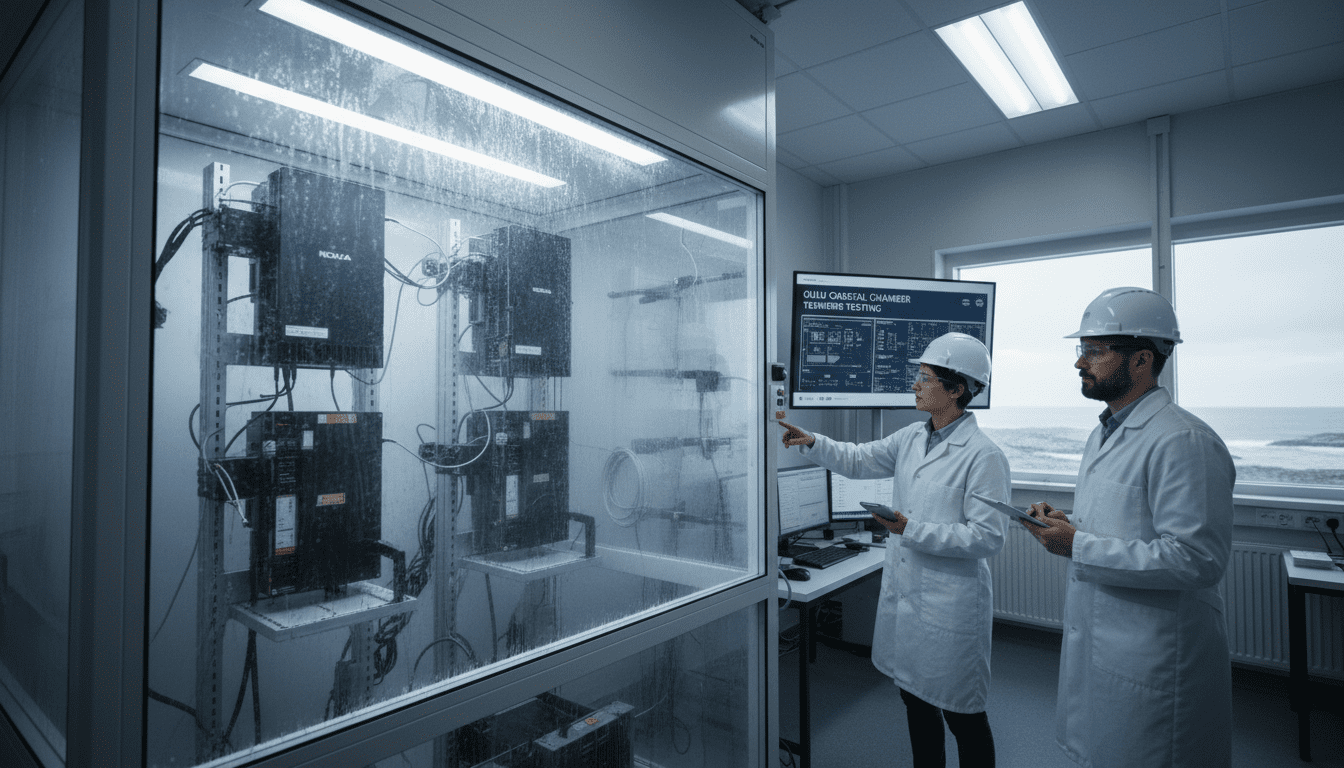
Nokia Oulu Test Chamber Seals in Salt Air to Stress-Test 5G Base Stations
Nokia’s Oulu test chamber seals coastal salt air to simulate harsh maritime conditions for prolonged 5G base station testing and device durability validation.
Salt-air test chamber simulates coastal extremes
Nokia has built a sealed salt-air test chamber in Oulu that confines a controlled saline atmosphere around communications equipment for weeks at a time. The facility is designed to reproduce the corrosive mix of humidity, sea spray and airborne salt that coastal deployments face. Engineers use the chamber to observe how materials, connectors and electronics behave under sustained exposure.
Why coastal testing matters for 5G infrastructure
Coastal corrosion and moisture-related failures are frequent causes of premature equipment degradation in network sites near the sea. 5G base stations contain sensitive radio, power and antenna components that must remain reliable across seasons and storms. Manufacturers and operators place a premium on identifying vulnerabilities in the lab to avoid costly field repairs and network outages.
How Nokia runs extended durability trials in Oulu
Devices and assemblies are placed inside the chamber for weeks to replicate years of coastal exposure in compressed time. Tests combine salt fog with temperature cycling, vibration and power-cycling regimes to stress mechanical joints, seals and electronic boards. Nokia pairs these long-duration exposures with functional checks so technicians can track performance drift and failure modes as they develop.
Standards and scenarios replicated in the facility
The Oulu lab runs test sequences modeled on established salt-spray and environmental standards while tailoring scenarios to telecom-specific needs. Beyond generalized corrosion protocols, technicians simulate real deployment settings such as rooftop huts, street cabinets and exposed towers. The goal is to ensure product designs meet both regulatory benchmarks and the practical demands of operators in maritime and nearshore regions.
Local expertise and the Oulu technology cluster
Oulu’s history as a technology hub provides a skilled workforce and university partnerships that support advanced test engineering. The test chamber complements other local facilities used for radio, electromagnetic compatibility and mechanical endurance trials. This concentration of expertise helps shorten development cycles and accelerates certification for products destined for global markets.
Benefits for operators, manufacturers and consumers
Identifying weaknesses in a controlled environment reduces the risk of in-service failures, emergency maintenance and costly part replacements. For operators, more robust equipment translates to higher network availability and lower total cost of ownership over multi-year contracts. End users see the practical benefit in fewer service interruptions and steadier performance in coastal communities and ports.
Nokia’s investment in specialized test environments in Oulu reflects a wider industry push to harden telecom infrastructure as networks expand into more challenging geographies. As climate volatility increases the frequency of extreme weather events, such laboratory verification will be a central step in delivering resilient 5G services to coastal and maritime customers.
