
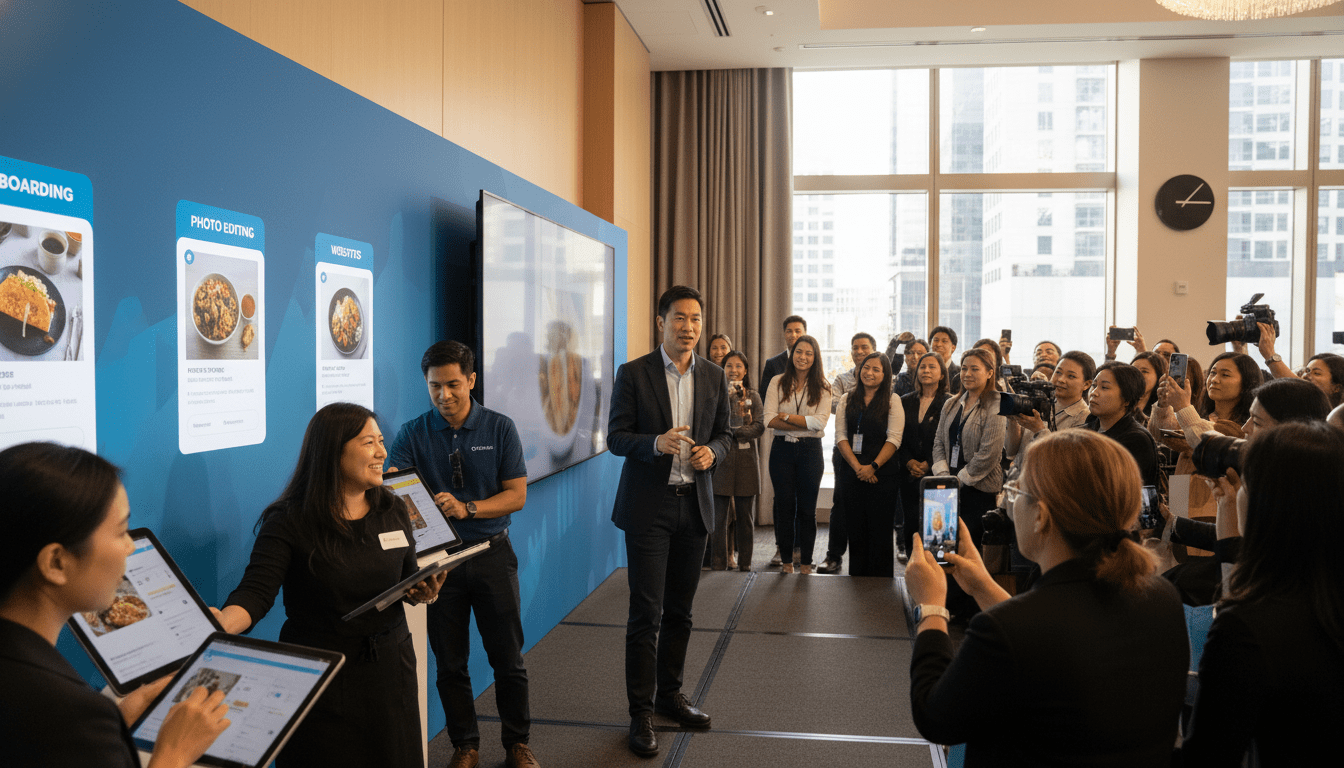
DoorDash AI Tools Accelerate Merchant Onboarding, Photo Editing and Site Creation
DoorDash AI tools announced Monday give merchants new ways to automate onboarding, enhance food photography, tag items in videos and build websites from their DoorDash listings.
DoorDash on Monday introduced a suite of AI-powered merchant tools designed to speed onboarding and improve how restaurants present menu items on the platform. The new features let merchants import details from their own sites to create DoorDash listings, edit and relight photos of dishes, tag menu items in videos for direct ordering, and generate standalone websites from DoorDash content. DoorDash said the enhancements are intended to reduce friction for merchants and boost order conversion by making listings more accurate and visually appealing.
Automated onboarding that pulls merchant data
The centerpiece of the rollout is an onboarding tool that extracts store information from a merchant’s website to prepopulate a DoorDash listing. The system automatically fetches photos, hours and menu items so owners can preview and edit entries before publishing. The approach mirrors other recent marketplace tools that streamline listing creation by reusing existing web content.
AI photo editing designed for menu presentation
DoorDash added two photo tools aimed specifically at restaurant imagery: one that retouches backgrounds, sharpness and lighting without altering the food, and another that replates dishes to look professionally styled. Merchants can supply a reference image to apply a desired plating style across gallery photos, helping maintain a consistent brand aesthetic. These features are built to improve the appearance of items on listings and in marketing materials, potentially increasing click-throughs and sales.
Video tagging and analytics to link content to orders
The company has also upgraded its video library so merchants can tag specific dishes within clips, enabling customers to order items seen in a video with fewer steps. The library surfaces performance metrics such as total views, video-driven sales and new-customer conversions to help merchants understand which content is driving orders. Those analytics are intended to inform content strategy and advertising spend on the DoorDash platform.
Website creation from DoorDash listings
A new capability on DoorDash’s commerce platform allows restaurant owners to generate a simple website using existing DoorDash content like menus and photos. DoorDash said early tests of the feature produced average order conversion rates close to 10 percent for participating merchants. The company positions the site builder as a fast way for small restaurants to launch an online presence without separate web development resources.
Marketing automation and merchant controls
Alongside creative tools, DoorDash added a marketing campaign builder that automates content generation, email outreach and scheduling for merchants. The marketing tool pairs with the video and photo features so restaurants can quickly create and distribute promotional material tied to specific menu items. Importantly, merchants retain control: the onboarding process requires review and explicit approval of harvested information before a listing goes live.
DoorDash frames tools as friction reduction for merchants
DoorDash framed the updates as practical technology to help merchants focus on food and service rather than technical tasks. Company messaging emphasizes reducing setup time and improving visual merchandising as ways to increase orders and customer satisfaction. DoorDash also highlighted that these tools are intended to be additive rather than intrusive, allowing restaurateurs to make final edits and choose how their brand is presented.
These additions come as marketplaces and delivery platforms increasingly invest in creator- and merchant-facing AI to boost engagement and streamline operations. For restaurants, the appeal is clear: faster onboarding, better imagery and integrated marketing can lower the barrier to reaching new customers and converting views into purchases. At the same time, restaurants and industry observers will likely evaluate how automated edits affect authenticity, and whether new site-creation services lock merchants more tightly to platform ecosystems.
Overall, the new DoorDash AI tools expand the company’s merchant toolkit by combining automated data ingestion, image and video editing, website generation and campaign automation into a single commerce offering. DoorDash says the suite is designed to reduce manual tasks for merchants while increasing the visual and transactional quality of listings, and it is positioning these features as tools to improve conversion and customer discovery on its platform.
