
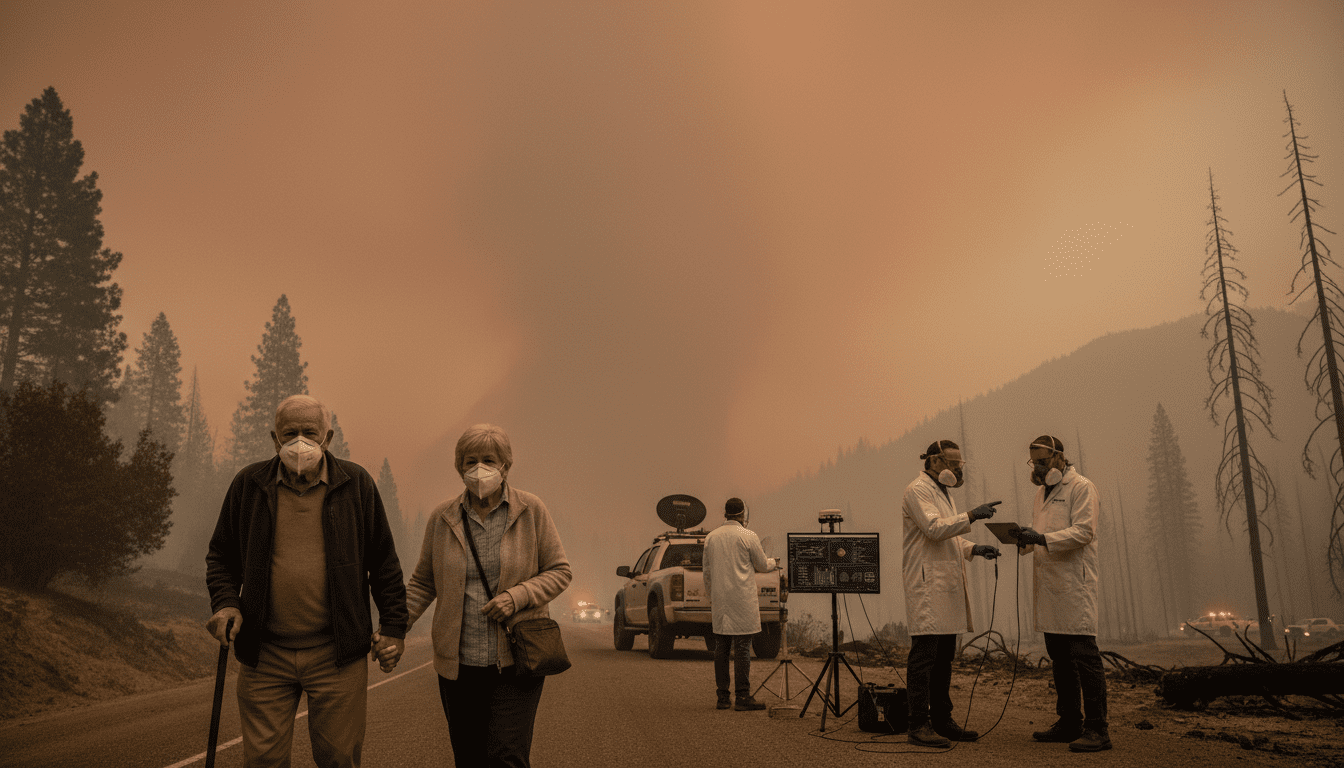
Wildfire Smoke and Dementia Linked in 1.2 Million-Patient Study; Long-Term Exposure Raises Risk
UW-led study links wildfire smoke and dementia, finding long-term smoke exposure raises diagnosis odds, with greater impacts on disadvantaged communities.
A large new analysis led by the University of Washington finds a measurable association between wildfire smoke and dementia, reporting that long-term exposure to wildfire fine particulate matter is linked to higher odds of a dementia diagnosis. The keyword wildfire smoke and dementia appears centrally in this finding, which used health records for 1.2 million older adults in Southern California to compare long-term smoke exposure with subsequent diagnoses. Researchers presented the initial results at the Alzheimer’s Association International Conference and published the full report in JAMA Neurology on November 25.
Study Cohort and Time Frame
The research team examined electronic health records for 1.2 million Kaiser Permanente Southern California members aged 60 and older who had no dementia diagnosis at the study’s start. The observation window spanned 2008 through 2019, offering a decade-long view of exposure and outcomes across diverse communities in the region. Investigators estimated each person’s long-term exposure to both wildfire and non-wildfire PM2.5 using a three-year rolling average tied to residential location.
Exposure Assessment and Methods
Wildfire PM2.5 was separated from other sources of fine particulate matter so the team could isolate the specific contribution of smoke from wildfires. Exposure estimates accounted for temporal spikes in wildfire smoke and the many intervening days with little or no smoke, producing a long-term average that reflects episodic extreme events. The study then linked those exposure histories to new dementia diagnoses recorded in members’ medical records.
Measured Increase in Dementia Odds
After adjusting for relevant factors, researchers reported that each 1 microgram per cubic meter increase in three-year average wildfire PM2.5 was associated with an 18% increase in the odds of receiving a dementia diagnosis. Non-wildfire PM2.5 was also associated with higher dementia risk but to a substantially smaller degree. Investigators noted that a 1 µg/m3 rise in the three-year average can represent just a few days of very high-concentration wildfire smoke—days with air quality index values above 200—rather than a constant low-level exposure.
Disproportionate Effects on Vulnerable Communities
The analysis found that the increased dementia risk linked to wildfire smoke was larger for racialized populations and for residents of high-poverty census tracts. Researchers suggest that structural factors such as lower-quality housing and limited access to air filtration devices may increase indoor smoke infiltration and reduce protection for these groups. The pattern follows broader environmental justice concerns in which marginalized communities disproportionately bear the health burdens of air pollution and climatic events.
Context of Recent Fire Seasons and Climate Drivers
The study’s dataset ends in 2019 and therefore excludes the extreme California wildfire seasons of 2020 and 2021, which produced record regional smoke exposures. Investigators warn that climate change has already lengthened and intensified fire seasons across the American West, increasing both the frequency and severity of smoke episodes that contribute to elevated PM2.5 levels. Lead author Joan Casey and colleagues framed the problem as global in origin: while individual protections can help, prevention will require large-scale climate and land-management solutions.
Public Health and Policy Implications
Authors argue the findings should inform public health planning for aging populations as wildfire smoke becomes more common in many regions. Short-term measures—such as distributing high-efficiency air filters, improving building envelopes, and promoting well-fitted masks during smoke events—can reduce exposure on severe smoke days. Longer-term responses will need coordinated climate mitigation, wildfire management, and investment in community-level resilience to limit future population-level cognitive health impacts.
The study lists co-authors across several institutions, including the University of Pennsylvania, Kaiser Permanente Hawaii Center for Integrated Health Research, Scripps Institution of Oceanography at UC San Diego, UCLA, Columbia University, and UC San Francisco. Funding was provided by the National Institute on Aging and the National Institute of Environmental Health Sciences, underscoring federal research investment in links between environmental hazards and neurological outcomes.
The association between wildfire smoke and dementia risk adds a new dimension to public-health conversations about air quality, aging and climate. As wildfire seasons intensify, clinicians, policymakers and community organizations face growing pressure to translate these findings into protections that reduce exposure for older adults and for populations already experiencing disproportionate environmental risk.
