
Climate tech IPOs heat up as X-energy raises $1B and Fervo files to go public
X-energy’s $1B IPO and Fervo’s filing signal rising appetite for climate tech IPOs as data-center power demand and big infrastructure funds reshape markets.
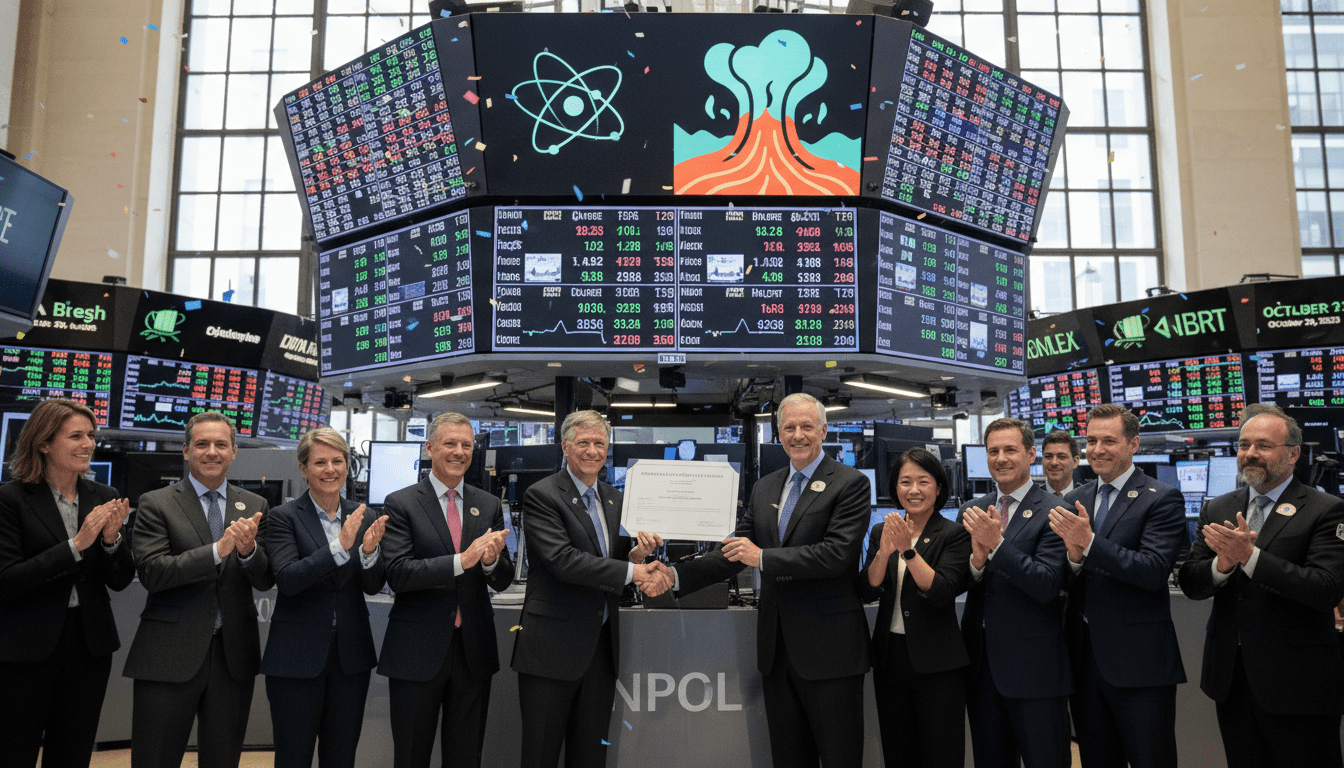
The public markets showed renewed appetite for climate tech IPOs this week as advanced energy startups moved to list and drew strong investor demand. Nuclear developer X-energy completed an upsized offering that raised roughly $1 billion and sent early trading gains for retail investors. Geothermal specialist Fervo confirmed it has filed to pursue an initial public offering, reflecting a broader shift in where public investors are willing to deploy capital.
X-energy IPO Sparks Retail and Strategic Investor Interest
X-energy’s market debut delivered a sharp first-day rally that underscored retail enthusiasm for scalable clean-energy plays. The offering was upsized before trading and included backing from major strategic investors, a signal that established corporations see value in next-generation nuclear technology. The stock’s early performance rewarded long-term backers and provided a high-profile example of how certain climate technologies can reach deep, liquid capital markets.
Fervo’s Filing Reflects Geothermal’s Public Potential
Fervo’s registration for an IPO follows a string of private financing rounds that pushed its valuation into the multibillion-dollar range. The move toward public markets indicates confidence among founders and investors that the company’s technology and commercial roadmap are mature enough to stand before a broader investor base. For geothermal, market access through an IPO would provide capital to scale drilling programs and field deployments at a tempo that private rounds typically cannot match.
Data Centers and AI Demand Power Investor Narratives
A surge in electricity demand driven by data centers and artificial intelligence deployments has turned energy-intensive infrastructure into an investable narrative. Investors are increasingly valuing technologies that can deliver dispatchable, low-carbon power to meet industrial-scale loads rather than niche efficiency gains. That narrative compresses a longstanding mismatch between the long timelines of climate technologies and the public markets’ need for scaleable revenue trajectories.
Traditional IPOs Chosen Over SPACs to Broaden Participation
Both X-energy and Fervo opted for conventional IPO pathways rather than merging with special-purpose acquisition companies, signaling a desire to cultivate a wide institutional investor base. That route tends to offer more comprehensive price discovery and can help establish long-term analyst coverage and liquidity. For venture funds that have carried these investments for years, a traditional offering returns capital to limited partners while validating the underlying business models.
A K-Shaped Outcome Across the Climate Tech Sector
While energy-focused startups are finding public-market openings, many climate tech companies remain outside the window for IPOs and public valuations. Firms tackling emissions reductions in harder-to-monetize sectors face a tougher path because their value often hinges on externalities that markets have yet to price properly. As a result, the sector is fragmenting: infrastructure-grade projects attract large pools of capital, while early-stage firms must navigate a more constrained private fundraising environment.
Fundraising Shifts Favor Large, Infrastructure-Oriented Vehicles
Recent fundraising activity shows that a relatively small number of large funds are capturing the bulk of capital earmarked for climate infrastructure. These vehicles are well-suited to back mature technologies that require hundreds of millions to scale, such as grid assets, storage, and utility-scale generation. Meanwhile, the proliferation of smaller funds means more sources of capital for startups but with shallower pockets, potentially lengthening the path to commercialization for some founders.
Looking ahead, climate tech IPOs will likely continue to favor companies with clear routes to sizable, contracted revenue and technologies that address concentrated power demand. For other innovators, the capital landscape will demand creative financing, strategic partnerships, or longer private journeys to reach commercial scale. Public listings for energy-first companies may unlock liquidity and attention, but they will not, on their own, solve the broader challenge of financing the full spectrum of decarbonization technologies.
