
One-on-One Duels Return to the Forefront of Bundesliga Tactics
Man-marking’s resurgence has changed how Bundesliga teams win one-on-one duels, with longer build-ups, coordinated blocks and refined defensive timing reshaping attacking and defensive play.
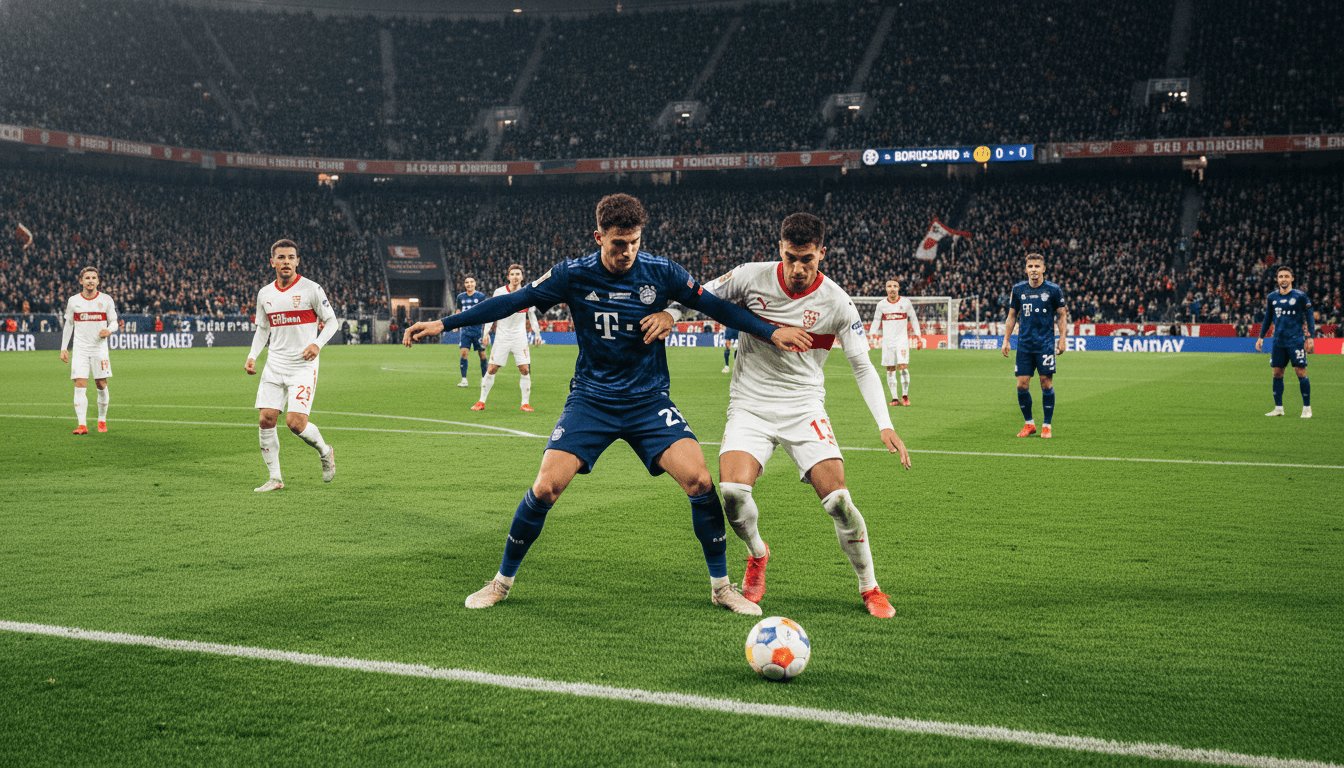
Bundesliga teams have increasingly treated one-on-one duels as tactical outcomes rather than isolated physical battles, driven by a renewed emphasis on man-marking across top-flight German clubs. Coaches and analysts note that duels now begin well before physical contact, with players manipulating angles, sightlines and teammate interventions to gain an advantage. The trend is visible in both high-possession sides and compact defensive units, where a mix of timing, step patterns and coordinated blocking has altered how matches are won and lost. This tactical shift has lifted the profile of individual contests while expanding the set of skills required to prevail in them.
Man-marking revival reshapes duel frequency
Recent Bundesliga matches show a clear uptick in dedicated man-marking, turning more sequences into direct one-on-one duels than in previous seasons.
Teams that deploy aggressive man-marking force opponents into repeated individual contests, increasing the number of decisive moments across a match. This revival has pushed clubs to train situational intelligence as much as raw tackling ability, with players learning to anticipate and pre-empt duels through positioning and movement.
Longer build-ups and pre-contact movement
A defining characteristic of the current cycle is that many one-on-one duels now have a prolonged prelude, with attackers and teammates engineering superior starting positions.
Youth coaching concepts such as the German “Auftaktbewegung” have been extended at the professional level, with attackers using feints, short positional adjustments and circular runs to create blindside opportunities. Players like Leverkusen’s Aleix García exemplify this pattern, turning approach runs into continuous, radar-like movements that make direct marking less effective.
Overlapping defensive angles replace blunt approaches
Defensive technique has evolved from straight-on physicality to diagonal, over-the-shoulder defending that prioritizes vision and containment over immediate contact.
This “overlapping” defending places defenders slightly offset from an attacker’s back, allowing them to see the ball and force play inward rather than conceding an early switch to the flank. Coaches favoring this method accept a first contact by the attacker to prevent an opening pass, then engage decisively on the opponent’s second touch, trading an aggressive first-challenge for higher probability of neutralising the subsequent threat.
Systematic blocking added to the defensive toolbox
Teams now deploy teammates to disrupt an opponent’s ability to enter a duel, using deliberate blocks from half-space positions to complicate marking and delay defensive shifts.
This tactic, long used sparingly on set pieces, has been adapted into live play by several clubs and is particularly visible at Bayern Munich, where midfielders and half-space full-backs time blocks to hamper wing defences. The result is slower lateral transitions for the defending team and greater freedom for targeted attackers, who then exploit the delayed reactions with quick combinations.
Timing and footwork over brute force in duels
Modern one-on-one success increasingly depends on timing, measured step sequences and intelligent physicality rather than pure strength or aggression.
Defenders now vary their tempo to provoke mistakes, momentarily reducing speed to invite a premature touch before accelerating to intercept. That choreography — combined with focused footwork to cut angles — has become as decisive as conventional attributes like tackling power. Clubs with technically adept goalkeepers also benefit, because the keeper can act as an extra outfield option, enabling midfielders to extend their pre-duel movements without exposing the team to easy pressure.
Coaching, scouting and analytics adapt to duel evolution
The changing nature of duels is prompting coaches to adjust training priorities and scouts to look for different player profiles.
Youth academies are refining ball-reception drills and spatial awareness exercises to teach longer, multi-step approach movements from an early age. At senior level, analytics teams are incorporating pre-contact metrics — such as angle gain, blindside creation and blocking effectiveness — into performance reports to evaluate both attackers and defenders. Recruitment now favours players who combine tactical intelligence with technical control and quick short-burst movement.
The Bundesliga’s recent tactical shifts have returned one-on-one duels to the center of strategic thinking while broadening the definition of what it takes to win them. As man-marking and coordinated defensive measures continue to spread, the duel is no longer an isolated moment of contact but a complex outcome of movement, timing and team cooperation.
