
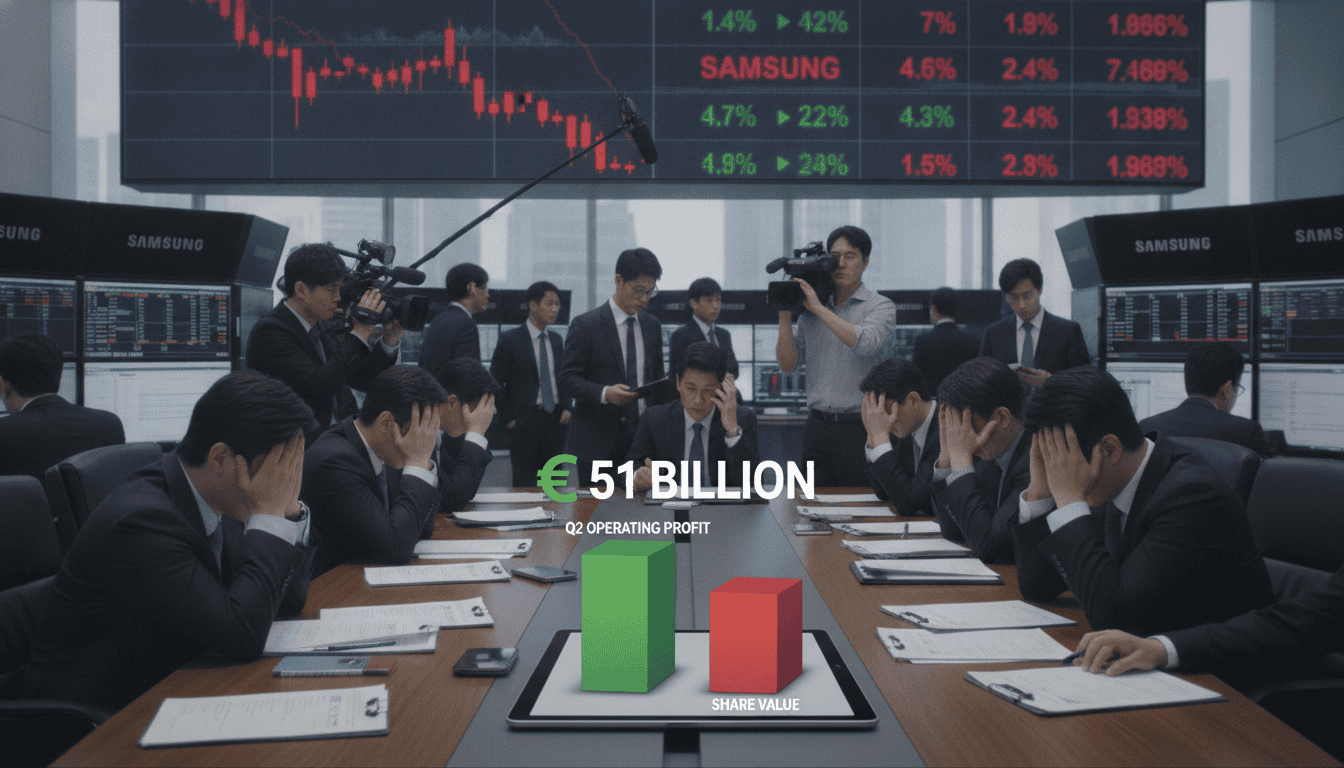
Samsung Electronics posts record profit in Q2 as AI-driven chip boom lifts earnings
Samsung Electronics record profit: Q2 operating profit hit 89.4 trillion won (~€51bn), driven by surging AI demand for memory chips.
Samsung posts unprecedented Q2 operating profit
Samsung Electronics posted a record operating profit of 89.4 trillion won for the second quarter, the company said, marking the largest quarterly result in its history. The figure, roughly €51 billion at current exchange rates, represents an increase of more than 1,800 percent from the same period a year earlier. The company reported the result as part of its regular earnings guidance, and did not disclose a separate net profit figure in the filing.
AI demand and memory chip tightness behind the surge
Executives and market analysts identified the boom in artificial intelligence applications as the primary driver of the profit jump. Strong demand for high-performance memory used in AI systems pushed chip prices higher, and Samsung’s leading position in memory production allowed it to capture exceptionally large margins. Industry observers say production capacity remains constrained, so elevated prices have persisted and boosted revenues across Samsung’s semiconductor unit.
Employee bonus provisions altered headline numbers
Samsung’s published operating profit reflects significant provisions set aside for employee bonuses related to a May labor agreement, which analysts say reduced the headline figure. Without those additional provisions, some estimates place the operating profit closer to €57 billion for the quarter. The company’s decision to book higher one-off personnel expenses highlights the interplay between corporate results and labour settlements in South Korea’s large conglomerates.
Stock market reaction showed profit-taking and pricing-in
Despite the historic result, Samsung’s share price fell sharply after the report, closing about seven percent down and seeing intraday moves near ten percent. Market participants said much of the earnings strength had already been priced into valuations after months of positive guidance and industry optimism. Several institutional investors opted to sell into strength to lock in gains, and market commentators described the moves as an early “AI stress test” of investor sentiment.
Rivals and HBM technology shape competitive landscape
Competition from domestic rival SK Hynix added another layer to investor concern, as SK Hynix has positioned itself as a major supplier of High Bandwidth Memory (HBM) chips crucial to AI servers. SK Hynix briefly overtook Samsung in market capitalization in June before Samsung reclaimed the top spot, underscoring rapid shifts in market leadership tied to product specialization. The HBM supply race is driving investment and strategic positioning across South Korea’s semiconductor sector.
Government backing and industry investment commitments
South Korea’s government signalled support for the semiconductor industry amid the boom, with officials announcing plans for significant investment to expand capacity and strengthen supply chains. Policy makers emphasized the strategic importance of memory and AI-related chips to the national economy and signalled incentives to sustain long-term production growth. Analysts said public backing could ease some near-term supply constraints but warned that private capital spending decisions will determine actual capacity expansion timelines.
Analysts caution on durability of the AI-driven cycle
While the quarter demonstrates the financial upside of the AI surge, several economists and market analysts cautioned that the pace of investment and demand could moderate once initial infrastructure build-outs conclude. Some observers pointed to signs of “AI fatigue” among investors, who are increasingly discerning about which companies can sustain elevated margins. The sector’s future performance will depend on the balance between new data-center buildouts, customer inventory cycles, and how quickly manufacturers can scale advanced memory production.
Samsung’s second-quarter result cements its role as a central beneficiary of the global AI hardware shift, but the market response underscores that lofty expectations and short-term profit-taking can still temper share prices even after landmark earnings.
