
NPCI Says AI Will Power UPI’s Push Toward One Billion Daily Transactions
NPCI says AI will drive the next phase of UPI growth to a billion daily transactions, boosting fraud prevention, voice onboarding and digital credit access.
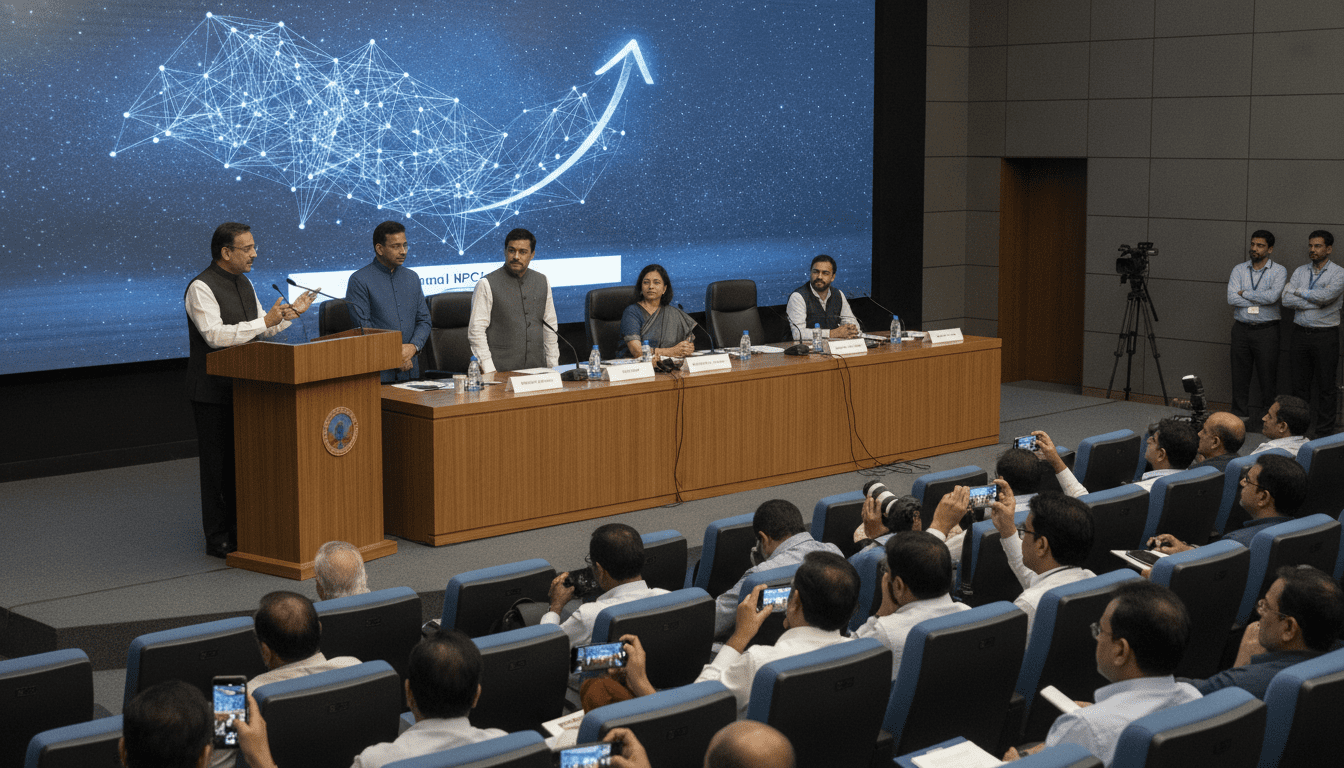
India’s payments regulator National Payments Corporation of India (NPCI) signaled a major strategic shift as it expects artificial intelligence to be central to the next wave of Unified Payments Interface (UPI) expansion. NPCI managing director and CEO Dilip Asbe told reporters at Mumbai Tech Week 2026 that AI will be used to expand user reach, strengthen fraud detection, and enable credit services across the UPI ecosystem. The network currently processes more than 750 million transactions a day and aims to scale toward one billion daily transactions.
NPCI frames AI as the engine for UPI’s next half-billion users
Asbe outlined a roadmap that ties AI adoption to user growth, saying the technology will help onboard underserved populations and simplify interactions in multiple languages. He argued that AI-driven voice and multilingual solutions could reduce friction for first-time digital payments users, provided the models reach sufficient accuracy. NPCI is positioning AI not simply as a back-office tool but as a front-line mechanism to broaden UPI’s demographic footprint.
Fraud detection, mule identification and credit via AI
A central pillar of NPCI’s plan is using machine learning to detect and prevent fraud across the UPI rails. Asbe emphasized AI’s role in identifying mule accounts, suspicious patterns, and automated abuse that traditional rules-based systems may miss. He also highlighted opportunities to analyze digital footprints to extend small-ticket credit to consumers and merchants who lack formal credit histories, creating new financial access pathways within the payments network.
Voice interfaces and multilingual onboarding remain nascent
NPCI has experimented with voice-enabled interactions since launching an assistant-style system in 2023, but adoption has been limited so far. Asbe acknowledged that speech models must improve in accuracy and contextual understanding before voice becomes a mainstream payment interface. He said voice will be a strategic focus for onboarding non-English speakers and users with low literacy, but that real-world uptake will depend on stronger model performance and clearer use cases.
Local language models and regulatory safeguards
Beyond application-level AI, Asbe advocated for development of small, purpose-built language models tailored to India’s finance sector. He suggested these models would be differentiated by the datasets they are trained on and could offer more deterministic behavior for payments tasks. At the same time, NPCI is stressing the need for a regulatory framework that protects users, captures consent for agent-driven actions, and provides mechanisms to audit instructions given to automated agents when disputes arise.
Market concentration and the 30% market-share cap
Competition in the UPI app market remains uneven, with two private players controlling a large majority of transactions, a dynamic regulators have sought to address. Data cited by NPCI points to PhonePe and Google Pay holding roughly 80% of market share, while NPCI’s own BHIM app — spun out in 2024 to be a sovereign alternative — accounts for about 1% of volume. India’s planned cap limiting any single app to 30% market share is scheduled to come into force on December 31, 2026, a policy milestone that could reshape commercial incentives in the sector.
Commercial models and new entrants’ viability
Asbe noted switching costs for UPI apps are low and many core features are shared, but sustainable competition depends on viable business models. He said the current market leaders benefited from substantial investment and customer acquisition spending, and that newer apps will invest more once clearer revenue pathways emerge. Investors are watching India’s regulatory stance closely, and the intersection of AI-enhanced services and fresh commercial models could unlock renewed interest in competing fintechs.
NPCI has already begun deploying AI in targeted areas: last year it introduced FIMI, an AI model designed to assist with payment disputes and mandate cancellations, which Asbe said is serving over a million users and scaling rapidly. Those early use cases are part of NPCI’s wider experiment to combine operational AI with consumer-facing tools that preserve security and sovereignty within India’s payments infrastructure.
The coming months will test whether NPCI’s plans translate into measurable gains in inclusion, safety and market diversity. Adoption curves for voice, the effectiveness of small language models in regional contexts, and the implementation of regulatory guardrails will determine how deeply AI reshapes UPI. If successful, NPCI’s strategy could add hundreds of millions of users to India’s digital payments ecosystem while creating new avenues for credit and commerce.
