
Northern Ireland unrest escalates into racially charged arson and mob attacks
Northern Ireland unrest included racially targeted arson and mob violence in Belfast and towns; police and government vowed investigations and prosecutions.
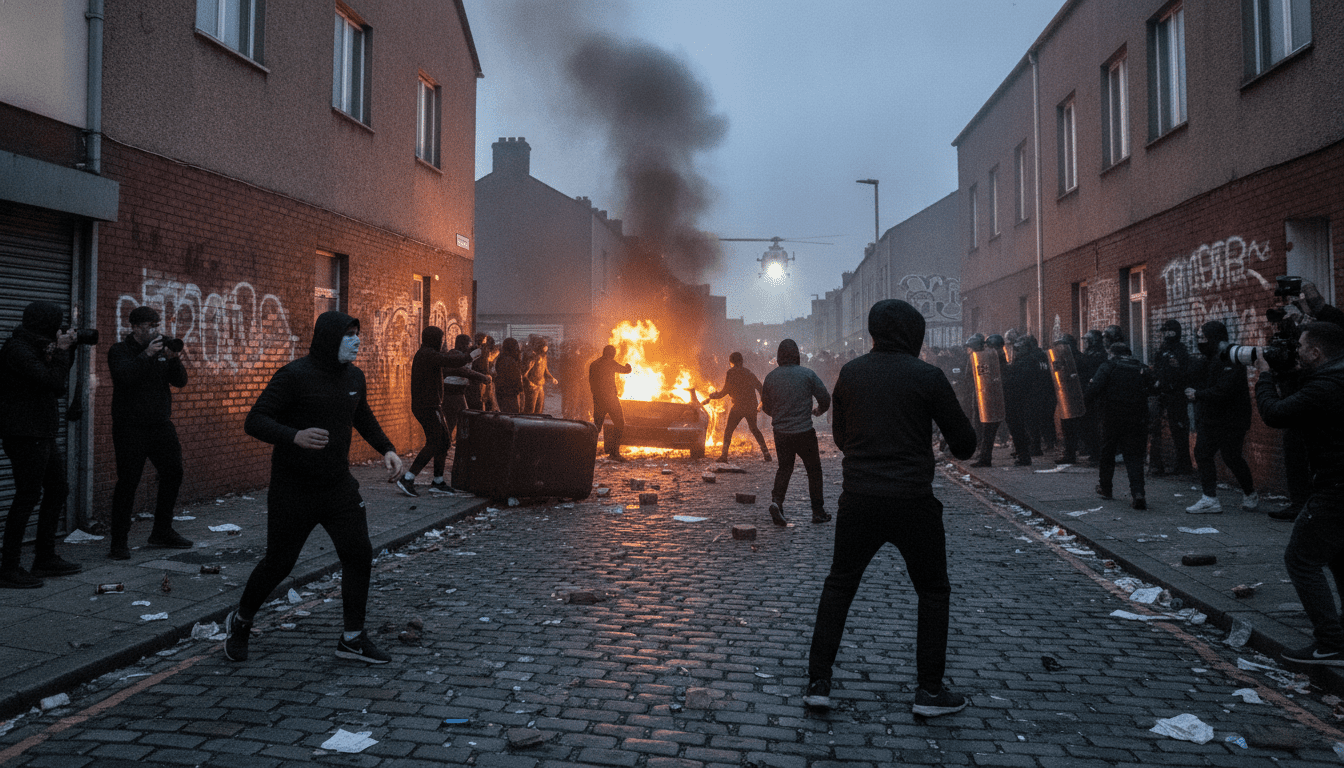
The overnight unrest in Northern Ireland devolved into widespread arson, attacks on vehicles and homes, and scenes described by some politicians as a racially motivated pogrom. Witnesses reported groups going door to door targeting people because of their skin colour, and emergency services logged hundreds of calls as fires and disorder spread across Belfast and nearby towns. Prime Minister Keir Starmer promised that those responsible would face the full force of the law and ordered urgent investigations. Police urged calm as they worked to restore order and establish the facts of multiple incidents.
Violent Night of Attacks in Belfast and Beyond
Trash bins, a public bus and several vehicles were set alight in east Belfast during the initial outbreaks, according to emergency responders. Fire crews said they were called more than 250 times overnight and attended dozens of blazes, with the highest concentration of incidents in the city.
Incidents later spread to the north of the city, where houses in the Crumlin Road area were set on fire and residents were forced from their homes. Other towns reported targeted attacks on businesses and cars, including a barber shop with Turkish ownership and a police vehicle burned in Portadown.
Video of Knife Attack Sparks Outrage
The disturbances followed the circulation of a video showing a brutal knife attack on Monday evening, in which a man was filmed repeatedly stabbing another person who lay bleeding on the ground. Bystanders intervened and later described what some believed to be an attempted decapitation, while the victim remains in hospital with severe head injuries.
Police have charged a man who is reported to be a Sudanese national with legal refugee status and he is due to appear before a court on a murder charge. The footage appears to have acted as a catalyst, inflaming tensions and prompting retaliatory violence in multiple communities.
Residents and Officials Describe Ethnic Targeting
Several eyewitnesses and local politicians said the violence disproportionately targeted people of non-white backgrounds, with accounts of groups checking houses and singling out residents based on appearance. A local Member of Parliament reported seeing men going from house to house searching for foreigners, and community leaders described scenes of people being forced out of their homes.
This pattern of targeted attacks intensified public alarm and prompted immediate condemnation from across the political spectrum. Community organisations called for urgent protection for vulnerable residents and for swift action by authorities to prevent further assaults.
Government and Emergency Services Mobilise Response
Prime Minister Keir Starmer issued a public statement condemning the attacks and promising prosecutions, while police described the disturbances as sporadic but serious. Officers increased patrols in affected areas and appealed to demonstrators to disperse, warning of the legal consequences for those who committed violence.
Fire services confirmed dozens of separate incidents overnight and said crews worked through the night to bring blazes under control and prevent further spread. Local health services and charities mobilised to assist displaced residents and to support anyone requiring medical or psychological help.
Echoes of Last Year’s Unrest and Deep-Rooted Divisions
The latest violence follows a similar outbreak exactly one year earlier, when disorder in several towns, including Ballymena, unfolded over consecutive nights. At that time police concluded that attacks had been directed against ethnic minorities and law enforcement, leaving many officers injured and property damaged.
Analysts warn that the legacy of the decades-long sectarian conflict known as the Troubles continues to shape violent dynamics, with identities still frequently framed through unionist and nationalist, Protestant and Catholic divides. That historical context contributes to quick escalation when a specific incident becomes a flashpoint for wider grievances.
Border Movement and Migration Debate Reignited
The arrest of a man with refugee status has reopened a political debate over cross border movement between Northern Ireland and the Republic of Ireland, with some critics arguing that the common travel arrangements make it easier for migrants to move between jurisdictions. The arrangements between the United Kingdom and the Republic create a shared travel zone without routine internal immigration checks.
Officials in Dublin have pointed to separate migration routes and stressed the complexity of irregular movements across the region, while calls for tightened controls and clearer processing of asylum claims have surfaced in political debates. Commentators warned that conflating violent crime with migration risks stoking xenophobia and further targeting of minority communities.
The immediate priority for authorities remains extinguishing remaining fires, treating the injured and protecting those at risk, while investigators work to establish the sequence of events and identify those who organised or participated in the attacks.
