
US attacks on Iran follow Apache helicopter downing off Oman coast
US attacks on Iran after Apache helicopter downing: CENTCOM says strikes ordered by President Trump; Iran demands U.S. troop withdrawal amid rising tensions.
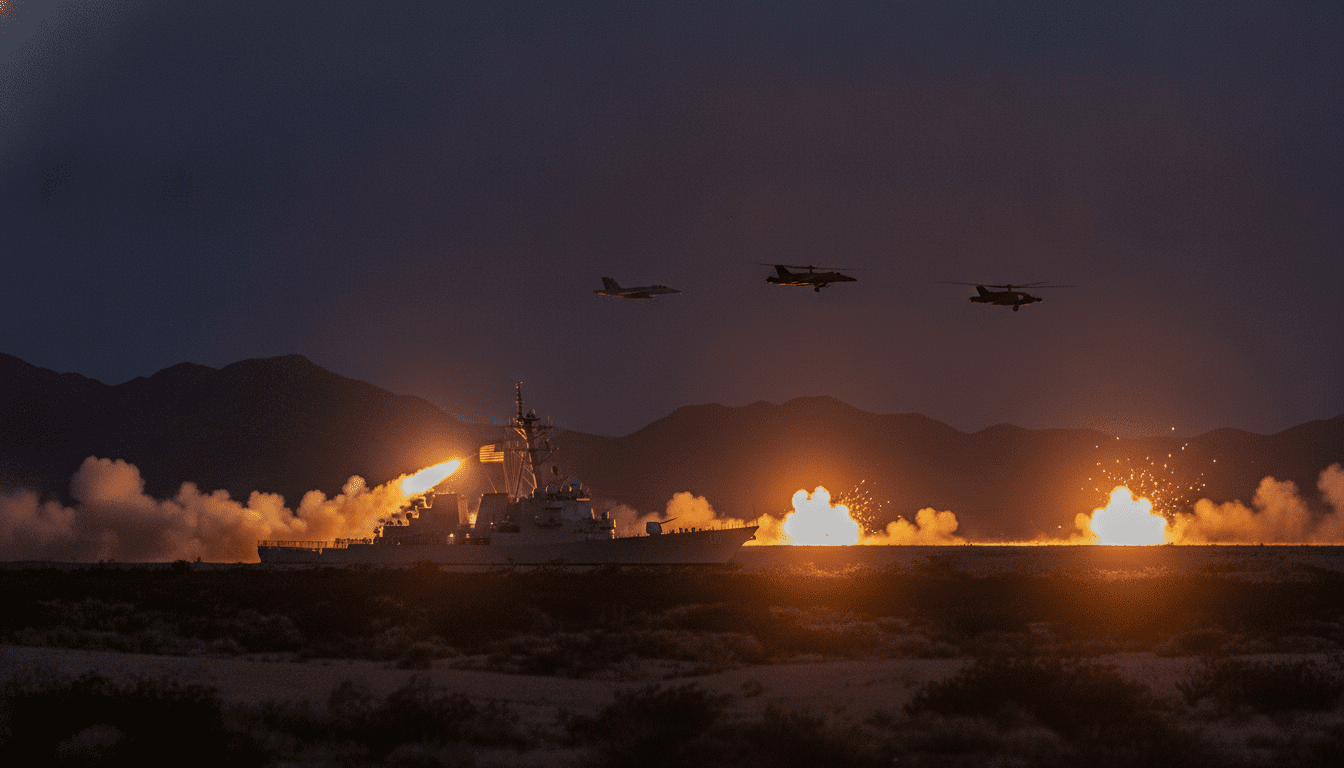
The U.S. military said it launched strikes against targets in Iran on orders from President Donald Trump after an Apache helicopter went down off the coast of Oman. The attacks, described by U.S. Central Command (CENTCOM) as an act of self-defense, were presented as a proportionate response to what U.S. officials called an Iranian attack on the aircraft. The unfolding incident has reignited regional tensions and prompted immediate calls from Tehran for a reduction of U.S. forces in the Gulf.
U.S. strikes initiated after Apache helicopter incident
CENTCOM announced that the strikes began late in the day on orders from the president, framing them as a response to the helicopter loss the previous evening. The U.S. military characterized the strikes as targeted and proportionate and said they were intended to deter further aggression against U.S. forces in the region. CENTCOM’s public statement gave a timeline for the operations and emphasized the defensive rationale cited by U.S. commanders.
President Trump frames military response
President Trump told ABC News that the United States had been forced to respond to the damage inflicted on the Apache helicopter and that the response would be “very strong, very powerful.” He directly attributed responsibility for the helicopter’s downing to Iran and said U.S. action was necessary to protect American personnel and interests. The White House and Pentagon officials repeatedly presented the strikes as a measured retaliation designed to prevent escalation while signaling resolve.
Rescue of helicopter crew and incident details
U.S. military briefings said the Apache crashed in waters near Oman and that the crew members survived the initial incident. According to U.S. statements and reporting by U.S. media, a U.S. Navy unmanned surface vessel recovered the aircrew and they were subsequently hoisted to safety by a rescue helicopter. U.S. spokespeople maintained that both pilots were uninjured, and stressed that the operation that followed was tailored to address the alleged hostile act without expanding the conflict.
Iran calls for U.S. troop withdrawal
Iran did not immediately acknowledge responsibility for the helicopter’s loss but reacted swiftly to the U.S. strikes by demanding a reduction of foreign forces near its territorial waters. A senior Iranian foreign ministry official, Abbas Araghchi, wrote on social media that foreign troops operating close to Iran face continual risks from accidents or crossfire and urged that the safest course would be their withdrawal. Tehran has framed the presence of U.S. forces in the Gulf as a destabilizing factor and linked recent incidents to the broader risk of miscalculation.
History of clashes and recent regional incidents
The Gulf has seen a string of confrontations and tense encounters between U.S. and Iranian forces in recent months, a pattern Washington and Tehran describe in starkly different terms. In April, U.S. authorities reported that an F-15 jet had been shot down in the region, an episode that likewise ended with the rescue of its pilots and highlighted the hazards of close military operations. Analysts say such incidents are occurring against the backdrop of an uneasy, unofficial cessation of large-scale hostilities that nonetheless allows for frequent and dangerous incidents.
International and military implications
U.S. officials argue the strikes demonstrate a capacity to respond rapidly to threats against American assets, but the operation raises questions about the potential for escalation and the safety of commercial and military navigation in strategic waterways. Allies and partners in the region may be weighing their responses while monitoring whether the U.S. action will deter further attacks or provoke reciprocal measures. Military planners face the challenge of calibrating limited strikes to achieve deterrence without triggering broader confrontation.
The humanitarian and diplomatic fallout is also a concern, with both sides likely to use public messaging to shape international opinion. Tehran’s call for U.S. forces to leave the area frames the dispute in terms of sovereignty and regional security, while Washington continues to stress protection of personnel and freedom of navigation. Observers note that unilateral military responses have historically complicated diplomatic avenues, making negotiation or third-party mediation more difficult.
The incident underscores the fragile nature of the current security environment in the Gulf and the narrow margins for error that exist when advanced weaponry and close encounters converge at sea. Military and diplomatic channels will be critical in the hours and days ahead to prevent further incidents and to clarify the facts surrounding the helicopter’s downing.
