
Reutlingen power outage spotlights risks to Germany’s energy infrastructure
Reutlingen power outage reveals weaknesses in Germany’s energy grid as officials probe causes; also: renewed Middle East clashes and NRW’s move to scrap homework.
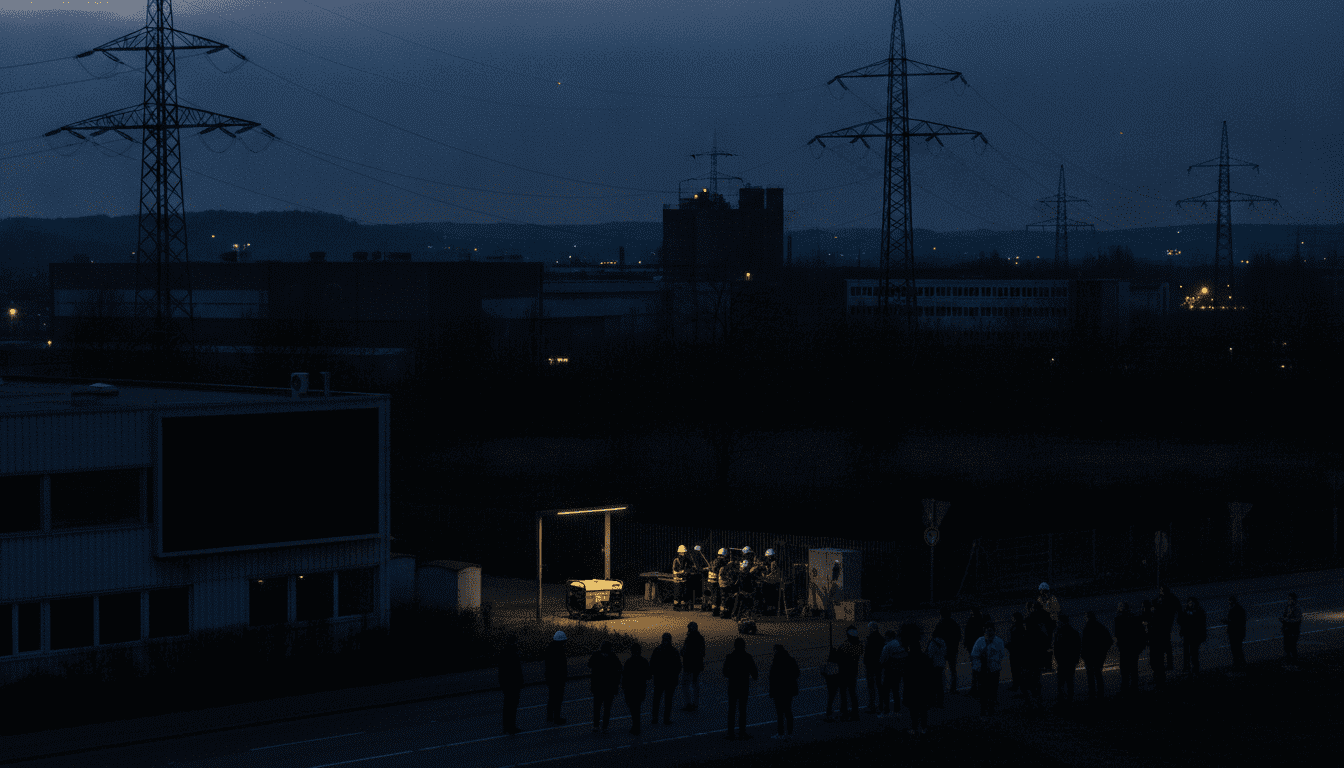
The Reutlingen power outage on Monday exposed weaknesses in local systems and raised fresh questions about Germany’s broader energy resilience. The Reutlingen power outage disrupted homes and businesses, prompting rapid response from municipal authorities and the regional utility. While investigations are ongoing, the incident has become a focal point for debates over maintenance, redundancy and the pace of grid modernization.
Blackout disrupts Reutlingen services
The outage left thousands without electricity for several hours and affected public transport signals and municipal services. Emergency crews prioritized hospitals and critical infrastructure, while feeder lines and substations were inspected for faults. Residents reported interrupted work and empty traffic lights, underscoring how brief outages cascade across daily life.
Local utility statements confirmed grid operators deployed crews immediately and used backup systems where available. Several neighborhoods experienced staggered restoration as crews isolated the fault and rerouted supply. The visible strain on local services has fueled calls for clearer contingency plans and faster communication during outages.
Preliminary findings point to an equipment or grid fault
Initial technical checks by utility engineers have focused on a substation transformer and an associated high-voltage feeder line serving central Reutlingen. Officials cautioned that definitive causes require full forensic analysis of equipment and operational logs. Investigators will also review recent maintenance records and whether extreme weather, if any, played a role.
Regulators said they expect findings within days but warned that complex component failures can take longer to diagnose. If confirmed as an equipment fault, the case will raise questions about replacement cycles and spare-part availability across regional networks. Utilities face pressure to produce transparent timelines for the investigation and any corrective actions.
Infrastructure weaknesses in focus across Germany
The Reutlingen incident has rekindled national debate over the condition of Germany’s energy infrastructure amid an evolving electricity mix. Experts note that aging components, increasing load complexity, and the integration of decentralized renewable generation complicate grid management. The outage is likely to be cited in discussions about accelerated investment in substations, smart grid technologies and resilience measures.
Policy analysts say the event highlights the need for targeted investment rather than general spending pledges. They recommend clearer standards for redundancy, especially for systems that serve hospitals, water treatment and transport hubs. The debate also touches on workforce capacity for 24/7 emergency repairs and the logistics of replacing specialized equipment quickly.
Government and utilities promise reviews and upgrades
State and municipal officials announced joint reviews of local grid resilience and emergency response protocols following the blackout. The regional energy regulator said it would monitor the investigation closely and could require remedial measures. Utilities committed to accelerated inspections of similar assets and to sharing key lessons with other network operators.
Officials emphasized no evidence of cyberattack or sabotage has been found so far and that physical infrastructure remains the primary focus. Authorities plan to brief parliamentarians and local councils on findings and proposed upgrades. Funding mechanisms for necessary investments will become a central element of forthcoming discussions between utilities and government.
North Rhine-Westphalia signals a shift on homework policy
In a separate development, North Rhine-Westphalia announced plans to phase out mandatory homework for certain school grades, signaling a major change in regional education policy. The proposal aims to reduce student stress and encourage in-class learning, while schools would retain flexibility to assign optional tasks. Supporters say the move modernizes pedagogy; critics worry about unequal out-of-class support for disadvantaged students.
Education officials stressed that the policy would come with teacher training and additional resources for classroom instruction. Pilot programs are expected before broader implementation to measure learning outcomes and equity impacts. The proposal adds to a growing national conversation on school reform and student well-being.
International context: renewed violence in the Middle East
Internationally, a fresh flare-up of violence in the Middle East has captured attention, prompting diplomatic concern and travel advisories in some countries. Officials described the situation as an escalation after a period of relative calm, and global markets monitored potential impacts on energy prices and regional stability. Germany and EU partners urged restraint and called for immediate de-escalation through diplomatic channels.
The renewed clashes add complexity to domestic conversations about energy security, as any sustained regional instability can influence global supply chains. Policymakers cited the importance of diversified energy sources and resilient domestic infrastructure in mitigating external shocks. Humanitarian agencies also called for immediate protections for civilians affected by the fighting.
The Reutlingen power outage has become more than a local incident; it is now a touchstone for broader debates about maintenance, investment and emergency readiness in Germany’s electricity networks. As investigators probe technical causes and authorities map corrective steps, the event will likely influence policy priorities ahead of scheduled infrastructure reviews and budget discussions.
