
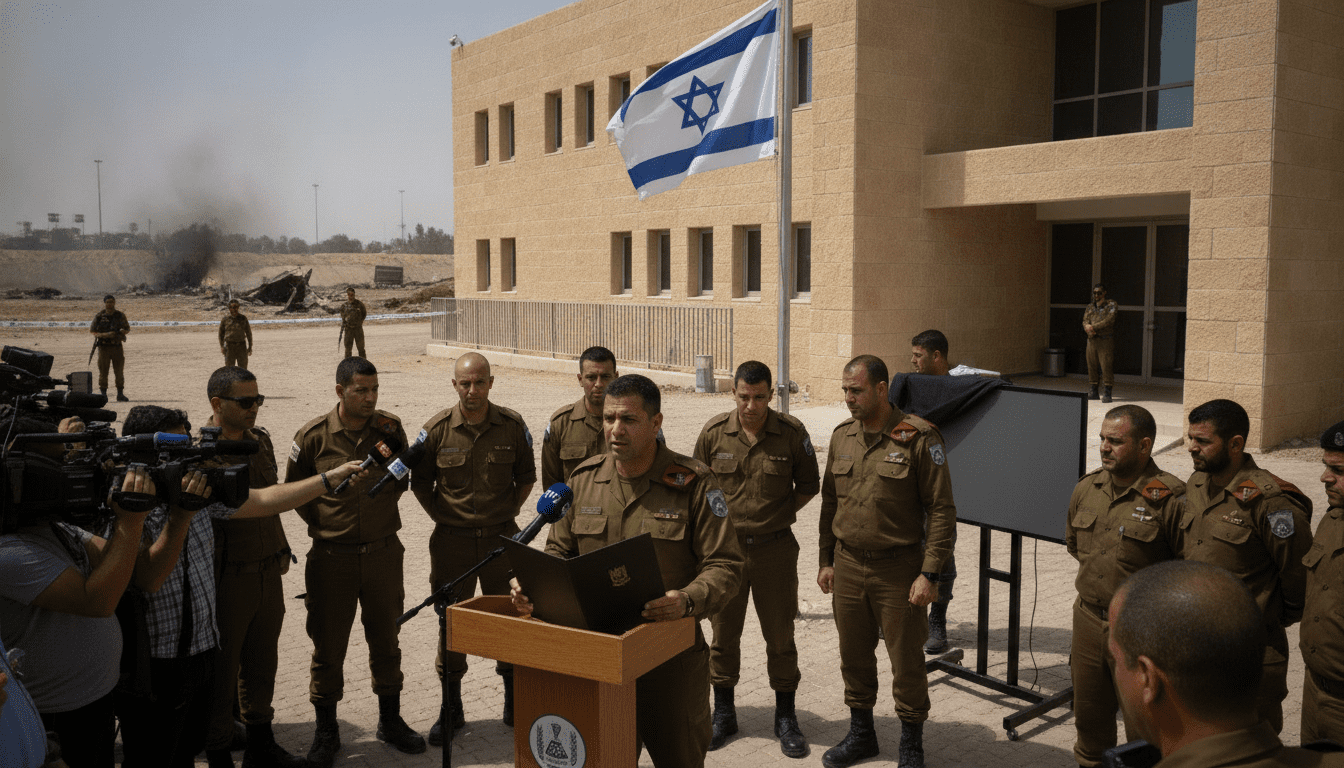
Israeli military censorship tightens war reporting as conflict with Iran escalates
Israeli military censorship tightens media rules on wartime reporting, restricting exact rocket tallies, strike images and debris locations amid rising tensions with Iran.
The Israeli military’s censorship authority has issued new guidance to news organizations tightening controls on wartime reporting, the office said in a notice sent to media outlets and individual journalists, including ZEIT.
The directive arrives as Israeli officials point to an escalating confrontation linked to Iran, and it places specific limits on how outlets may describe incoming rocket barrages and their effects.
Censorship directive sent to newsrooms
The censorship authority transmitted its instructions through the government press office to national and international newsrooms, asking editors to comply with the new wording and to submit material for review when in doubt.
The notice says that reporting which runs counter to the guidance should be withheld or cleared by the military censor before publication to avoid compromising operations.
Limits on reporting rocket numbers and outcomes
Under the new rules, media are permitted only to describe enemy launches in very general terms, using words such as “single” or “dozens” rather than providing precise numbers.
Reports on rockets that fell short or missed targets are to state only that the projectiles “did not reach their target,” and should avoid describing trajectories, impact points or technical details that could be operationally sensitive.
Prohibition on publishing strike imagery and debris locations
The directive also bars publication of accounts, photographs or video showing successful strikes on military or strategically important sites, including incidents at sea.
Additionally, images or footage that depict intercept operations — such as anti-missile engagements — are to be withheld, and journalists are instructed not to disclose locations where wreckage or debris has landed.
Military frames rules as operational security
In presenting the measures, the censorship authority justified the limits by saying it seeks to avoid “giving gifts to the enemy,” framing the constraints as necessary to protect troops and critical infrastructure.
Officials told news organizations that the tighter controls are intended to prevent adversaries from inferring capabilities, patterns or vulnerabilities from published reporting during heightened hostilities.
Press freedom groups warn of widened censorship
Press freedom advocates have said the measures further extend the scope of military oversight that has intensified since the Hamas attack on Israel on October 7, 2023.
Reporters Without Borders (RSF) has assessed that coverage of many security-related topics in Israel increasingly requires prior approval from authorities, a change that critics say narrows the space for independent reporting during conflict.
Practical impact for reporters and public information
Editors and correspondents face immediate editorial choices: publish less granular accounts to comply with the directive, or seek clearance from the military censor and risk delays in fast-moving coverage.
Local and international outlets covering the region will have to balance operational-security considerations against the public’s demand for timely, detailed information about threats and the effects of attacks.
The new guidance raises questions about verification and transparency: without specific tallies, independent monitoring groups and researchers will have fewer data points to assess the scale and trajectory of exchanges.
At the same time, government officials argue that withholding certain operational details reduces the risk that sensitive information could be pieced together and exploited by hostile actors.
Newsrooms say they will review the wording closely to determine which reporting practices must change and which can continue under the new framework.
Some editors are expected to adopt cautious language and to add editorial notes indicating when material was submitted for censorship review, while others may broaden reliance on international monitoring resources and third-party verification.
For citizens and consumers of news, the changes mean that publicly available accounts of rocket barrages and countermeasures are likely to be less specific, particularly about exact numbers, strike locations and intercept footage.
Observers say the result could be greater uncertainty in daily reporting and an increased need for context from independent organizations that track conflict-related incidents.
The directive is the latest development in the evolving relationship between Israeli security institutions and the press, and it will test how media organizations balance legal obligations, ethical reporting standards and the public interest during a period of heightened tension with Iran.
