
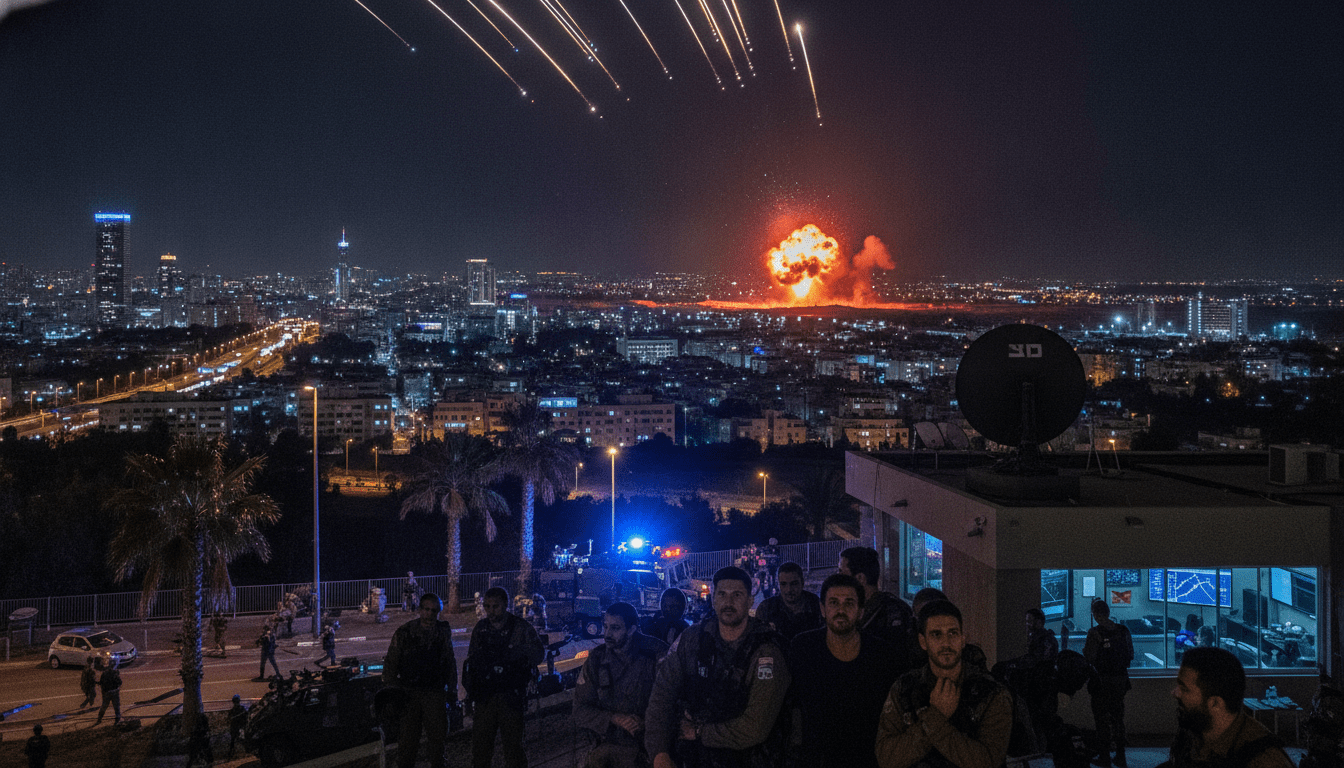
Iran rocket attack on Israel on June 7, 2026 triggers Israeli strikes and US push to de‑escalate
Iran rocket attack on Israel on June 7, 2026 sparked Israeli counterstrikes, US de-escalation efforts and fears of internet shutdown as talks on frozen funds stall.
The Iran rocket attack on Israel on June 7, 2026 marked a dramatic escalation that broke the fragile ceasefire reached on April 8, 2026, and prompted an immediate Israeli military response across western and central Iran. U.S. President Donald Trump publicly urged Israeli restraint, saying he would press Prime Minister Benjamin Netanyahu not to retaliate further, even as Israel announced strikes on multiple Iranian sites. Explosions were reported in Tehran, Tabriz, Isfahan and Karaj, and Iranian officials said a petrochemical facility in Khuzestan was hit, though casualty figures remained unclear.
Trump’s intervention and the diplomatic dilemma
The call from President Trump to dissuade Israel from an immediate counterstrike was made public by Axios and quickly placed Netanyahu in a difficult position between U.S. pressure and domestic security imperatives. Washington framed the Israeli follow-ups as “relatively limited,” while also urging Iran to return to negotiations and refrain from further missile launches. Tehran, however, framed its action as a calibrated response and suggested the exchange would continue, with the Islamic Revolutionary Guard Corps warning of sustained operations.
Israeli military strikes across Iranian territory
Israel’s military said on the morning of June 8, 2026 that it had struck targets in the west and center of Iran following the missile salvo the previous evening. Air defenses over northern Israel intercepted projectiles that Tehran said had targeted the Ramat David airbase, while Israeli strikes reportedly caused explosions in multiple Iranian provinces. Iran’s authorities confirmed damage at industrial sites including a petrochemical complex in Khuzestan, though they did not immediately report fatalities.
Origins of the exchange: Beirut strike and regional linkages
The immediate trigger for the Iran rocket attack on Israel was, according to Tehran, an Israeli strike on a Beirut suburb that targeted assets tied to the Iran-aligned militia Hezbollah. Iran has repeatedly warned that attacks on Lebanese territory would cross its red lines, and Tehran characterized its missile salvos as punitive, aimed at creating a new balance in the region. Houthi forces in Yemen, allied with Iran, also launched rockets against Israel, marking the widening geographic scope of the confrontation.
U.S.-Iran talks and the frozen funds impasse
Diplomatic efforts to prevent a wider war were already underway before the June 7 exchange, with U.S. negotiators and Pakistani intermediaries attempting to bridge differences over a ceasefire framework and maritime security in the Strait of Hormuz. A central sticking point in those talks has been Iran’s demand for immediate access to roughly $12 billion in frozen assets upon signing an initial agreement. Tehran’s negotiators accused Israel and the United States of undermining the process by allowing strikes in Lebanon, and warned that political concessions would be contingent on concrete financial assurances.
Strategic signaling and testing of U.S. resolve
Analysts noted that Tehran’s decision to fire directly at Israeli territory for the first time since the April 8, 2026 truce amounted to a deliberate test of American willingness to restrain its ally. By linking the ceasefire terms to developments in Lebanon and to the fate of Hezbollah, Iran appears to be asserting a broader regional strategy that treats militia partners as integral to its security calculus. Washington’s balancing act — pressing Israel to avoid escalation while trying to keep negotiations alive — underscores how entangled diplomatic, economic and military levers have become in the crisis.
Domestic consequences in Iran and fears of digital blackout
Beyond battlefield considerations, the confrontation has raised acute domestic anxieties inside Iran, where many citizens feared that renewed clashes could bring back broad internet restrictions. Tehran lifted a prolonged blackout only weeks earlier after 88 days of curtailed access; the prospect of another shutdown has added a social dimension to the political and military crisis. Economic pressure from a U.S.-imposed maritime blockade and the continued freeze on assets have deepened public concern about livelihoods and information access amid mounting tensions.
The Iran rocket attack on Israel and the subsequent rounds of strikes illustrate how quickly a localized tit-for-tat can widen into a regional confrontation with diplomatic, economic and societal ripple effects. As the United States presses both sides to step back, negotiators face a narrow window to salvage a fragile deal that links maritime security, frozen assets and the cessation of hostilities, while populations across the region brace for further uncertainty.
