
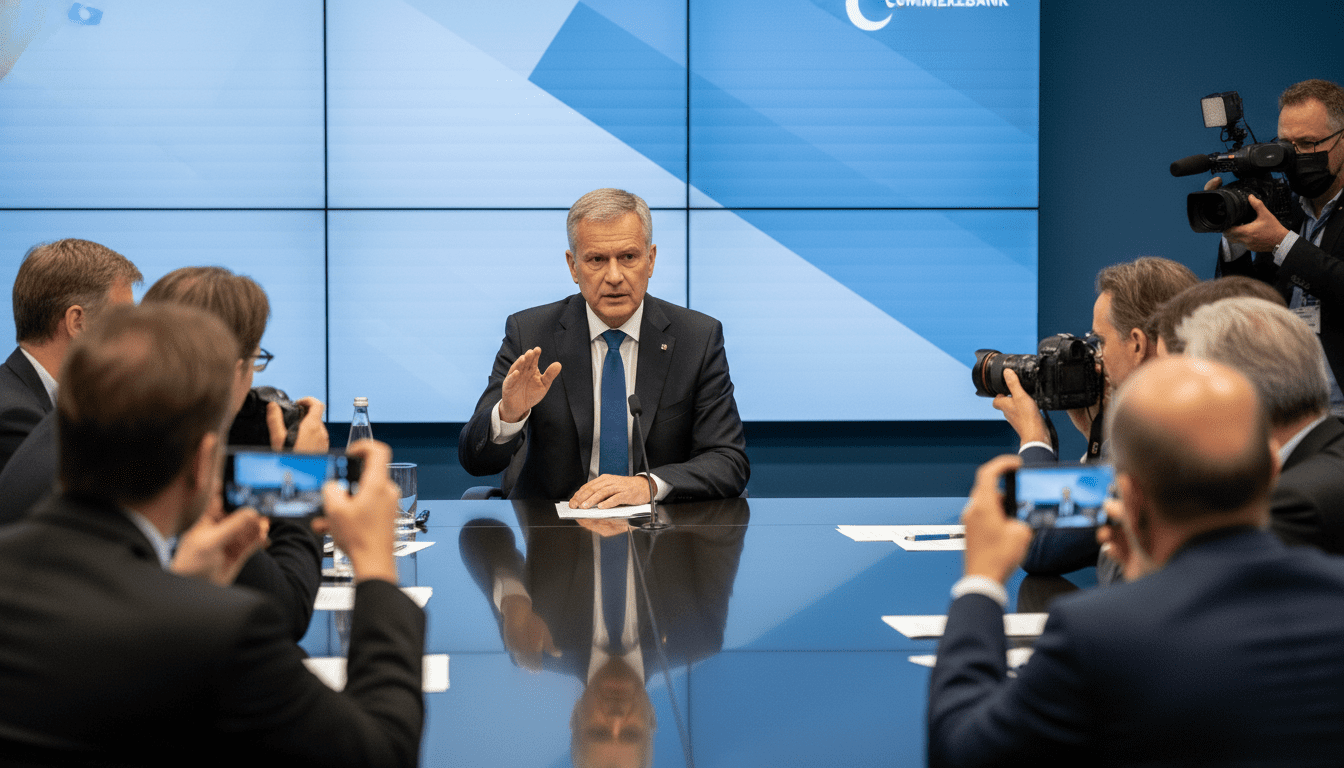
UniCredit takeover of Commerzbank draws sharp criticism from Commerzbank leadership
Meta description: Commerzbank criticizes the UniCredit takeover plan after UniCredit shareholders approved a capital increase; dispute centers on valuation, strategy and potential job cuts.
The UniCredit takeover of Commerzbank has sparked a public clash between the two banks as Commerzbank senior executives rejected UniCredit’s exchange offer as inadequate and disruptive to the bank’s current operations. Commerzbank deputy CEO Michael Kotzbauer told the Frankfurter Allgemeine Zeitung that the proposal, unveiled after 18 months of talks, would dismantle the bank’s customer-facing structure without offering shareholders a meaningful premium. The disagreement comes after UniCredit shareholders on May 4, 2026 approved a capital increase and a framework that clears the path for an official bid.
Kotzbauer says offer would “dismantle” Commerzbank’s operations
Michael Kotzbauer framed UniCredit’s proposal as fundamentally misaligned with Commerzbank’s business model and shareholder interests. He told the newspaper that UniCredit only detailed concrete plans after announcing an unsolicited offer in March, and that the terms fail to compensate Commerzbank owners. Commerzbank’s board previously rejected an April bid, citing major differences over strategy and the structure of a possible tie-up.
UniCredit shareholders back capital increase and exchange mechanism
On May 4, 2026 UniCredit shareholders voted to permit a capital increase that would enable the issuance of new UniCredit shares to be offered to Commerzbank investors in exchange for their stock. The approval is a crucial procedural step for UniCredit to convert the earlier voluntary exchange proposal into a formal takeover offer. UniCredit officials say the move is intended to create a feasible path to cross key ownership thresholds and pursue further purchases.
UniCredit’s strong quarterly results underpin its bid
UniCredit entered the takeover campaign with stronger-than-expected first-quarter results that executives say support the bank’s strategic ambitions. The lender reported a 16 percent rise in net profit to €3.22 billion in Q1 and revenue of €6.87 billion, figures that topped analyst forecasts and prompted management to raise its full-year net profit outlook to at least €11 billion. UniCredit CEO Andrea Orcel said the results demonstrate the durability of the bank’s business model and indicated that the group would present the formal takeover offer on May 5, 2026.
Terms of the March exchange proposal and market dynamics
In March UniCredit proposed an exchange ratio of 0.485 newly issued UniCredit shares for each Commerzbank share, a formula that was presented as equivalent to roughly €30.80 per Commerzbank share based on March 13 closing prices and implied a valuation near €35 billion. That basis, however, no longer reflects current market conditions: Commerzbank shares have risen materially since mid-March, weakening the relative attractiveness of the original offer. Market observers say the gap between the exchange valuation and the present share price is a central bone of contention in negotiations.
Restructuring plans raise job and integration concerns in Germany
UniCredit has outlined a post-takeover restructuring that it says would realize cost savings by integrating Commerzbank with its German unit, HypoVereinsbank (HVB). Reports associated with the takeover scenario suggest up to around 7,000 jobs in Germany could be affected, a figure that has alarmed labor groups and politicians. UniCredit argues the consolidation would strengthen its footprint in the German retail and mid-market segments, but Commerzbank leaders and employee representatives have warned of disruption to customer service and wider social impacts.
Regulatory and political review likely to follow the offer
A successful acquisition would require both regulatory approvals and political scrutiny in Germany and the European Union, given the systemic importance of the institutions involved. UniCredit is already the largest shareholder in Commerzbank ahead of the German state, and any movement toward majority control will prompt close review by banking supervisors and government stakeholders. Observers expect scrutiny to focus on competition effects, employment outcomes, and the preservation of service for retail and corporate customers.
The dispute over valuation and strategic intent now shifts to the formal offer and ensuing rounds of talks, with Commerzbank insisting on clear assurances for shareholders and clients while UniCredit presses to translate shareholder authorization into a binding bid. The coming weeks will determine whether the deal can be reshaped to address Commerzbank’s objections or whether the two institutions proceed toward a contested corporate confrontation.
